1800–1930 CE · Middle East · Trade
Bahrain: pearling, maritime work and Muharraq
Before oil, pearls connected Bahrain’s offshore oyster beds with crews, merchant houses and overseas markets. Muharraq preserves traces of this maritime economy, not merely the wealth of its most successful traders.
 Enlarge and examine the picture
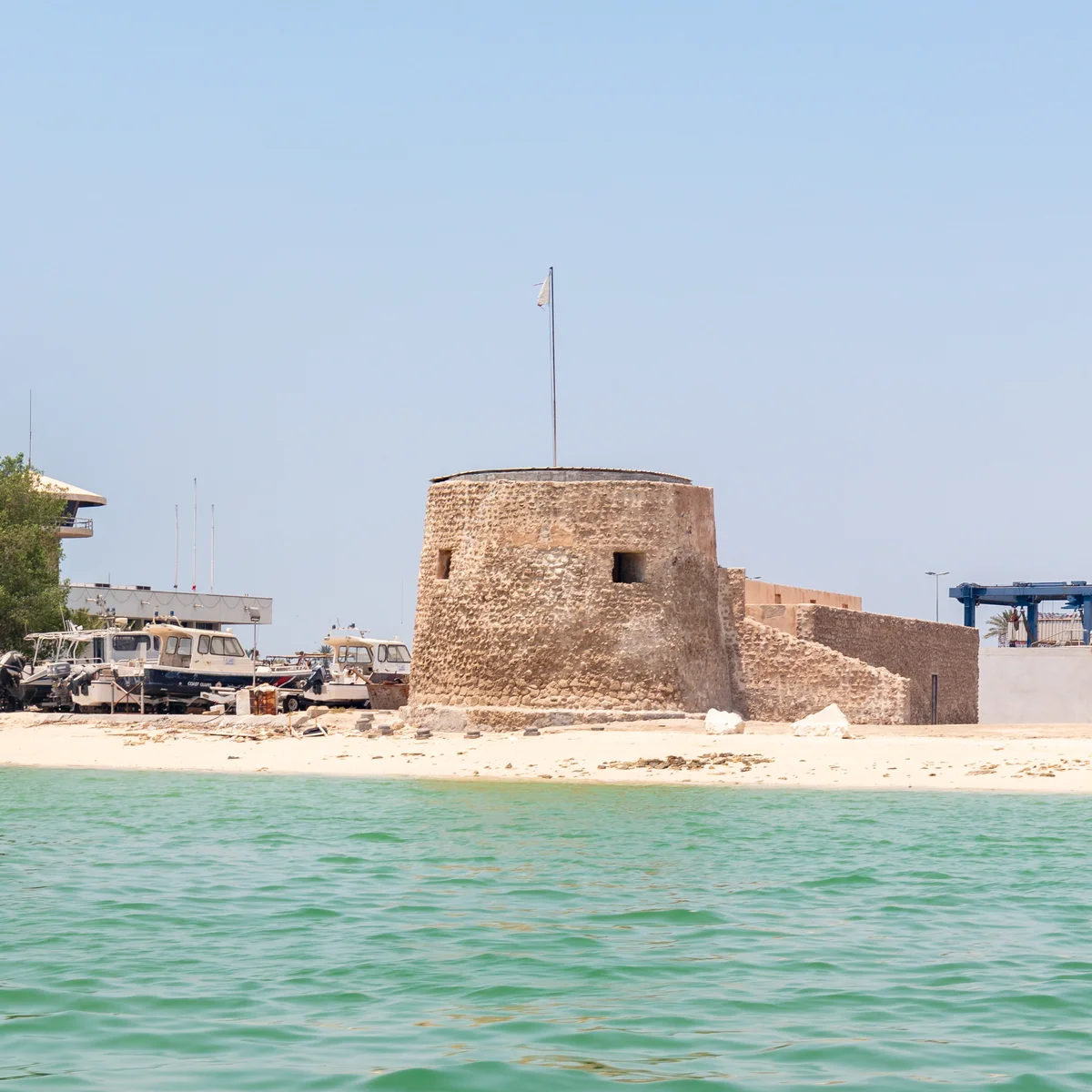
Diego Delso, delso.photo · CC BY-SA 4.0 · Resized and converted to WebP; derivative under the same licence · Source and rights ↗ · Licence terms
An economy stretching from seabed to town
Pearling in the Gulf had a long history before the nineteenth-century expansion explored here. Its prosperity peaked around the late nineteenth and early twentieth centuries. UNESCO’s Bahrain property joins oyster beds and shore with merchant residences, shops, warehouses and a mosque: evidence of an economic system, rather than a collection of unrelated monuments.
Different people performed different work
The pearl’s journey depended on more than the diver. Bahrain’s heritage authority distinguishes the tawwash, or major pearl merchant; the nukhidha, or boat captain; and the seeb, who hauled divers back to the deck. Naming these roles restores the human organisation behind an object often encountered only as jewellery.
Read the fort as a later view of a working coast
Bu Maher Fort and its shore marked a departure and return point for pearling boats. The photograph shows the surviving, partly rebuilt monument in 2024, not a nineteenth-century crew. Excavation and restoration belong to its later history. Its setting helps connect maritime journeys with the streets and buildings of Muharraq.
Decline, memory and the wider Gulf
The growth of cultured-pearl production in Japan helped undermine the older natural-pearl economy in the twentieth century. Preserved buildings make its material legacy visible, but cannot by themselves tell every worker’s experience. This Bahrain case is an entry into Gulf history; Oman, Kuwait, Qatar, the Emirates and their distinct maritime and political histories require separate treatment.