880–1279 CE · Asia · Culture
Chola Tamil country: living temples, bronze images and poetry
South Indian history includes powerful regional courts and living traditions of worship, poetry and skilled metalwork. Chola temples and bronze images offer a picture-led route into Tamil cultural history.
 Enlarge and examine the picture
The Metropolitan Museum of Art · Gift of R. H. Ellsworth Ltd., in honor of Susan Dillon, 1987 · 1987.80.1 · Public domain / CC0 · Resized and converted to WebP · Source and rights ↗ · Licence terms
Royal buildings in a regional landscape
Chola rulers sponsored major temples in Tamil country. The surviving complexes at Thanjavur, Gangaikondacholapuram and Darasuram demonstrate changing architectural forms across the eleventh and twelfth centuries. Monumental towers and sculptural programmes expressed royal power as well as religious devotion. These sites are not interchangeable examples of a single timeless Indian style.
How to read Shiva’s dance
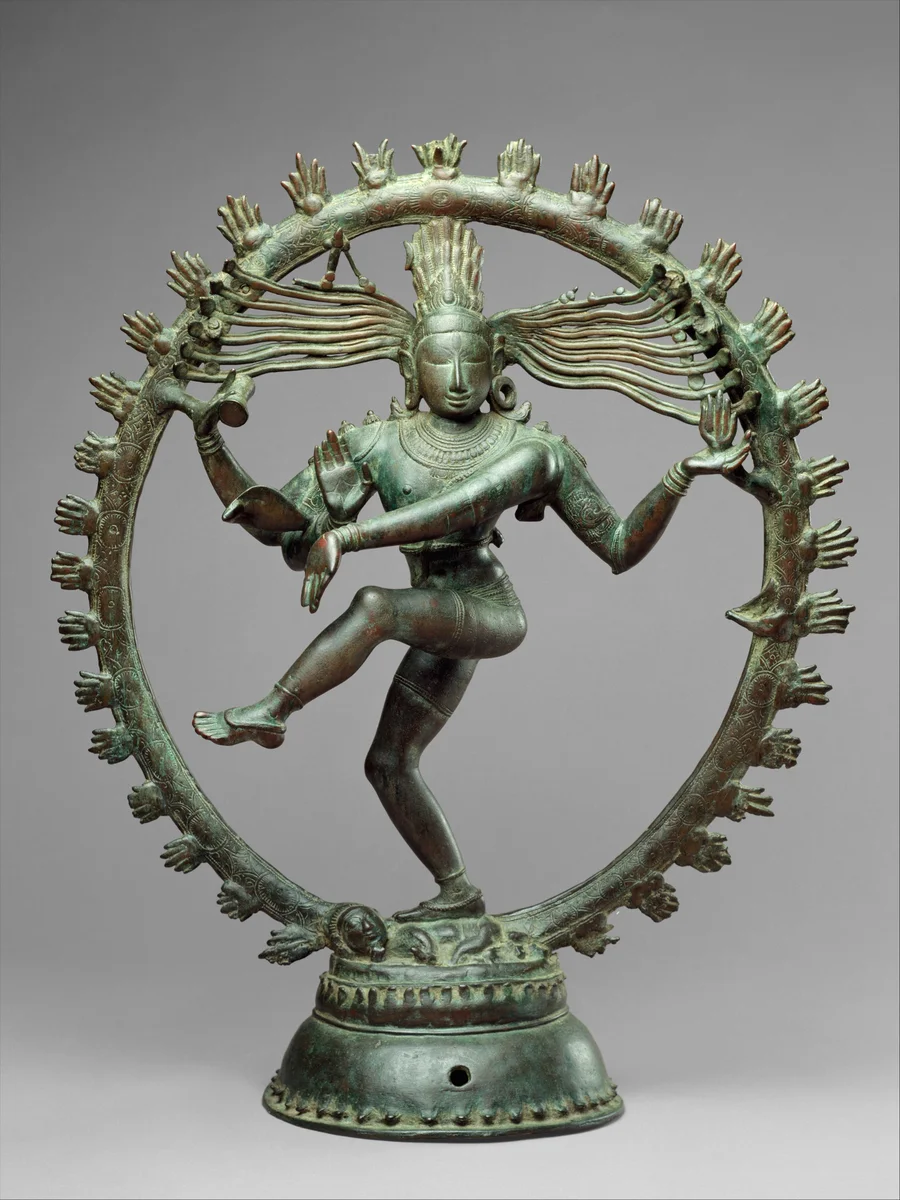
The late-eleventh-century copper-alloy image shows Shiva as Nataraja, Lord of Dance. A drum signifies creation and a flame destruction; another hand offers reassurance. The figure beneath Shiva’s foot represents illusion. These are elements of a religious visual language, not a depiction of a historical ruler performing a dance.
An image was more than a museum sculpture
Many medieval South Indian bronzes were commissioned for temple processions. Tamil devotional hymns, with roots in earlier poet-saints, addressed Shiva and Vishnu and remain part of worship. Considering movement, song and devotional encounter restores context that a still museum photograph cannot provide. This does not establish the original ritual itinerary of the particular bronze shown here.
A living tradition, and limits of this study
UNESCO describes the three great Chola complexes as living temples, where worship continues alongside conservation. Their present appearance includes later interventions. This introduction concerns temple arts and devotion; it does not replace accounts of agrarian society, caste, women’s lives, trade, warfare or other religious communities in South India.