ATLAS / ANCIENT—PRESENT
All historyHow Atlas is sourced← Back to Atlas
Back to Atlas timeline
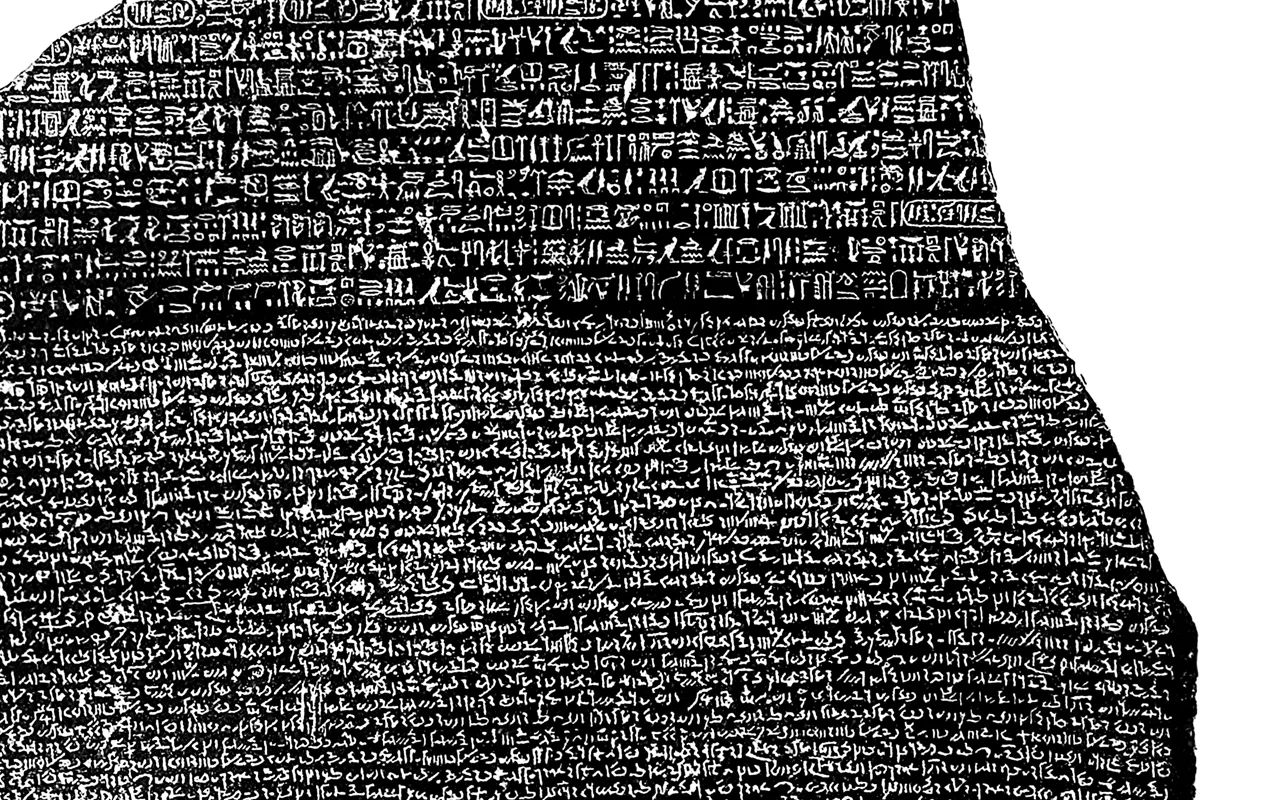
The Rosetta Stone, 1922

1799–1822 CE · discovery and decipherment milestones · Africa · Science

The Rosetta Stone unlocks hieroglyphs

French soldiers found the trilingual Rosetta Stone at Rashid in 1799. British forces took it in 1801; in 1822 Jean-François Champollion announced a decisive advance built on Thomas Young’s work and earlier scholarship.

Atlas dossier · Enlightenment & Revolutions

Free device narration · synchronized English captions · transcript available

Why it matters

Decipherment opened Egyptian inscriptions, historical records and language to modern study, while also raising enduring questions about colonial collecting and the custody of cultural heritage.

Date
1799–1822 CE · discovery and decipherment milestones
Historical setting
Enlightenment & Revolutions · Africa
People & communities
Egyptian communities at Rashid · French soldiers · Jean-François Champollion · Thomas Young · Egyptian scholars
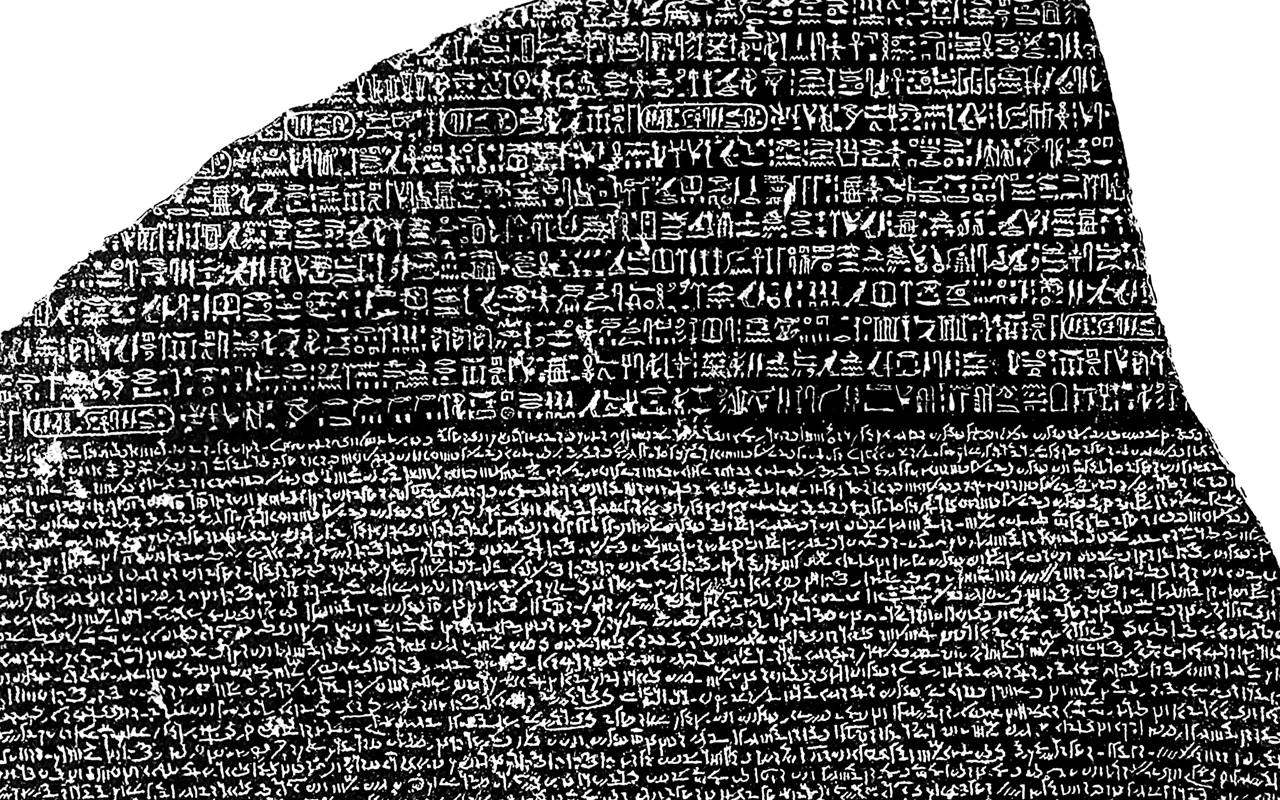
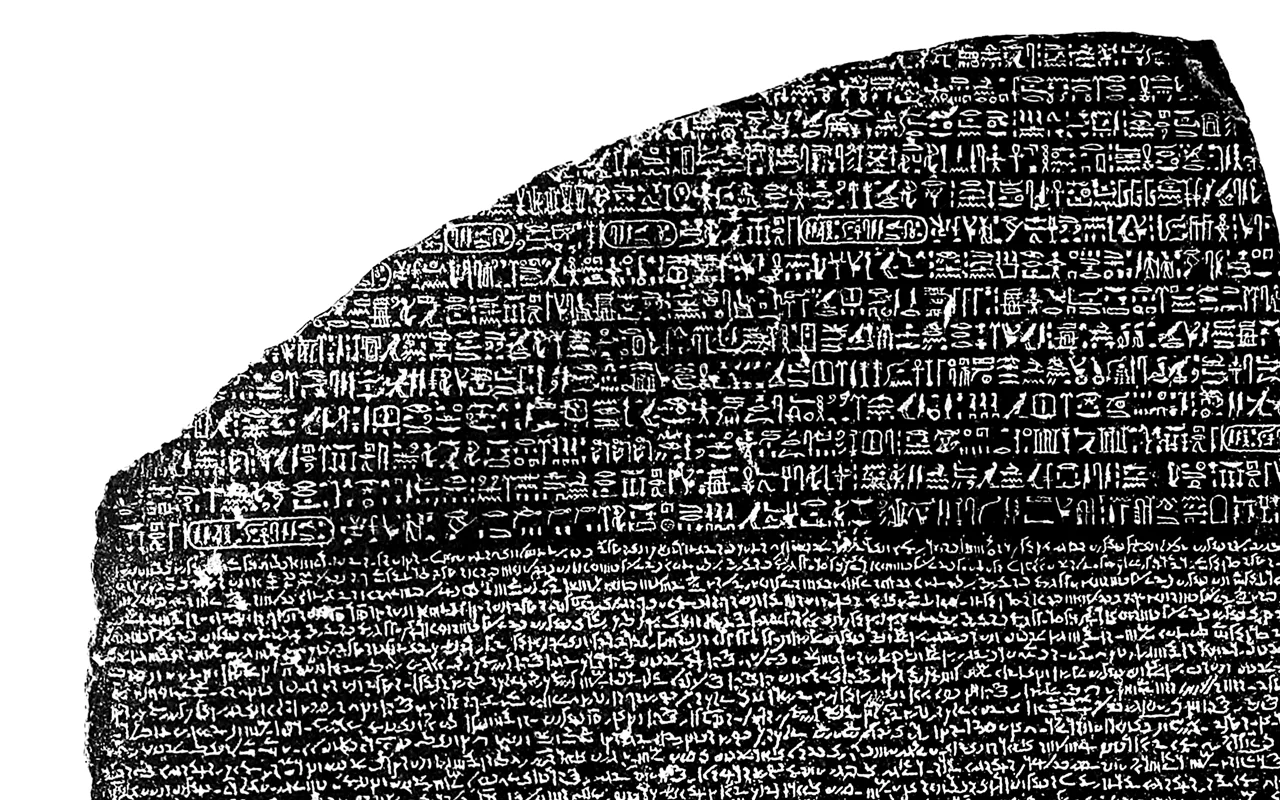
Discovery, transfer and decipherment

The stone was found by French soldiers at Rashid in 1799 and transferred to British possession after the 1801 capitulation of Alexandria. Its museum custody is part of the object’s modern history. The inscription itself is a Ptolemaic decree copied in three scripts, not a narrative of its discovery.

British Museum: Rosetta Stone collection record

A breakthrough with predecessors

Champollion’s 1822 announcement was decisive, but Thomas Young and earlier scholars had already compared the scripts and royal names. The trilingual text supplied a key; decipherment still required cumulative linguistic work rather than a single flash of translation.

British Museum: decipherment timeline

Illustrated sequence

A visual presentation accompanying this entry. Read each image’s attribution to distinguish archival records, later depictions and reconstructions.

The Rosetta Stone, 1922
IMAGE 1

Visual record

A photograph of the Rosetta Stone published in 1922, subsequently digitally enhanced. It does not show the discovery in 1799.

The Rosetta Stone, 1922 — Sir E. A. Wallis Budge (book) · Donald Macbeth (photograph); Public Domain Mark 1.0; via British Museum / Wikimedia Commons. Resized, cropped and converted to WebP for Atlas display.

Source and reuse terms ↗ · Read the licence ↗

Interpretation note

Evidence, memory and historical debate

This dossier distinguishes the event’s basic chronology from later arguments about meaning, responsibility and legacy. When comparing religious, national, Indigenous or scholarly interpretations, consult the primary and institutional sources above alongside peer-reviewed historical work.

Elsewhere in the world

Parallel histories near this moment

1798–1799 CE · capture, exile and death · EuropeCapture of Pope Pius VI

French revolutionary forces occupied Rome and proclaimed a republic in 1798. Pius VI was removed from Rome, held under French authority and died in exile at Valence in 1799.

1796–1980 CE · Jenner milestone to certified eradication · GlobalSmallpox vaccination

Edward Jenner’s experiment helped formalize vaccination, building on earlier variolation knowledge across Asia, Africa and the Ottoman world.

1803–1890 CE · selected U.S. expansion milestones · AmericasManifest Destiny and Indigenous wars

U.S. settlement expanded westward through purchase, annexation, forced removal, broken treaties, warfare and the destruction of Indigenous food systems.