1000–1300 CE · Asia · Faith
Bagan: Buddhism, patronage and a living landscape in Myanmar
Bagan’s temples open a history of religious giving, political authority and artistic work beside the Ayeyarwady River. Myanmar’s past extends far beyond its modern conflicts.
 Enlarge and examine the picture
Vyacheslav Argenberg / Wikimedia Commons · CC BY 4.0 · Resized and converted to WebP · Source and rights ↗ · Licence terms
A capital beside the river
Bagan’s principal monumental period falls in the eleventh to thirteenth centuries. Its location in the central Myanmar plain placed a regional imperial capital beside the Ayeyarwady. Temples, stupas, monasteries, paintings and sculpture belong to a connected landscape, rather than a collection of isolated tourist monuments. These dates describe a cultural flowering, not exact founding and abandonment years.
Giving, work and authority
Theravada Buddhist merit-making linked religious gifts to social relationships. Royal patronage made the king a leading donor, while construction and maintenance drew on wider communities. UNESCO interprets redistribution through Buddhism as part of political authority. Religious devotion, artistic production and the organisation of resources therefore need to be read together.
A place still used
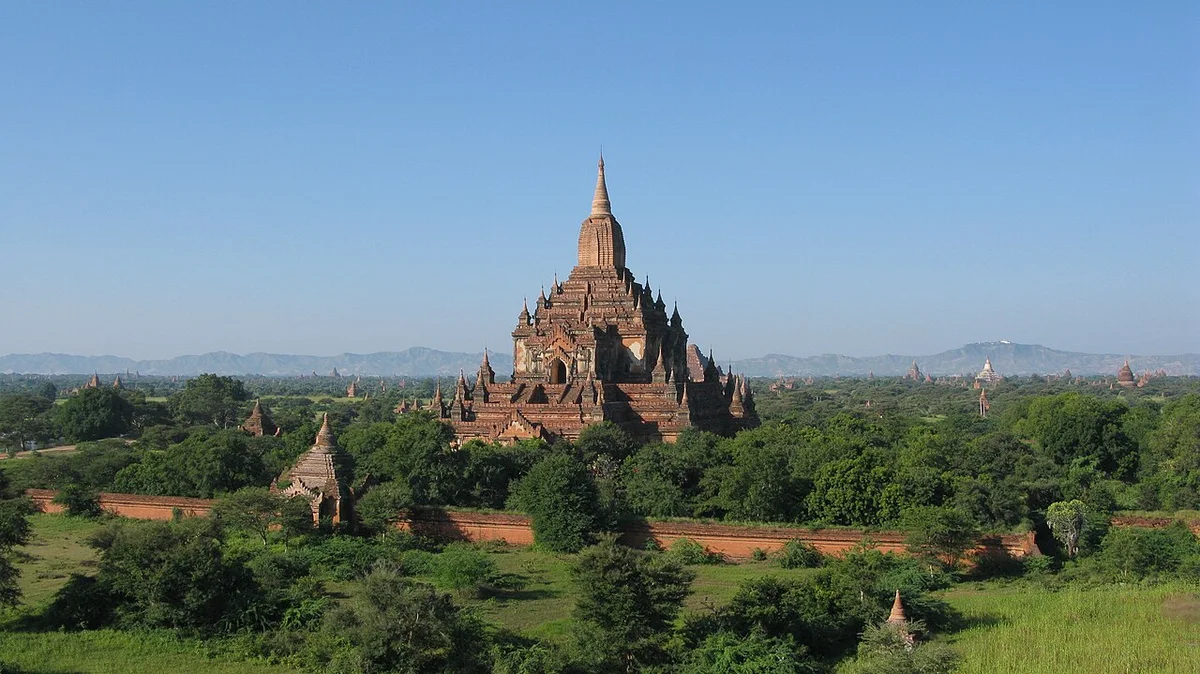
Pilgrimage and religious practice continue. The photograph shows Sulamani Temple in 2008, not the medieval city as it originally appeared. Surviving buildings include the effects of damage, repair and conservation. Bagan is one regional history within Myanmar; it does not stand for every ethnic community or replace accounts of later kingdoms and modern state formation.