1765–1868 CE · Asia · Culture
Edo Japan: prints, performers and urban publishing
Color prints connected specialist workshop labor, commercial publishing, theatre and urban fashion in Tokugawa Japan.
 Enlarge and examine the picture
The Metropolitan Museum of Art · JP2822 · Henry L. Phillips Collection, Bequest of Henry L. Phillips, 1939 · Public domain / CC0 · Resized and converted to WebP · Source and rights ↗ · Licence terms
Several hands behind one picture
Designers, block carvers, printers and publishers contributed different skills to woodblock production. Publishers could choose subjects and oversee the finished edition. Full-color printing developed in the eighteenth century, with elaborate calendars associated with wealthy Edo patrons in 1765. A print was both artwork and manufactured object, requiring coordination and a market as well as its named designer.
Shops, souvenirs and celebrity
Tokyo Metropolitan Library describes nishiki-e as information media: shops and wholesalers sold images of fashion, manners, actors and sumo wrestlers. Pictures also circulated as souvenirs of Edo. Actor portraits connected theatre performances with recognizable public personalities. Their popularity does not make them a complete social record; commercial choices affected which people and activities appeared.
An actor performing a role
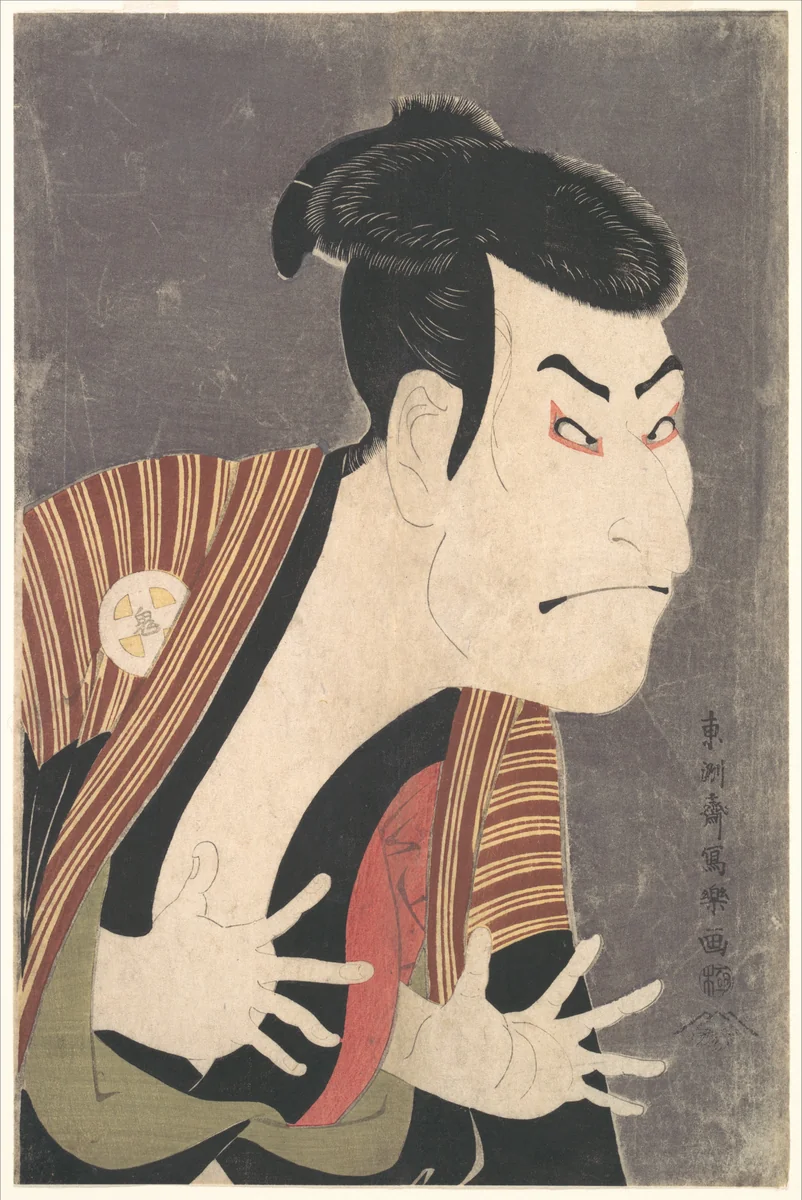
Sharaku’s 1794 portrait depicts Ōtani Oniji III as Yakko Edobei in The Colored Reins of a Loving Wife. The tense hands, hair and expression convey a threatening henchman’s theatrical character. This is a historical print of a performer in a role, not a candid image of an ordinary servant or evidence of how servants generally behaved.
Vivid pictures, selective evidence
Ukiyo-e subjects included performers, pleasure districts, famous places and landscapes. Publishers and purchasers helped shape what became a recognizable image of urban life. A print might dramatize a character, idealize fashion or make a destination desirable. Historical reading asks who made the picture, what viewers recognized and why it could sell. Vividness is valuable evidence, but not a guarantee of comprehensive representation.