1804–1838 CE · Americas · Rights
Haiti: independence, recognition and imposed debt
Haiti won independence in 1804, but recognition by other states followed a different chronology. A French royal ordinance exposes the coercive conditions attached to recognition in 1825; the story continues through renegotiation in 1838.
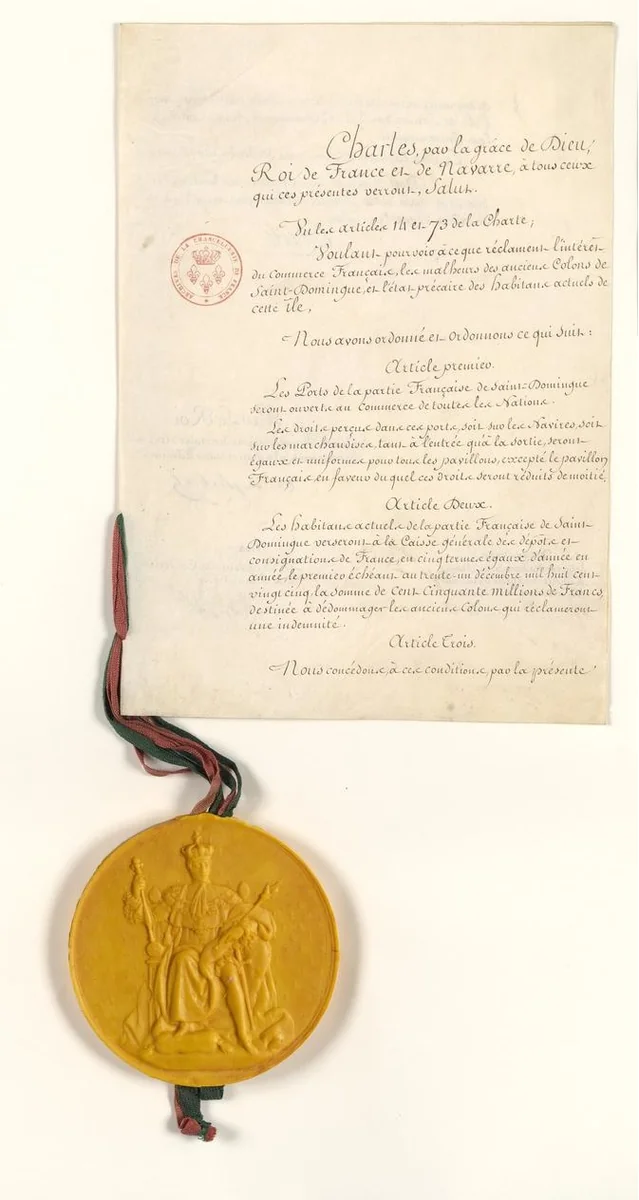 Enlarge and examine the picture
Archives nationales (France), A//1108/B, via Wikimedia Commons · CC BY 4.0 · Resized without cropping and converted to WebP · Source and rights ↗ · Licence terms
Independence and recognition were different struggles
Haiti declared independence on 1 January 1804 after a revolution that overturned slavery and French colonial rule. Its existence did not depend on another government’s approval, but recognition affected international relationships. The United States did not formally recognize Haiti until 1862, beyond this chapter’s main period. Winning independence, defending sovereignty and obtaining diplomatic recognition were related but separate processes. This account continues the revolutionary story rather than retelling the battles that produced independence.
A French ordinance is not Haiti’s declaration
The opening image shows the first page of Charles X’s ordinance of 17 April 1825, preserved by France’s Archives nationales. Its royal heading identifies the authority issuing it. It is neither Haiti’s declaration of independence nor the complete ordinance. The photograph records a surviving manuscript, not the negotiations surrounding it. French recognition must not be confused with the creation of a sovereignty Haitians had asserted twenty-one years earlier.
Recognition under naval pressure
The 1825 ordinance demanded an indemnity of 150 million francs for former colonial proprietors, payable in five annual instalments. President Jean-Pierre Boyer accepted the arrangement in July under pressure from a French naval squadron and the threat of blockade. This was an imposed condition of recognition, not simply a development loan chosen by the independent state. The indemnity clause belongs to the complete ordinance, not necessarily the first page displayed here.
Renegotiation did not erase the burden
Borrowing to meet the indemnity created another layer of debt. In 1838, France recognized Haitian independence without the earlier conditional formulation, while the indemnity was reduced to 90 million francs and rescheduled. These were diplomatic and financial changes, not a second independence. Indemnity payments and refinancing loans had different repayment dates. Combining them into a single unexplained endpoint obscures the obligations involved and the distinction between their original terms and later financing.
Whose voice survives in the record?
The manuscript records a claim of French royal authority; the United States recognition chronology records another government’s decisions. Neither supplies the everyday perspective of Haitian families, farmers or traders. Their different origins are part of the evidence, not incidental details. The distinction between a foreign administrative record and a history of Haitian society limits what these sources establish. This is a focused account of constrained recognition, not a complete portrait of independent Haiti.