1945–1949 CE · Asia · Empire
Indonesia’s independence: proclamation, revolution and sovereignty
Indonesians proclaimed independence in 1945 and fought Dutch efforts to restore colonial rule. The transfer of sovereignty in 1949 was a later milestone.
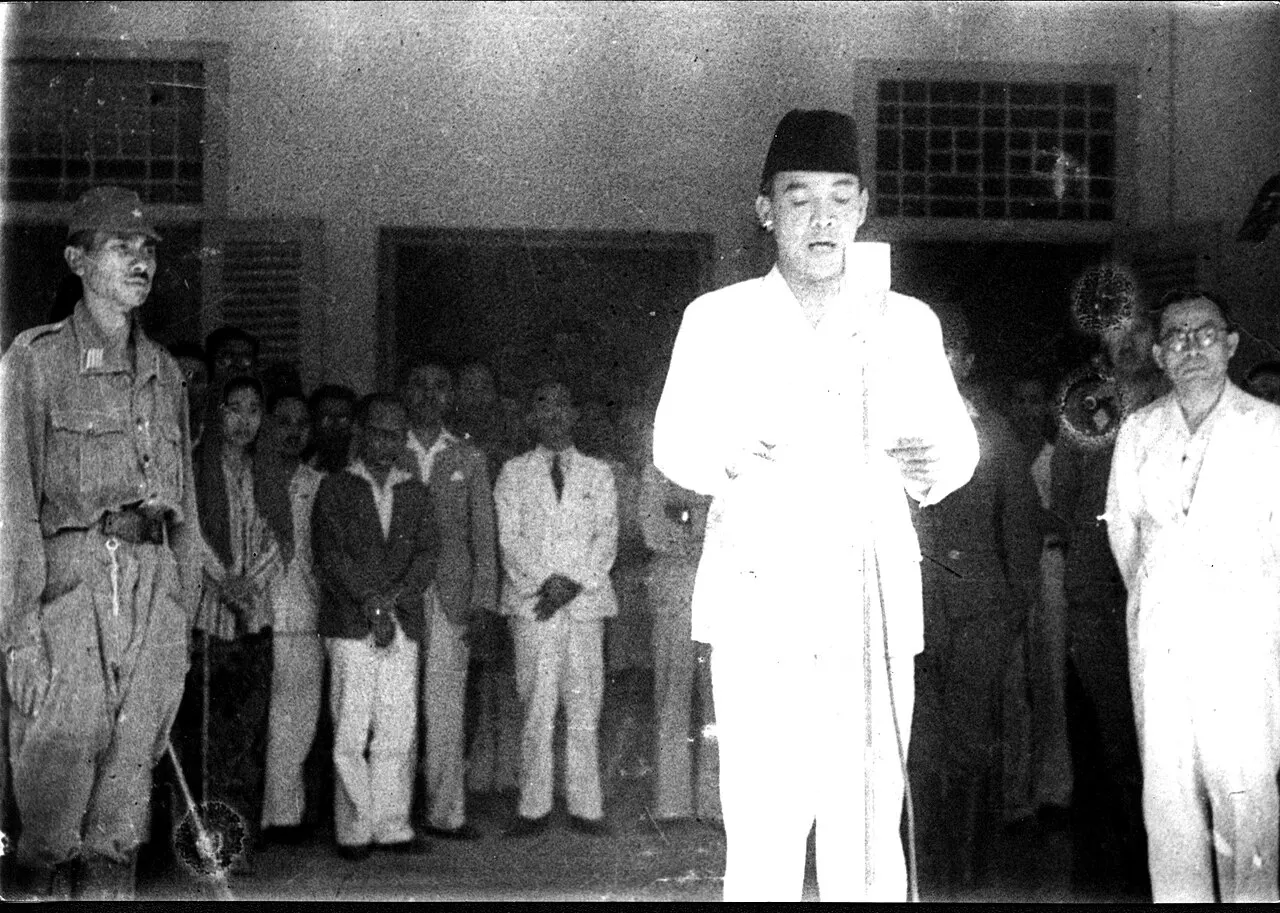 Enlarge and examine the picture
Frans Mendur / Indonesian Department of Information; National Library of Indonesia Presidential Documents collection / Wikimedia Commons · Public domain · Touched-up archive derivative converted to WebP · Source and rights ↗ · Licence terms
A proclamation creates a political claim
Sukarno proclaimed Indonesian independence on 17 August 1945. The revolution that followed concerned who would exercise authority and what an independent Indonesia would become. Dutch attempts to restore colonial power encountered armed and civilian resistance. Independence was a claim Indonesians acted on, not simply a concession later delivered by the Netherlands.
Revolution through individual lives
The Rijksmuseum’s Revolusi exhibition follows the experiences of Indonesians and other participants through photographs, documents and objects. It shows political mobilisation and violence alongside the movement of people and the work of artists. These records reveal how the conflict entered homes and streets as well as diplomatic negotiations.
Keep the two dates distinct
The Netherlands transferred sovereignty on 27 December 1949. That date should not replace 17 August 1945 in the chronology of Indonesian independence. One marks the proclamation; the other marks a negotiated transfer after years of conflict. The distinction also explains why colonial and national accounts can emphasise different milestones.