1200–1600 CE · Oceania · Culture
Nan Madol: Pohnpeian architecture and chiefly authority
Basalt walls, artificial islets and waterways at Nan Madol reveal a specifically Pohnpeian history of engineering, ceremony and political authority in Micronesia.
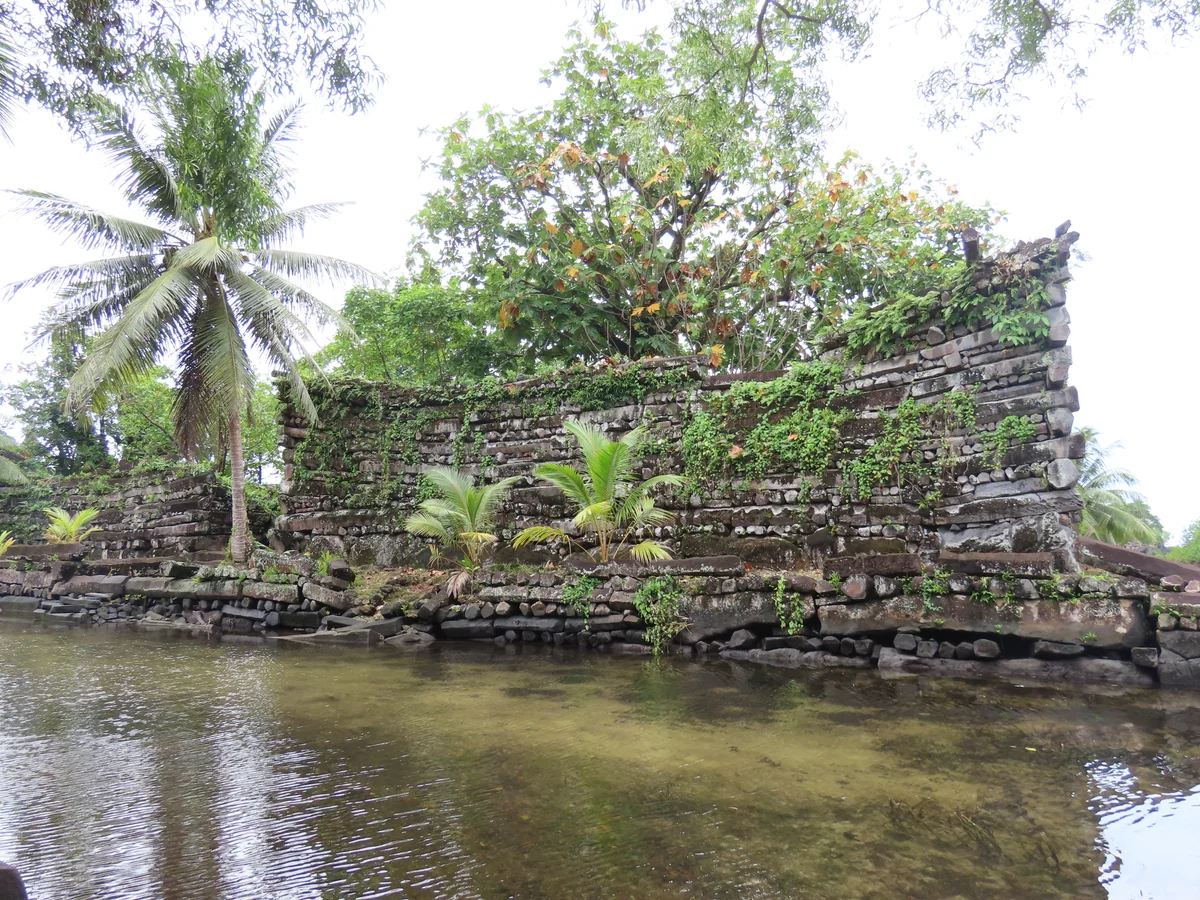 Enlarge and examine the picture
Uhooep / Wikimedia Commons · CC BY-SA 4.0 · Resized and converted to WebP; derivative under the same licence · Source and rights ↗ · Licence terms
An island society built this place
Off Pohnpei’s southeastern coast, builders used basalt and coral to create artificial islets supporting ceremonial, residential and mortuary structures. UNESCO dates the principal surviving buildings to 1200–1500 CE; the wider sequence of use extends beyond those dates. This is a history of Pohnpeian communities and labour, not evidence of a vanished outside civilisation.
Architecture expressed unequal power
Nan Madol was associated with Saudeleur rule. Its compounds, chiefly residences and ritual spaces organised social distinctions as well as physical movement. The Met describes the concentration of potential rivals at the centre as a means of political control. Large stone buildings therefore raise questions about authority, labour and obligations, not just the technical feat of moving rock.
Oral history and archaeology answer different questions
Pohnpeian traditions preserve accounts of founders, rulers and political change. Archaeological investigation studies materials, buildings and deposits. Neither should be casually substituted for the other. The Met discusses correlations between accounts of sacred eels and turtles and excavated canals and animal remains. Those comparisons provide specific evidence, rather than permission to portray every traditional narrative as an excavated event.
Living heritage, not a generic Pacific ruin
Traditional ownership and the authority of the Nahnmwarki remain central to the site’s meaning. Conservation must address damaged masonry, vegetation and waterways while respecting local custodians. The opening picture is a modern photograph. Nan Madol is not representative of all Micronesian, Polynesian or Melanesian histories; the existing voyaging and Marshall Islands studies describe different places and experiences.