300–800 CE · Asia · Trade
Sogdiana: cities, merchants and the Silk Roads
Sogdian communities helped connect Central Asia with China and the steppe. Their history includes farming, urban life, languages and artistic exchange—not only caravans crossing an empty landscape.
 Enlarge and examine the picture
The Metropolitan Museum of Art · 1998.223 · Friends of Asian Art, Purchase, Mr. and Mrs. Douglas Dillon Gift, 1998 · Public domain / CC0 · Resized to WebP · Source and rights ↗ · Licence terms
An urban culture, not a single road
Between the fourth and eighth centuries, Sogdiana supported an elaborate urban culture sustained by agriculture as well as trade. Wall paintings, textiles, sculpture and metalwork preserve evidence of feasting, music and religious practices. The phrase “Silk Roads” describes intersecting connections; it should not turn these settled communities into scenery along someone else’s journey.
Networks of people and letters
Sogdian merchants became leading long-distance traders in Central Asia between the fifth and eighth centuries. Communities abroad connected places through family, language and commercial relationships. Letters written in the Gansu corridor in the early fourth century already reveal links with Samarkand and describe disruption in China. Such documents give the routes a human scale: distance, risk and dependence on news mattered alongside valuable goods.
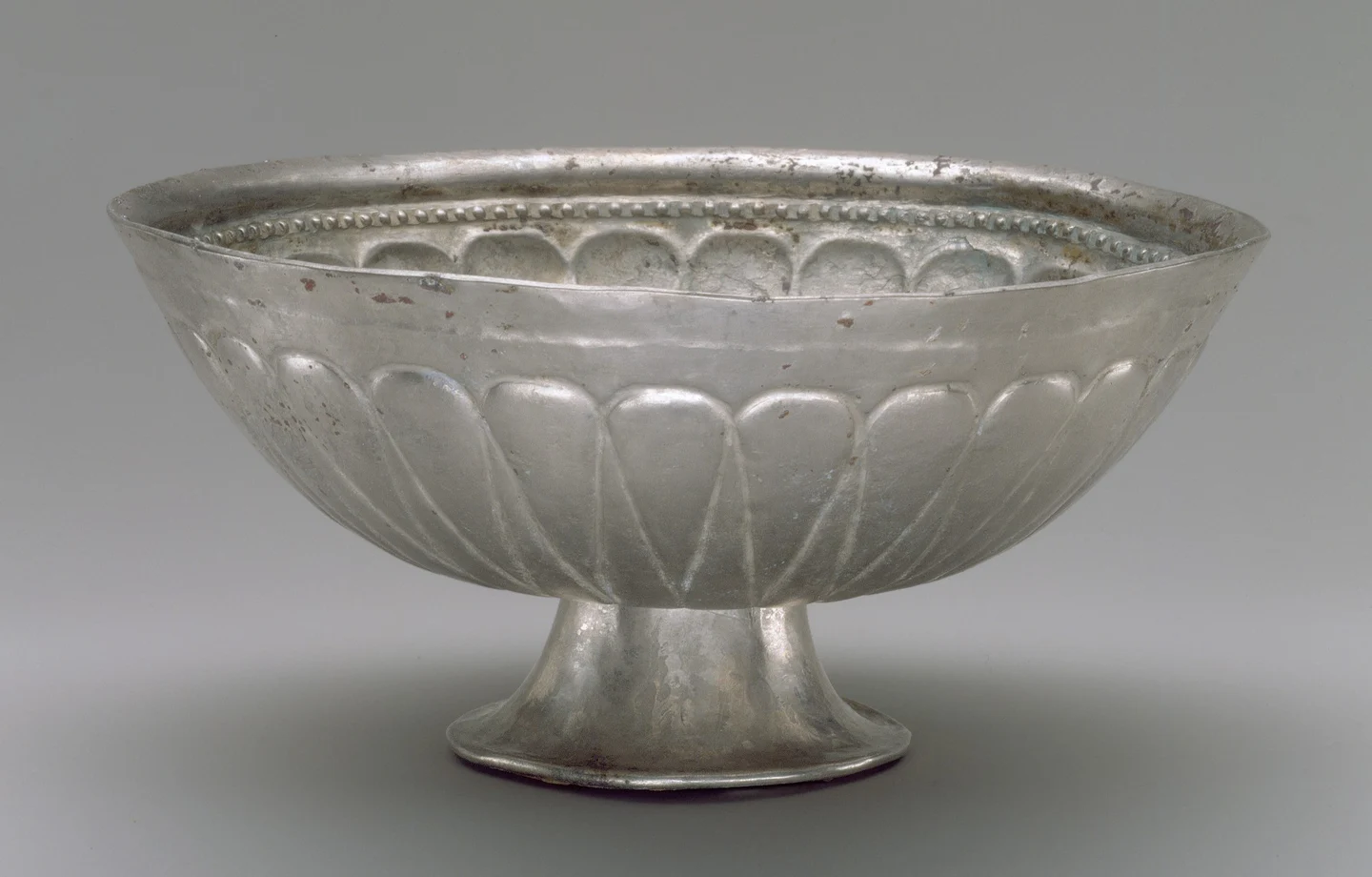
Look at the silver cup
This sixth-century silver cup has a flaring foot, raised petals and a beaded inner rim. The Met connects its form with western models, probably from the Roman Mediterranean, that reached Iran and Central Asia during the fifth century. Similar luxury tableware appears in Sogdian murals. The surviving cup is evidence of taste and craft; it does not identify a particular merchant or journey.
Exchange without an eternal golden age
Sogdian emigrants lived across China and beyond, carrying cultural practices as well as merchandise. Their networks changed under conquest and shifting political conditions. This focused study does not stand in for the later histories of Turkic states, the Timurids, Central Asian khanates or the modern republics; those require their own chronologies and local perspectives.