224–651 CE · Middle East · Empire
Sasanian Iran: kingship, craft and exchange
Between the Parthian and early Islamic periods, Sasanian rulers built a major Iranian empire. Silverwork, court imagery and exchanges with neighbouring societies reveal more than its wars with Rome.
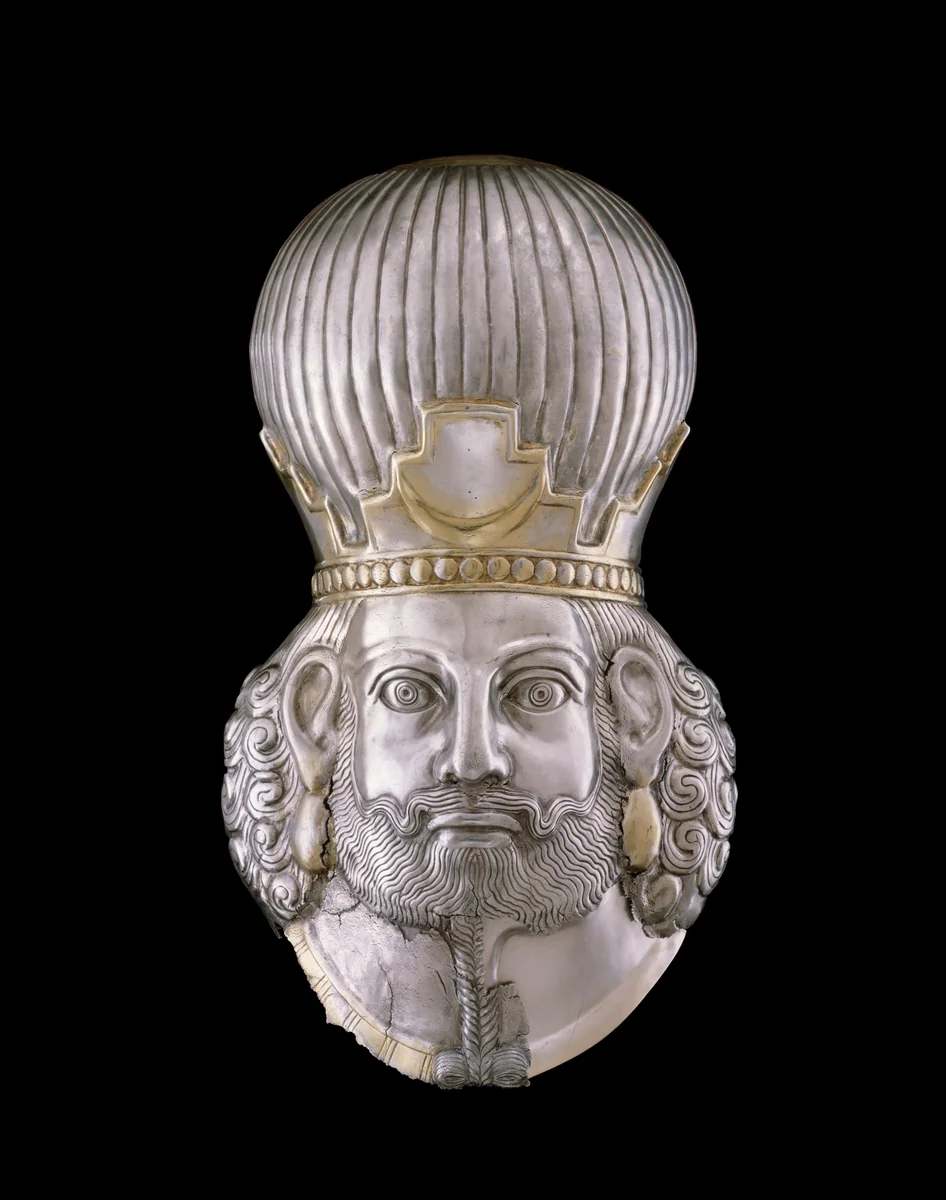 Enlarge and examine the picture
The Metropolitan Museum of Art · Fletcher Fund, 1965 · 65.126 · Public domain / CC0 · Resized and converted to WebP · Source and rights ↗ · Licence terms
Iran did not disappear after Alexander
Achaemenid, Parthian and Sasanian are names of different dynasties, not interchangeable labels for one unchanged state. After the conquests of Alexander and the successor kingdoms, Parthian rulers recovered extensive territories. Ardashir I overthrew the Parthian dynasty around 224 CE, establishing Sasanian power. This study follows that later empire rather than repeating the existing Cyrus dossier.
A royal image whose identity remains uncertain
The silver head pictured here dates to approximately the fourth century. Its crown, jewellery and strongly modelled face convey royal authority. The Met suggests a possible association with the reign of Shapur II, but does not securely identify the individual. Because the lower portion was cut away, it is also uncertain whether the head belonged to a larger sculpture. The caption preserves those limits.
Power travelled through objects as well as armies
Sasanian silver vessels, textiles and monumental reliefs circulated images of kingship. Craftspeople adapted traditions shared with western Asia and the Greco-Roman world. Trade, diplomacy and conquest carried these forms beyond the empire; objects illuminate cultural exchange without proving that every place receiving them was politically controlled by Iran.
The end of a dynasty was not the end of a culture
Conflict with Rome and Byzantium was one part of this history; eastern rivals and internal struggles mattered too. Arab Muslim conquests dismantled Sasanian rule in the seventh century, and the last ruler, Yazdgard III, died in 651. Iranian artistic traditions continued to influence later societies. The separate Safavid study begins many centuries afterward, not immediately after the Sasanians.