ATLAS / ANCIENT—PRESENT
All historyHow Atlas is sourced← Back to Atlas
Back to Atlas timeline
Arab uprisings — original Atlas editorial reconstruction

17 December 2010–2012 CE · selected opening phase of diverse uprisings · Middle East · Rights

Arab uprisings

After Mohamed Bouazizi's self-immolation in Tunisia on 17 December 2010, mass protests challenged authoritarian governments across North Africa and the Middle East. Grievances, coalitions, state responses and outcomes differed sharply by country.

Atlas dossier · Digital & Global Age

Free device narration · synchronized English captions · transcript available

Why it matters

Tunisia's transition, Egyptian upheaval, Gulf repression and wars in Libya, Syria and Yemen cannot be one revolution or social-media story. Labour, prices, corruption, dignity, gender, policing, armies, foreign intervention and digital communication interacted without a common endpoint in 2012.

Date
17 December 2010–2012 CE · selected opening phase of diverse uprisings
Historical setting
Digital & Global Age · Middle East
People & communities
Mohamed Bouazizi · protesters and bereaved families · trade unions · women and youth organisers · journalists · soldiers · governments · displaced communities

A regional label contains national histories

Bouazizi's self-immolation on 17 December 2010 preceded Tunisia's mass uprising, but protests elsewhere arose from local histories of authoritarianism, corruption, policing, unemployment and food prices. Tunisia, Egypt, Bahrain, Libya, Syria, Yemen and other states did not share one coalition, timetable or outcome.

United Nations Digital Library: Arab uprisings

Digital media enabled and exposed; it did not cause alone

Social platforms helped circulate evidence, coordinate some actions and reach international audiences. Labour networks, mosques, neighbourhoods, satellite television and face-to-face organising were also crucial, while governments used networks for surveillance and propaganda. ‘Facebook revolution’ is therefore an inadequate causal claim.

Library of Congress: Arab uprisings research collection

2012 does not close the uprisings

Transitions, counterrevolution, repression and war continued after the selected opening phase. Military institutions, monarchies, foreign intervention, sectarian politics and armed groups shaped diverging paths. The dossier retains protest agency without implying that mobilisation guaranteed democracy or that later violence erased original demands.

Academic research on the Arab uprisings

Illustrated sequence

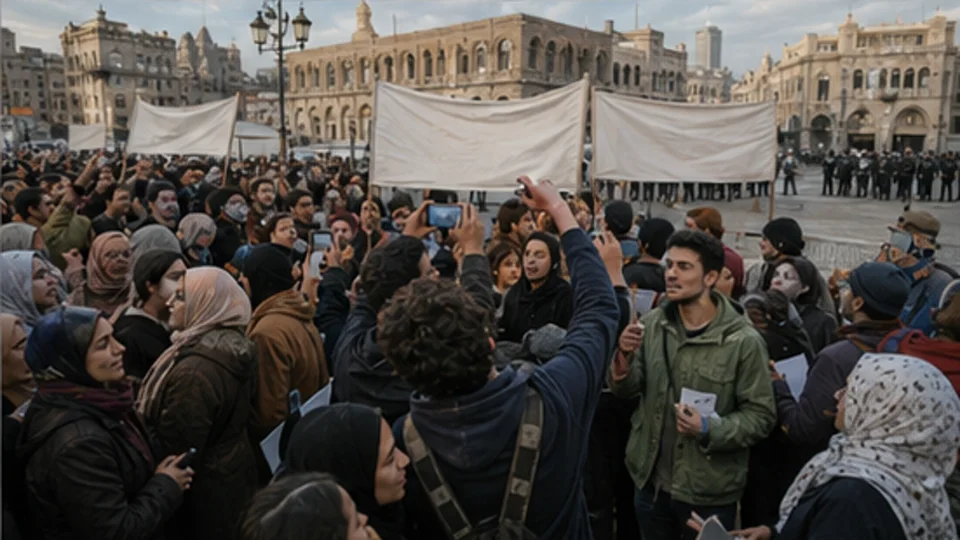
Silent pan-and-zoom motion derivative of the Arab uprisings reconstruction; not archival footage.

Arab uprisings — original Atlas editorial reconstruction
IMAGE 1

Original Atlas reconstruction

Primary Atlas editorial reconstruction for Arab uprisings.

World History in Pictures · Public site artwork. This record does not grant third-party republication rights.

How Atlas classifies this artwork →
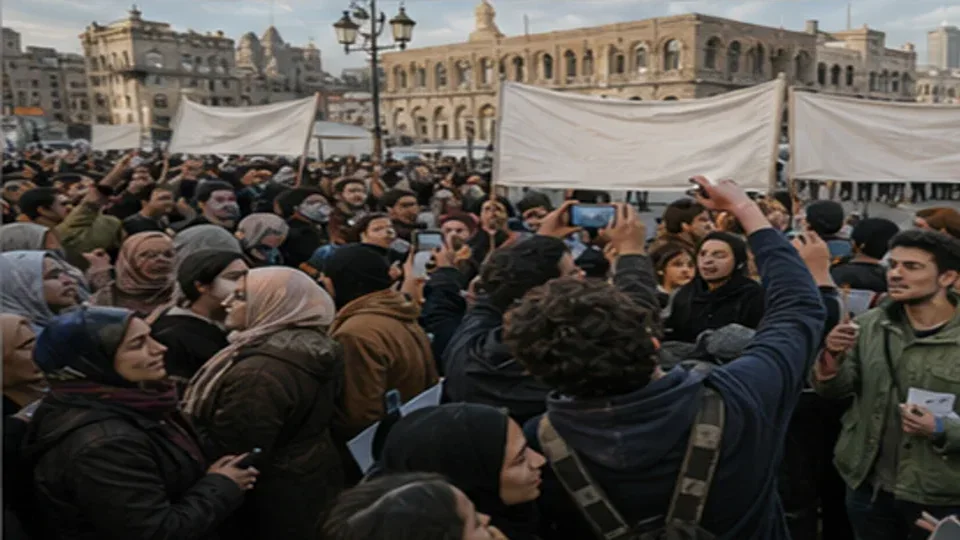
Arab uprisings: people and action
IMAGE 2

Detail crop — same artwork

Detail crop from the same Arab uprisings reconstruction; not an independent historical record.

World History in Pictures · Same editorial artwork package

How Atlas classifies this artwork →
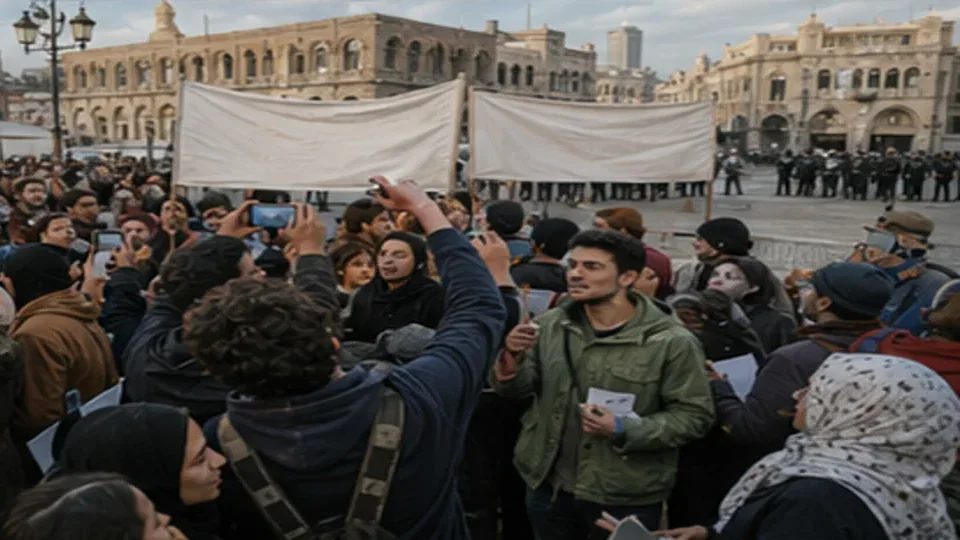
Arab uprisings: setting and consequences
IMAGE 3

Context crop — same artwork

Context crop from the same Arab uprisings reconstruction; not an independent historical record.

World History in Pictures · Same editorial artwork package

How Atlas classifies this artwork →

Interpretation note

Evidence, memory and historical debate

This dossier distinguishes the event’s basic chronology from later arguments about meaning, responsibility and legacy. When comparing religious, national, Indigenous or scholarly interpretations, consult the primary and institutional sources above alongside peer-reviewed historical work.

Elsewhere in the world

Parallel histories near this moment

2012–2018 CE · programmable Cas9 and a germline-ethics rupture · AmericasCRISPR gene editing

Research on repeated microbial DNA and bacterial adaptive immunity preceded the 2012 demonstration that CRISPR-Cas9 could be programmed to cut selected DNA. Many laboratories then adapted CRISPR systems for cells, organisms, diagnostics and treatment research.

2012–2023 CE · selected deep-learning adoption, not the origin of artificial intelligence · GlobalMachine learning, deep learning and AI systems

A 2012 image-recognition result became a visible threshold in a much longer history of statistics, neural networks, backpropagation, specialised processors, benchmark datasets and networked computing. Later transformer and foundation-model systems extended machine learning into language and other media.

2007–2012 CE · housing and credit crisis through uneven aftermath · GlobalGlobal financial crisis and its aftermath

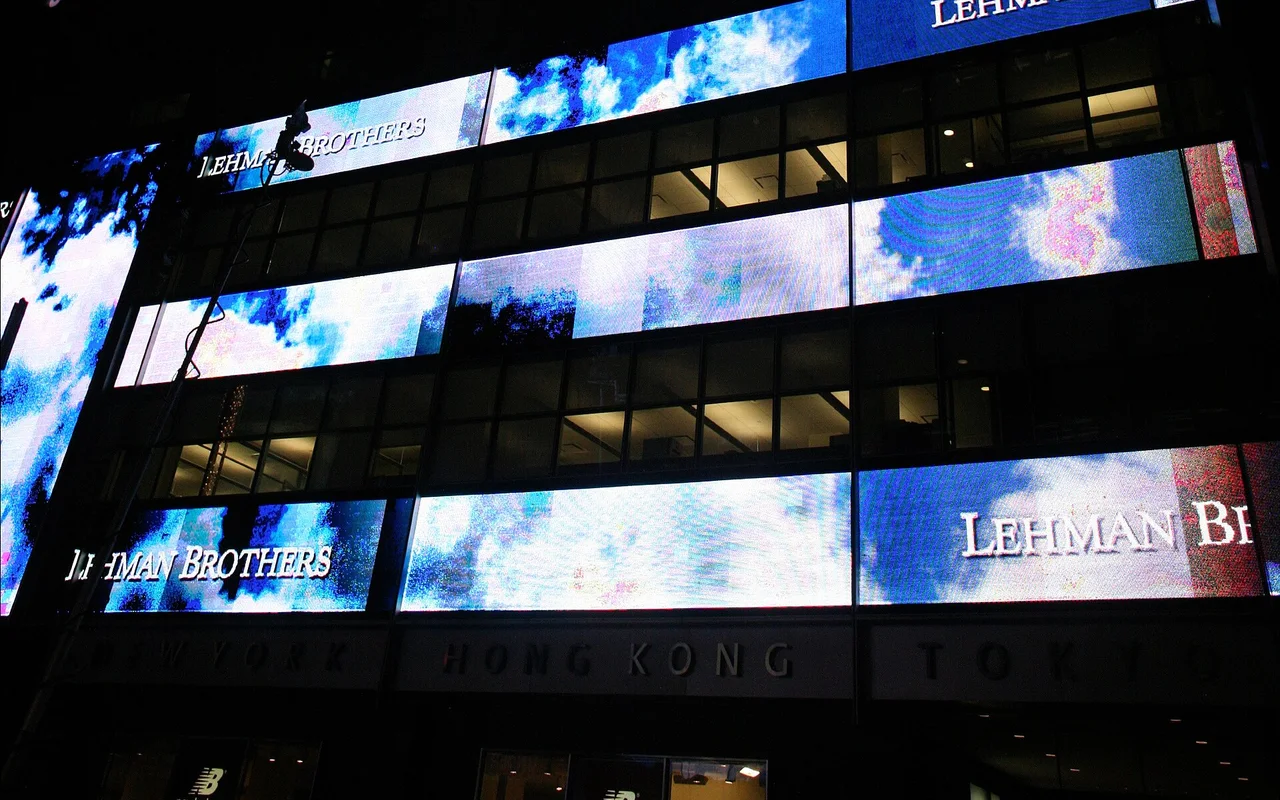
Falling U.S. house prices exposed risky mortgages, securitisation, leverage and fragile short-term funding. Losses spread through interconnected banks and markets; the September 2008 failure of Lehman Brothers marked an acute phase, not the beginning or whole cause of the crisis.