ATLAS / ANCIENT—PRESENT
All historyHow Atlas is sourced← Back to Atlas
Back to Atlas timeline
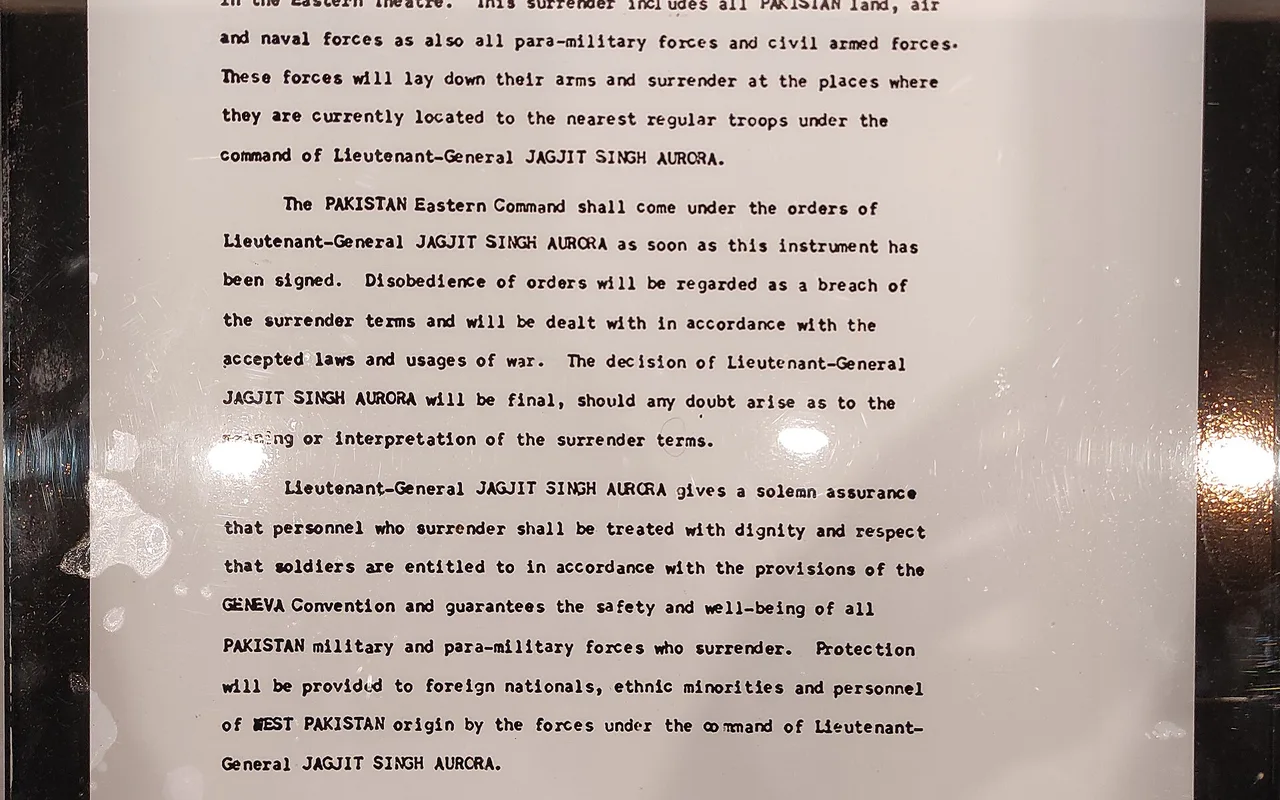
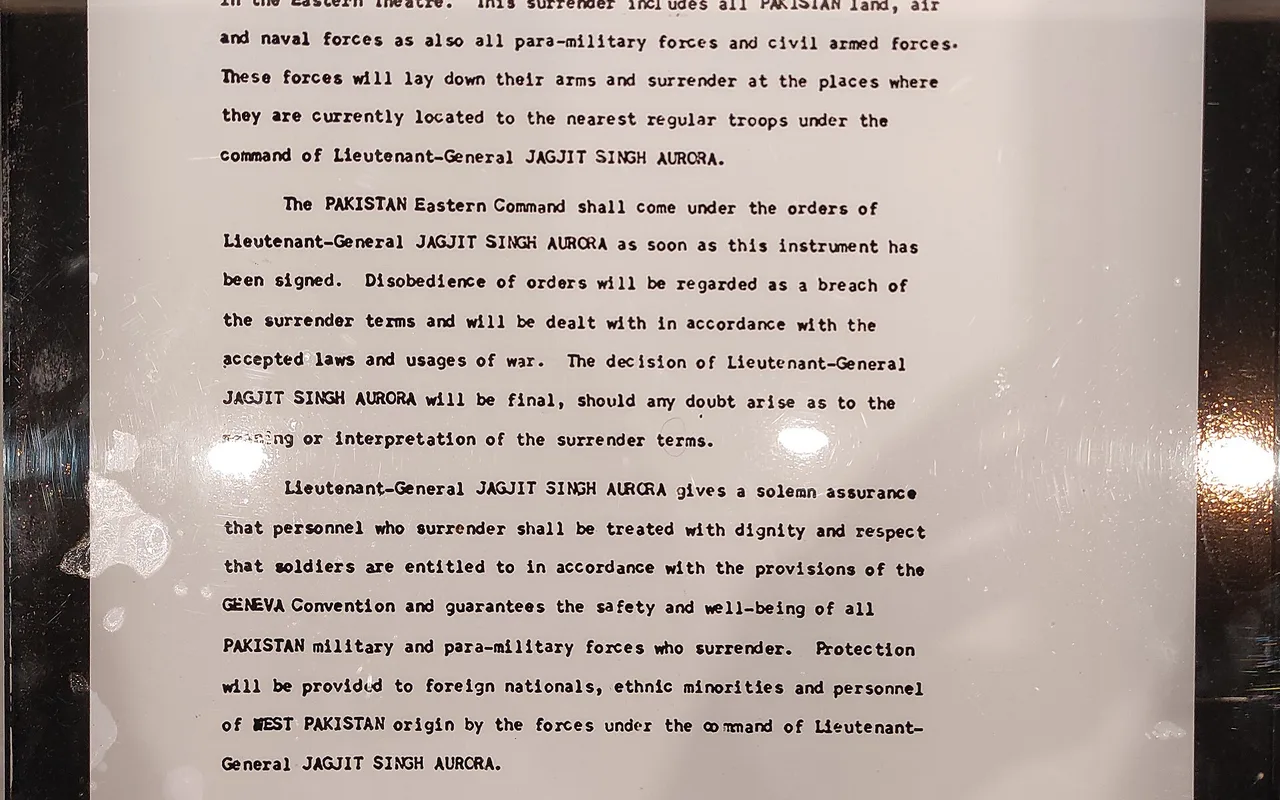
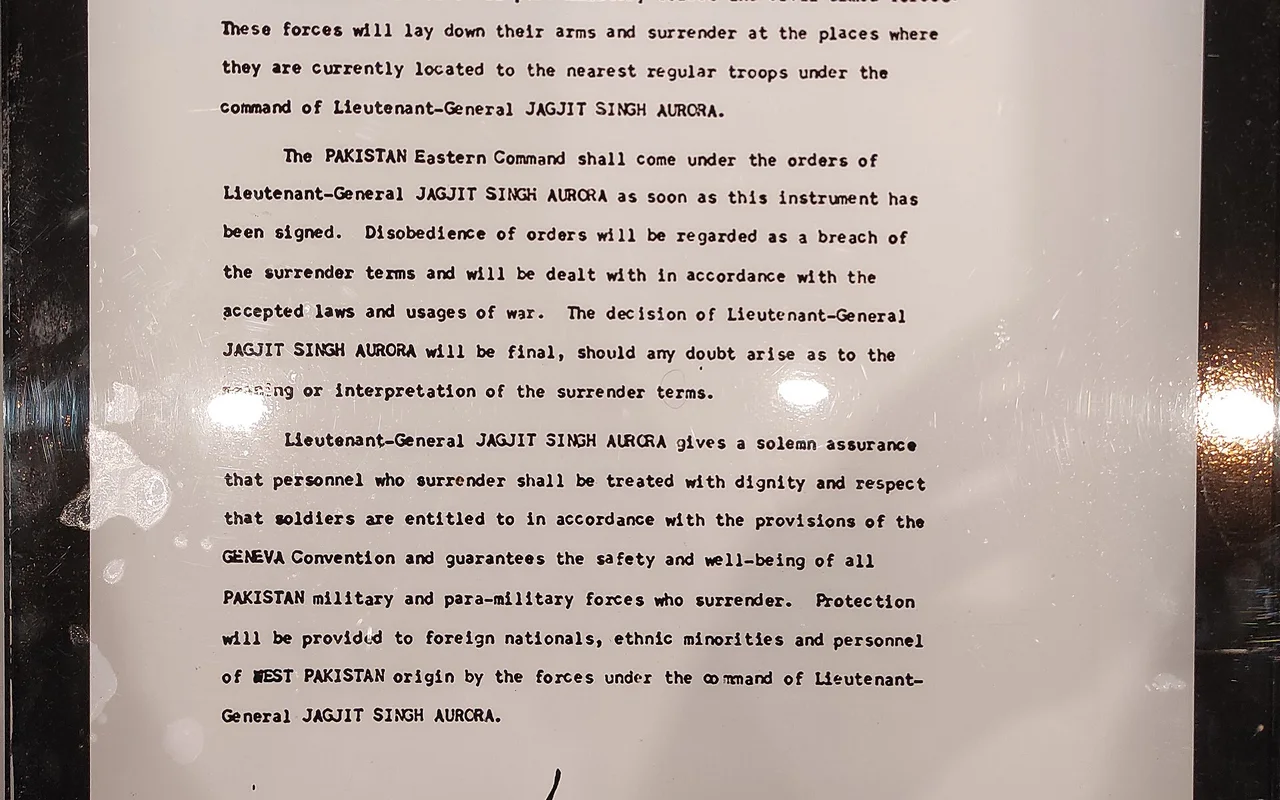
Pakistani Instrument of Surrender (16 December 1971), Copy of Document in the Bangladesh Military Museum, Dhaka.jpg

March–December 1971 CE · repression, liberation war and regional intervention · Asia · War

Bangladesh Liberation War

After the Awami League won Pakistan’s 1970 election, the refusal to transfer power and the Pakistani army’s March 1971 crackdown precipitated war, mass atrocities and flight. Bengali forces fought for independence; Indian intervention in December accelerated Pakistan’s surrender and Bangladesh’s creation.

Atlas dossier · Cold War & Decolonization

Free device narration · synchronized English captions · transcript available

Why it matters

The war reshaped South Asia and remains central to democracy, language, genocide claims, sexual violence, refugee memory and regional security; casualty totals are contested and should not be presented with false precision.

Date
March–December 1971 CE · repression, liberation war and regional intervention
Historical setting
Cold War & Decolonization · Asia
People & communities
Bangladeshi civilians · women survivors · Mukti Bahini fighters · Pakistani and Indian forces · refugees · aid workers
The 1970 election preceded the war

The Awami League won a majority in Pakistan’s National Assembly, but power was not transferred. The army’s Operation Searchlight crackdown began on 25 March 1971; independence was declared in that crisis. Starting with constitutional breakdown clarifies why the war cannot be reduced to India and Pakistan fighting in December.

U.S. Department of State: Bangladesh

Mass violence and displacement require careful evidence

Pakistani forces and allied militias committed mass killing and sexual violence; millions fled to India and many more were displaced internally. Precise death totals remain contested. The dossier names documented forms of violence and survivor experience without using a single disputed number as a substitute for evidence.

Library of Congress research shelf: Bangladesh Liberation War

December intervention accelerated an existing liberation war

The Mukti Bahini had fought for months before open India–Pakistan war began in December. Indian military intervention contributed decisively to Pakistan’s surrender in Dhaka on 16 December. Bangladesh’s independence joined a Bengali liberation struggle to a regional interstate war rather than belonging exclusively to either frame.

Academic research on Bangladesh’s 1971 war

Illustrated sequence

A visual presentation accompanying this entry. Read each image’s attribution to distinguish archival records, later depictions and reconstructions.

Pakistani Instrument of Surrender (16 December 1971), Copy of Document in the Bangladesh Military Museum, Dhaka.jpg
IMAGE 1

Visual record

A museum copy of the 1971 instrument of surrender, photographed in 2022. The document’s public-domain status is separate from the photograph’s CC BY-SA 4.0 licence.

Pakistani Instrument of Surrender (16 December 1971), Copy of Document in the Bangladesh Military Museum, Dhaka.jpg — Niasoh; CC BY-SA 4.0; via Bangladesh Military Museum, Dhaka. Resized, cropped and converted to WebP for Atlas display.

Source and reuse terms ↗ · Read the licence ↗

Interpretation note

Evidence, memory and historical debate

This dossier distinguishes the event’s basic chronology from later arguments about meaning, responsibility and legacy. When comparing religious, national, Indigenous or scholarly interpretations, consult the primary and institutional sources above alongside peer-reviewed historical work.

Elsewhere in the world

Parallel histories near this moment

1971–1977 CE · first clinical CT and foundational MRI milestones · EuropeCT, MRI and non-invasive medical imaging

Computed tomography reconstructed cross-sectional images from many X-ray measurements, while magnetic-resonance imaging used magnetic fields, radio-frequency signals and spatial encoding. Their first clinical and foundational milestones unfolded through different teams during the 1970s.

1971–2009 CE · selected market, payment and digital-money milestones · GlobalElectronic markets, digital money and fintech

NASDAQ’s 1971 quotation system anchors a selected history of electronic markets; card and automated-clearing networks, online banking, Kenya’s 2007 M-Pesa service and the 2009 Bitcoin network followed different institutional and technical paths.

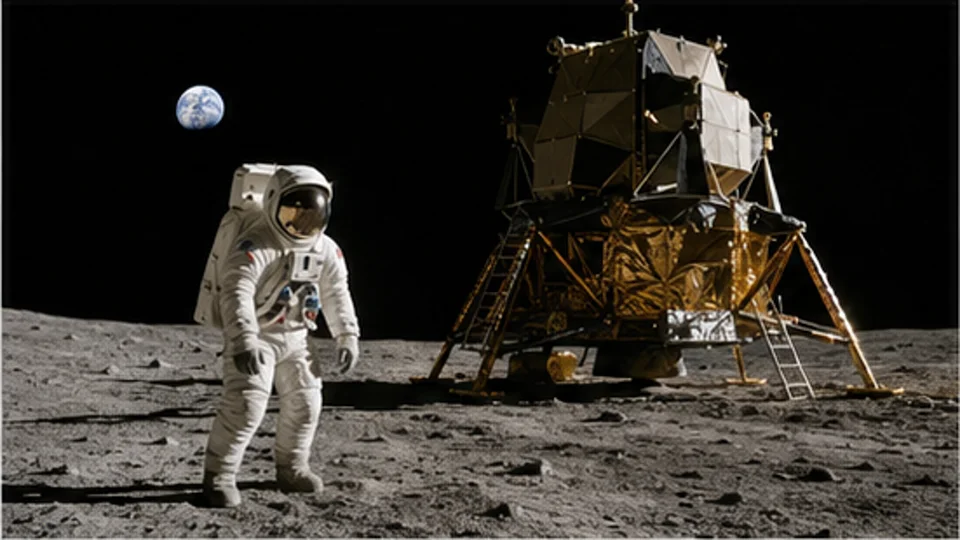
16–24 July 1969 CE · Apollo 11 mission · GlobalHumans land on the Moon

Apollo 11 carried Neil Armstrong and Buzz Aldrin to the first crewed landing on the Moon while Michael Collins remained in lunar orbit, after an immense mobilization of science, engineering, tracking networks, industry and public funds.