ATLAS / ANCIENT—PRESENT
All historyHow Atlas is sourced← Back to Atlas
Back to Atlas timeline
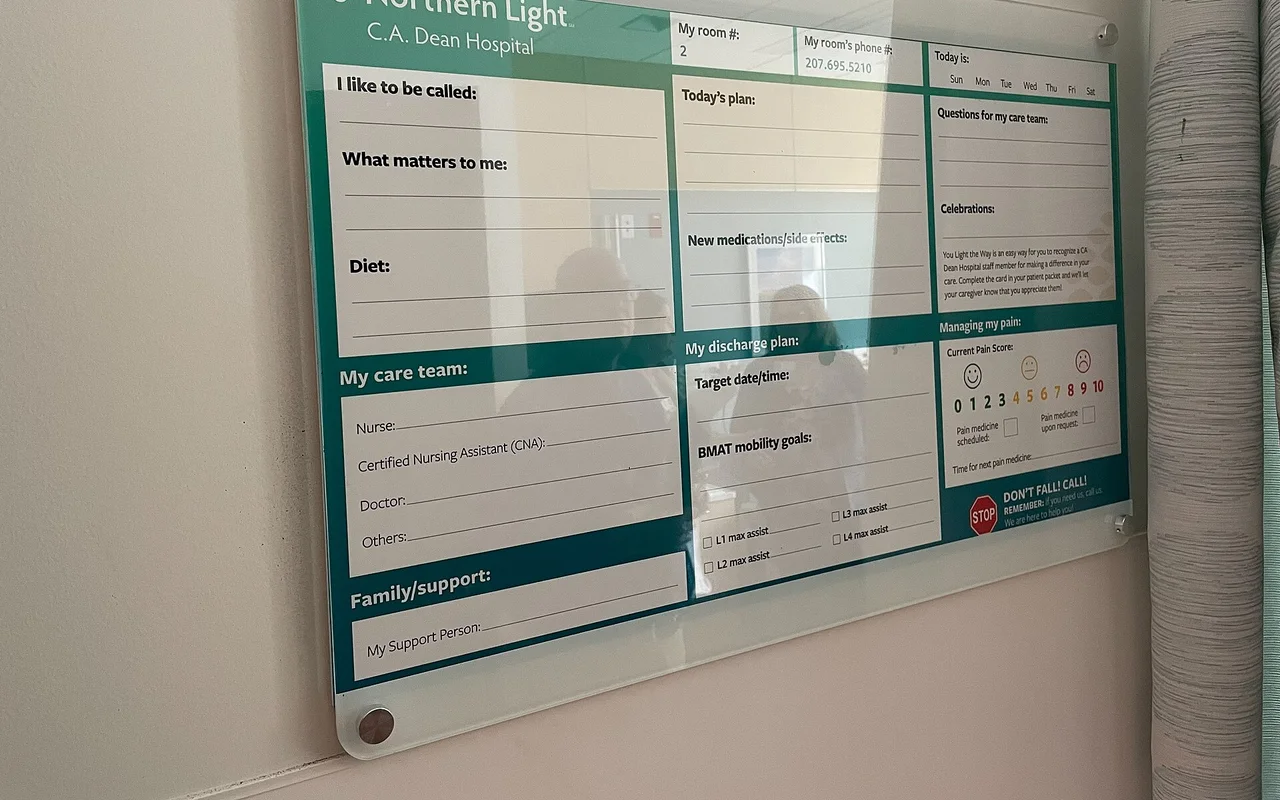
CA Dean Hospital CT Scanner, X-Ray, and Snowplow with USDA Help (20240912-USDA-RD-ME-SDS-CADeanHospital-0015).jpg

1971–1977 CE · first clinical CT and foundational MRI milestones · Europe · Medicine

CT, MRI and non-invasive medical imaging

Computed tomography reconstructed cross-sectional images from many X-ray measurements, while magnetic-resonance imaging used magnetic fields, radio-frequency signals and spatial encoding. Their first clinical and foundational milestones unfolded through different teams during the 1970s.

Atlas dossier · Cold War & Decolonization

Free device narration · synchronized English captions · transcript available

Why it matters

CT and MRI transformed diagnosis, cancer care, neurology and surgery without making every scan harmless or universally accessible: CT uses ionizing radiation, MRI has distinct magnetic-field safety limits, and both require equipment, expertise and interpretation.

Date
1971–1977 CE · first clinical CT and foundational MRI milestones
Historical setting
Cold War & Decolonization · Europe
People & communities
Allan Cormack · Godfrey Hounsfield · Paul Lauterbur · Peter Mansfield · patients · radiographers · radiologists · engineers

Two imaging technologies, not one invention

CT reconstructs cross-sections from X-ray measurements taken around the body; MRI spatially encodes nuclear-magnetic-resonance signals using magnetic-field gradients and radio-frequency pulses. Cormack and Hounsfield’s CT work and Lauterbur and Mansfield’s MRI work belong to connected but different histories.

Nobel Prize: CT and MRI ↗

The dates mark first clinical and foundational steps

The first patient CT scan in 1971, Lauterbur’s 1973 image-formation work and the human and whole-body MRI milestones of the later 1970s did not instantly create today’s scanners. Detectors, magnets, coils, software, radiographers, radiologists and participating patients turned experimental methods into clinical systems.

Nobel Prize: magnetic resonance imaging ↗

Non-invasive does not mean risk-free or universally available

CT can prevent exploratory surgery but uses ionizing radiation. MRI avoids ionizing X-rays yet brings magnetic-field, implant, noise, contrast-agent and access considerations. Every image is also an interpretation produced through protocols and expertise, not a transparent view of the body.

Academic research on CT and MRI ↗

Illustrated sequence

A visual presentation accompanying this entry. Read each image’s attribution to distinguish archival records, later depictions and reconstructions.

CA Dean Hospital CT Scanner, X-Ray, and Snowplow with USDA Help (20240912-USDA-RD-ME-SDS-CADeanHospital-0015).jpgEnlarge and examine the picture

Examine the picture

IMAGE 1

Visual record

Rights-cleared archival or official image · Public domain

CA Dean Hospital CT Scanner, X-Ray, and Snowplow with USDA Help (20240912-USDA-RD-ME-SDS-CADeanHospital-0015).jpg — USDAgov; Public domain; via Wikimedia Commons

Source and reuse terms ↗
CA Dean Hospital CT Scanner, X-Ray, and Snowplow with USDA Help (20240912-USDA-RD-ME-SDS-CADeanHospital-0014).jpgEnlarge and examine the picture

Examine the picture

IMAGE 2

Another perspective

Rights-cleared archival or official image · Public domain

CA Dean Hospital CT Scanner, X-Ray, and Snowplow with USDA Help (20240912-USDA-RD-ME-SDS-CADeanHospital-0014).jpg — USDAgov; Public domain; via Wikimedia Commons

Source and reuse terms ↗
CA Dean Hospital CT Scanner, X-Ray, and Snowplow with USDA Help (20240912-USDA-RD-ME-SDS-CADeanHospital-0017).jpgEnlarge and examine the picture

Examine the picture

IMAGE 3

Another perspective

Rights-cleared archival or official image · Public domain

CA Dean Hospital CT Scanner, X-Ray, and Snowplow with USDA Help (20240912-USDA-RD-ME-SDS-CADeanHospital-0017).jpg — USDAgov; Public domain; via Wikimedia Commons

Source and reuse terms ↗

Supplemental archival visual

The preserved machine makes MRI visible

The preserved Mark One MRI scanner photographed on display at Aberdeen Royal Infirmary in 2016. This later object record represents the MRI half of the dossier; it is not a photograph of Paul Lauterbur's or Peter Mansfield's foundational 1970s experiments.

Open the item page and rights record ↗MRI Scanner Mark One — Andy Gaskell, 19 December 2016; CC BY-SA 4.0. Resized, placed on a neutral background and converted to WebP for Atlas display.
Preserved Mark One MRI scanner — 2016 documentary photographEnlarge and examine the picture

Examine the picture

Preserved Mark One MRI scanner — 2016 documentary photograph · CC BY-SA 4.0

Interpretation note

Evidence, memory and historical debate

This dossier distinguishes the event’s basic chronology from later arguments about meaning, responsibility and legacy. When comparing religious, national, Indigenous or scholarly interpretations, consult the primary and institutional sources above alongside peer-reviewed historical work.

Elsewhere in the world

Parallel histories near this moment

March–December 1971 CE · repression, liberation war and regional intervention · AsiaBangladesh Liberation War

After the Awami League won Pakistan’s 1970 election, the refusal to transfer power and the Pakistani army’s March 1971 crackdown precipitated war, mass atrocities and flight. Bengali forces fought for independence; Indian intervention in December accelerated Pakistan’s surrender and Bangladesh’s creation.

1971–2009 CE · selected market, payment and digital-money milestones · GlobalElectronic markets, digital money and fintech

NASDAQ’s 1971 quotation system anchors a selected history of electronic markets; card and automated-clearing networks, online banking, Kenya’s 2007 M-Pesa service and the 2009 Bitcoin network followed different institutional and technical paths.

16–24 July 1969 CE · Apollo 11 mission · GlobalHumans land on the Moon

Apollo 11 carried Neil Armstrong and Buzz Aldrin to the first crewed landing on the Moon while Michael Collins remained in lunar orbit, after an immense mobilization of science, engineering, tracking networks, industry and public funds.