ATLAS / ANCIENT—PRESENT
All historyHow Atlas is sourced← Back to Atlas
Back to Atlas timeline
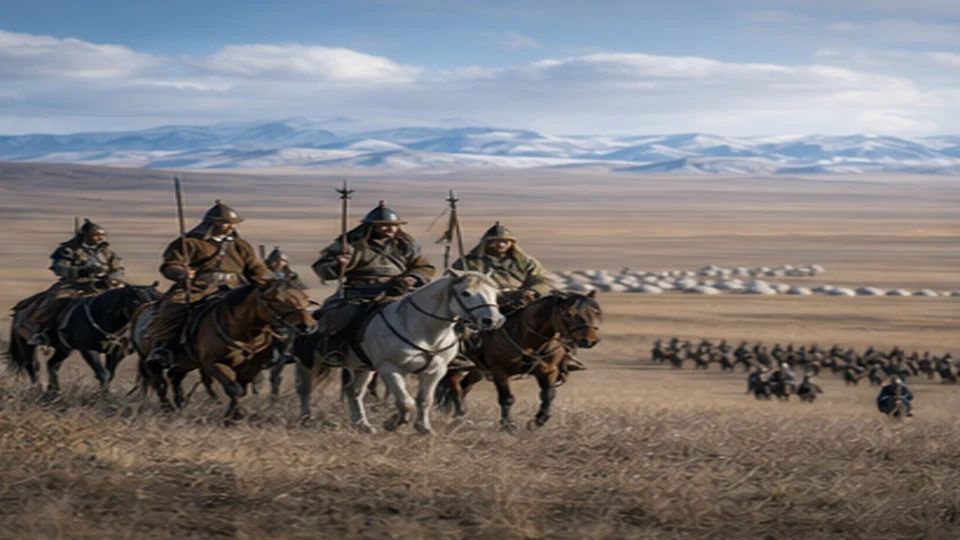
Mongol expansions — original Atlas editorial reconstruction

1206–1368 CE · expansion through Yuan rule in China · Asia · Empire

Mongol expansions

Mongol armies created the largest contiguous land empire, devastating many societies while intensifying Eurasian exchange.

Atlas dossier · Medieval World

Free device narration · synchronized English captions · transcript available

Why it matters
Conquest remade states and trade networks, combining destruction and forced displacement with intensified cultural exchange.

Date
1206–1368 CE · expansion through Yuan rule in China
Historical setting
Medieval World · Asia
People & communities
Chinggis Khan · Ögedei · Kublai Khan

An empire that became several states

Chinggis Khan’s elevation in 1206 anchors this survey. Expansion produced the largest contiguous land empire, but succession struggles divided authority among several ruling houses. The fall of Yuan rule in China in 1368 closes this entry’s central narrative; it did not end every Mongol successor state.

The Met: The Legacy of Genghis Khan

Authority carried in the hand

The surviving paiza shown below is a late-thirteenth-century safe-conduct pass from Yuan China. Its inscription and portable form connect imperial authority with travel. Such objects help explain the administration behind long-distance movement, alongside the violence and forced displacement of conquest.

The Met: Safe Conduct Pass, object 1993.256

Illustrated sequence

Silent pan-and-zoom motion derivative of the Mongol expansions reconstruction; not archival footage.

Mongol expansions — original Atlas editorial reconstruction
IMAGE 1

Original Atlas reconstruction

Primary Atlas editorial reconstruction for Mongol expansions.

World History in Pictures · Public site artwork. This record does not grant third-party republication rights.

How Atlas classifies this artwork →
Mongol expansions: people and action
IMAGE 2

Supporting Atlas reconstruction

Supporting Atlas reconstruction within the same Mongol expansions editorial package; not an independent archival record.

World History in Pictures · Same editorial artwork package

How Atlas classifies this artwork →
Mongol expansions: setting and consequences
IMAGE 3

Context crop — same artwork

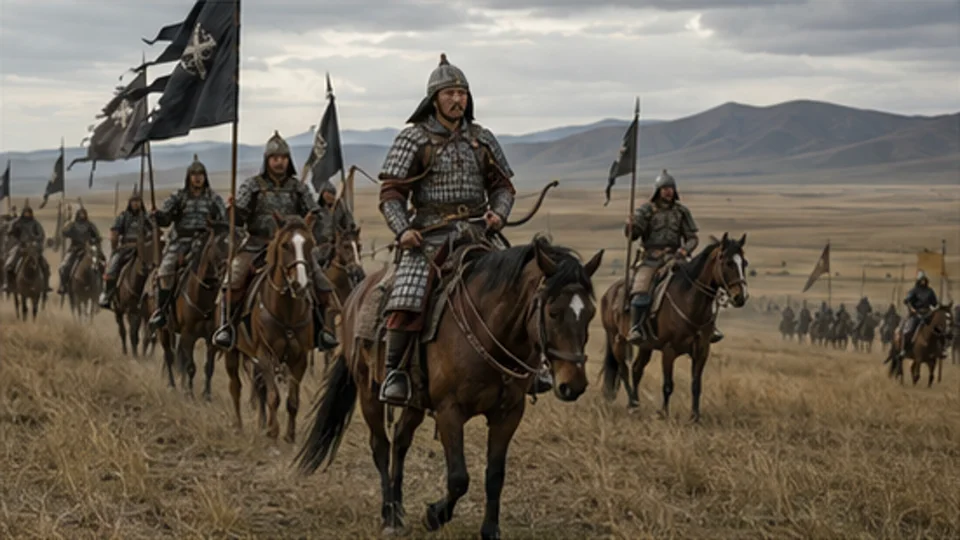
Context crop from the same Mongol expansions reconstruction; not an independent historical record.

World History in Pictures · Same editorial artwork package

How Atlas classifies this artwork →

Supplemental archival visual

A pass through the empire

A modern museum photograph of a surviving late-thirteenth-century iron pass with silver inlay and a Phakpa-script inscription. The object is 18.1 cm high. Its maker is unidentified; the museum does not supply a photographic capture date.

Open the item page and rights record ↗The Metropolitan Museum of Art, 1993.256. Purchase, Bequest of Dorothy Graham Bennett, 1993. Public Domain.
Archival visual record: Mongol safe-conduct pass (paiza), late 13th century — museum photograph
Mongol safe-conduct pass (paiza), late 13th century — museum photograph · Public Domain

Interpretation note

Evidence, memory and historical debate

This dossier distinguishes the event’s basic chronology from later arguments about meaning, responsibility and legacy. When comparing religious, national, Indigenous or scholarly interpretations, consult the primary and institutional sources above alongside peer-reviewed historical work.

Elsewhere in the world
Parallel histories near this moment

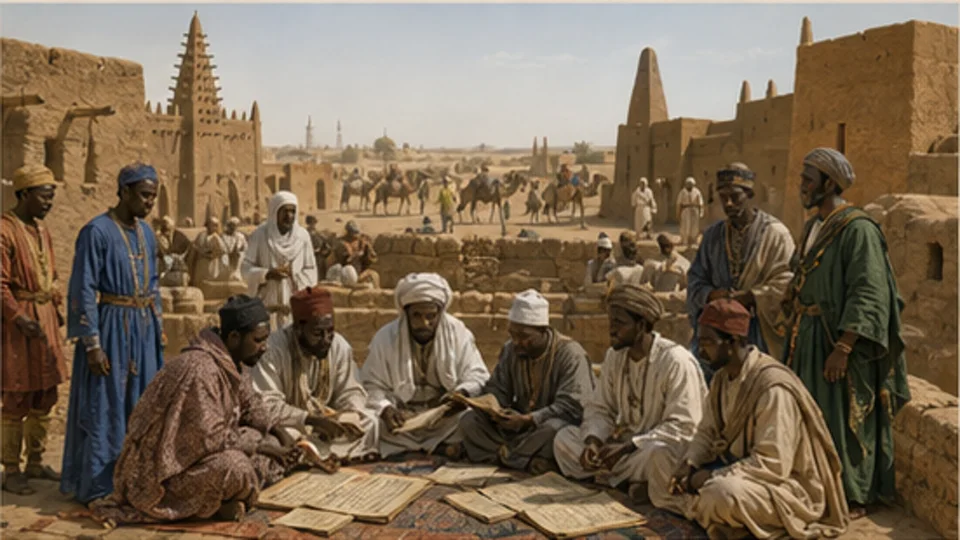
c. 1230–1591 CE · imperial survey · AfricaMali and Songhai empires

Mali and Songhai were distinct, overlapping Sahelian powers. Mali's rise in the thirteenth century preceded Songhai's expansion under Sunni Ali from 1464; Morocco's invasion broke Songhai's imperial power in 1591. Farming, gold, taxation, trade and scholarship sustained these societies.

c. 1170–1848 CE · persecution and emancipation · EuropeWaldensian witness and persecution

A lay reform movement emphasizing Scripture and preaching survived condemnation, crusade, displacement and later massacres.
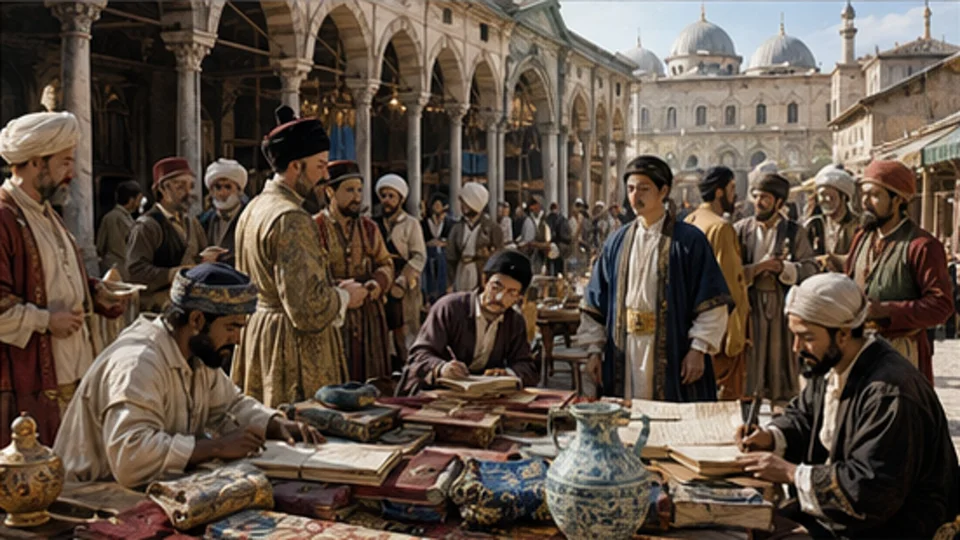
c. 1299–1922 CE · changing imperial rule · Middle EastOttoman Empire

An Anatolian principality became a multilingual empire spanning Southeast Europe, North Africa and the Middle East, governing vital cities and trade corridors for centuries.