ATLAS / ANCIENT—PRESENT
All historyHow Atlas is sourced← Back to Atlas
Back to Atlas timeline
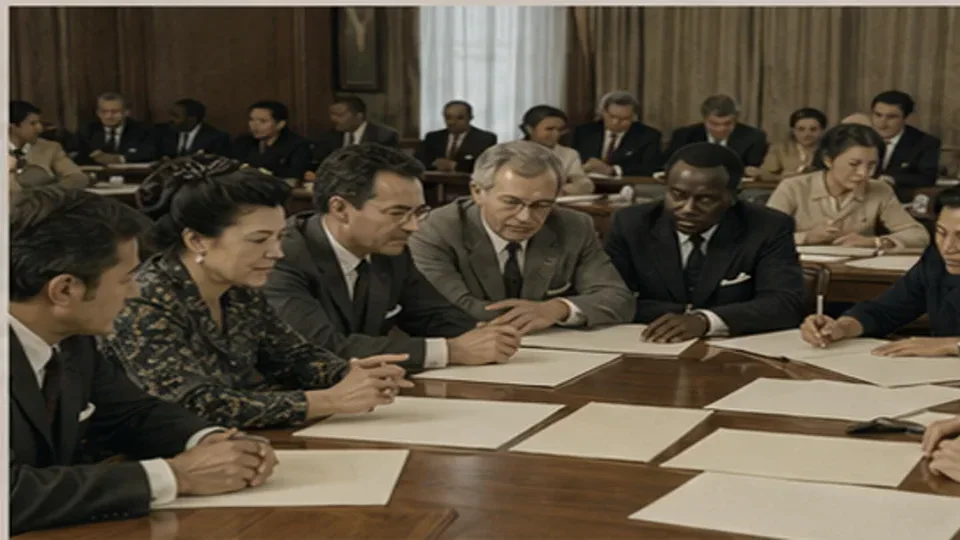
United Nations and Universal Declaration — original Atlas editorial reconstruction

1945–1948 CE · UN founding and UDHR drafting · Global · Rights

United Nations and Universal Declaration

Fifty states signed the UN Charter in 1945; representatives from several regions then negotiated the Universal Declaration of Human Rights, adopted by the General Assembly on 10 December 1948.

Atlas dossier · Cold War & Decolonization

Free device narration · synchronized English captions · transcript available

Why it matters

The Declaration joined civil, political, economic, social and cultural rights in a common standard. It was not itself a treaty or proof of equal enforcement, but it shaped later law and anti-colonial claims.

Date
1945–1948 CE · UN founding and UDHR drafting
Historical setting
Cold War & Decolonization · Global
People & communities
Eleanor Roosevelt · Hansa Mehta · Charles Malik · Peng-chun Chang · UN delegates
Charter and declaration are different instruments

The UN Charter created an intergovernmental organisation in 1945. The General Assembly adopted the Universal Declaration on 10 December 1948 as a common standard, not a self-executing global treaty. Later covenants and institutions translated parts of its programme into legal obligations on different timelines.

Universal Declaration of Human Rights (1948)

Drafting was international and constrained

Eleanor Roosevelt chaired the drafting commission, while Hansa Mehta, Peng-chun Chang, Charles Malik and delegates from several regions shaped language and concepts. Colonial rule, abstentions and unequal state power remained part of the 1948 setting, so adoption cannot be equated with universal enforcement.

United Nations Digital Library

Illustrated sequence

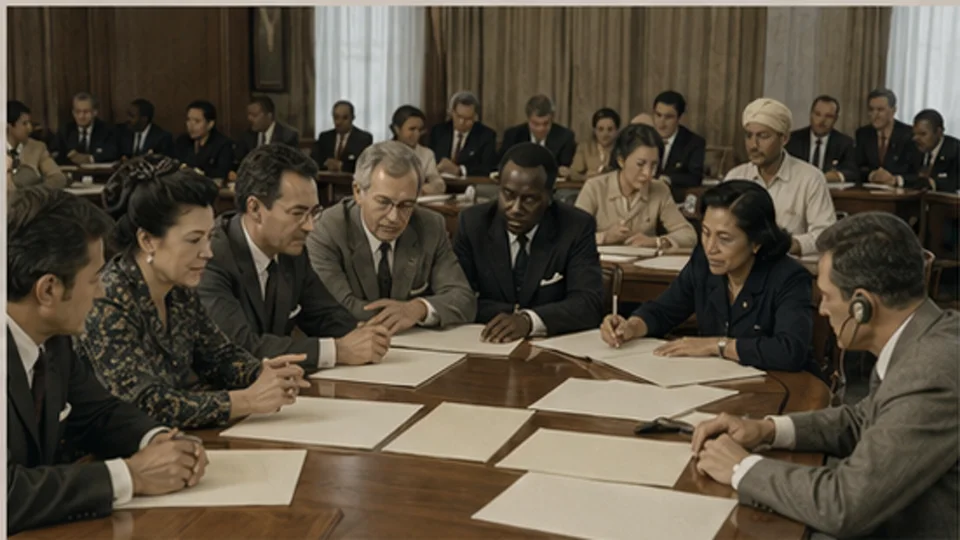
Silent pan-and-zoom motion derivative of the United Nations and Universal Declaration reconstruction; not archival footage.

United Nations and Universal Declaration — original Atlas editorial reconstruction
IMAGE 1

Original Atlas reconstruction

Primary Atlas editorial reconstruction for United Nations and Universal Declaration.

World History in Pictures · Public site artwork. This record does not grant third-party republication rights.

How Atlas classifies this artwork →
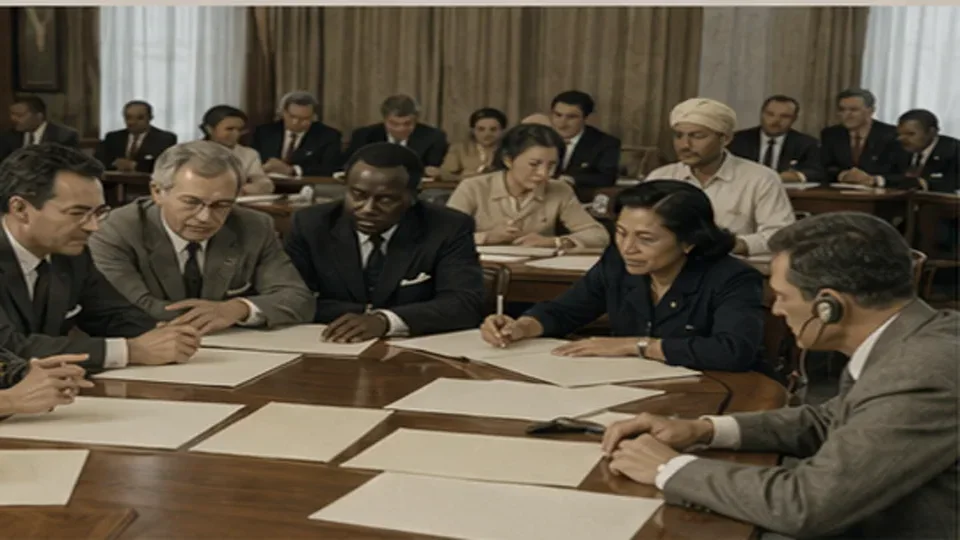
United Nations and Universal Declaration: people and action
IMAGE 2

Detail crop — same artwork

Detail crop from the same United Nations and Universal Declaration reconstruction; not an independent historical record.

World History in Pictures · Same editorial artwork package

How Atlas classifies this artwork →
United Nations and Universal Declaration: setting and consequences
IMAGE 3

Context crop — same artwork

Context crop from the same United Nations and Universal Declaration reconstruction; not an independent historical record.

World History in Pictures · Same editorial artwork package

How Atlas classifies this artwork →

Interpretation note

Evidence, memory and historical debate

This dossier distinguishes the event’s basic chronology from later arguments about meaning, responsibility and legacy. When comparing religious, national, Indigenous or scholarly interpretations, consult the primary and institutional sources above alongside peer-reviewed historical work.

Elsewhere in the world

Parallel histories near this moment

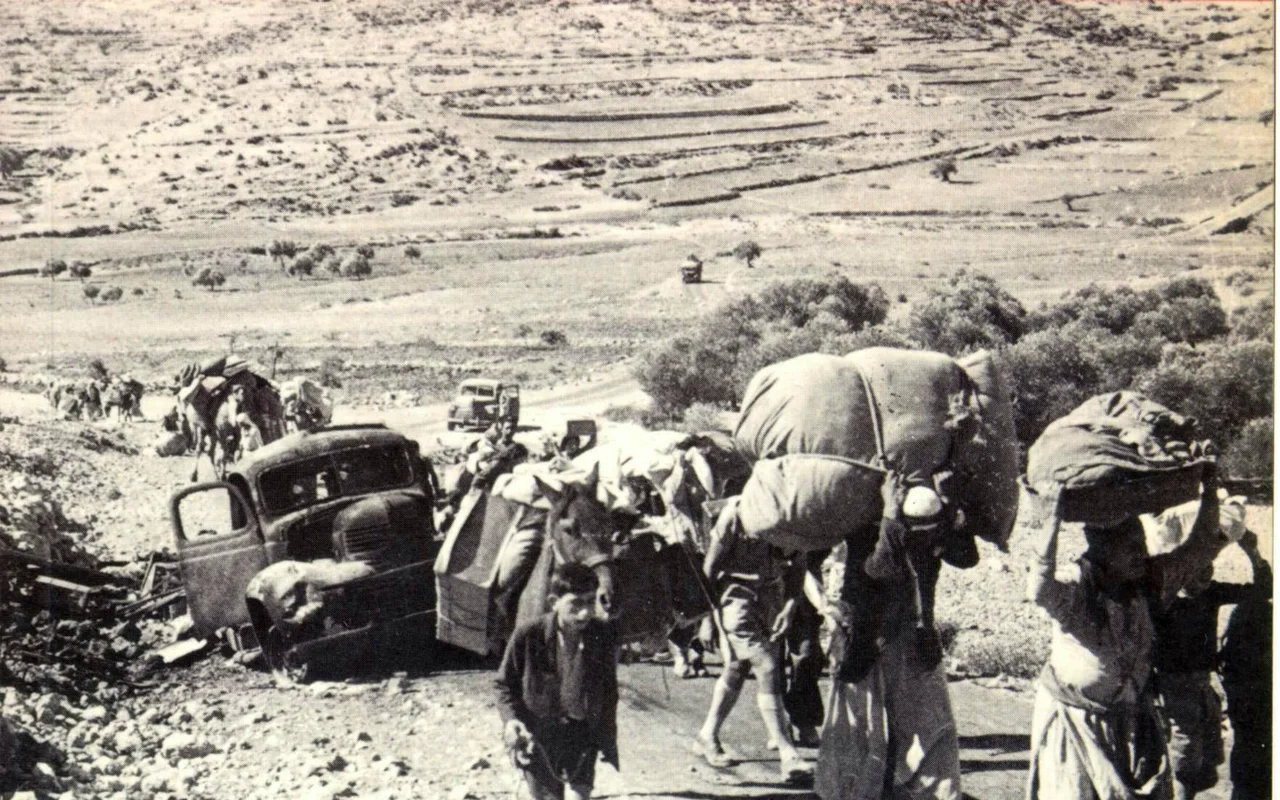
1947–1949 CE · partition proposal, civil war, statehood, regional war and displacement · Middle East1948 war, Palestinian displacement and the making of Israel

The UN General Assembly recommended partition in 1947; civil war followed, Israel declared statehood as the British Mandate ended in May 1948, and neighbouring Arab states entered the war. More than 700,000 Palestinians were displaced or expelled in the Nakba.

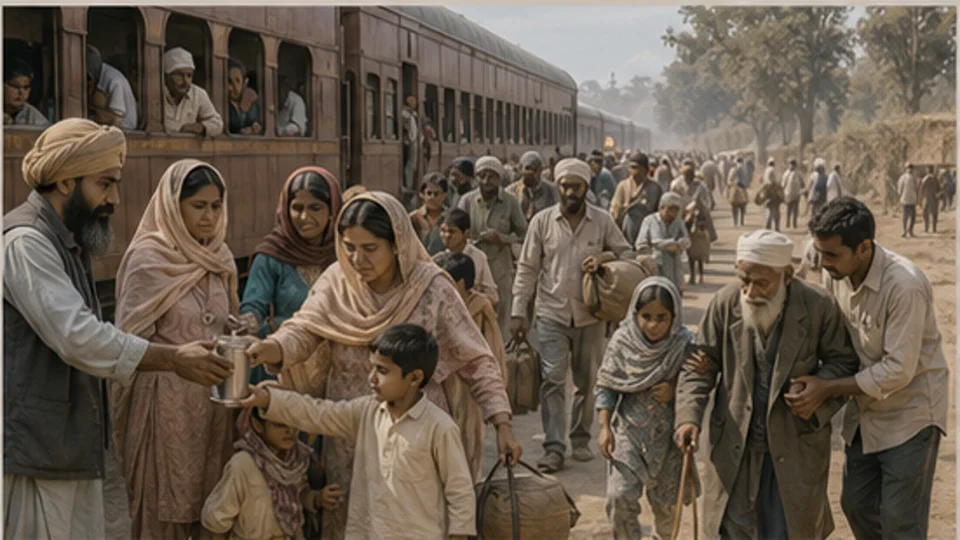
1947–1948 CE · independence, Partition, migration and first Kashmir war · AsiaPartition and independence of India and Pakistan

British rule ended and India and Pakistan became independent in August 1947. A hurried boundary divided Punjab and Bengal amid one of the twentieth century’s largest forced migrations, communal violence and the first war over Kashmir.

1947–1956 CE · cave discoveries and dispersed manuscripts · Middle EastThe Dead Sea Scrolls are discovered

Bedouin discoverers, antiquities dealers and archaeologists brought to light manuscripts from eleven caves near Qumran between 1947 and 1956, including biblical texts and other Jewish writings copied during the late Second Temple period.

Explore the connections

Srebrenica: genocide, evidence and accountability

The Yugoslav wars: distinct conflicts and civilian displacement

The refugee protection system: the 1951 Convention and 1967 Protocol