1100–1392 CE · Asia · Culture
Goryeo Korea: celadon, workshops and collecting
Green-glazed vessels connect regional workshops and technical exchange with elite tastes and difficult questions about collecting the past.
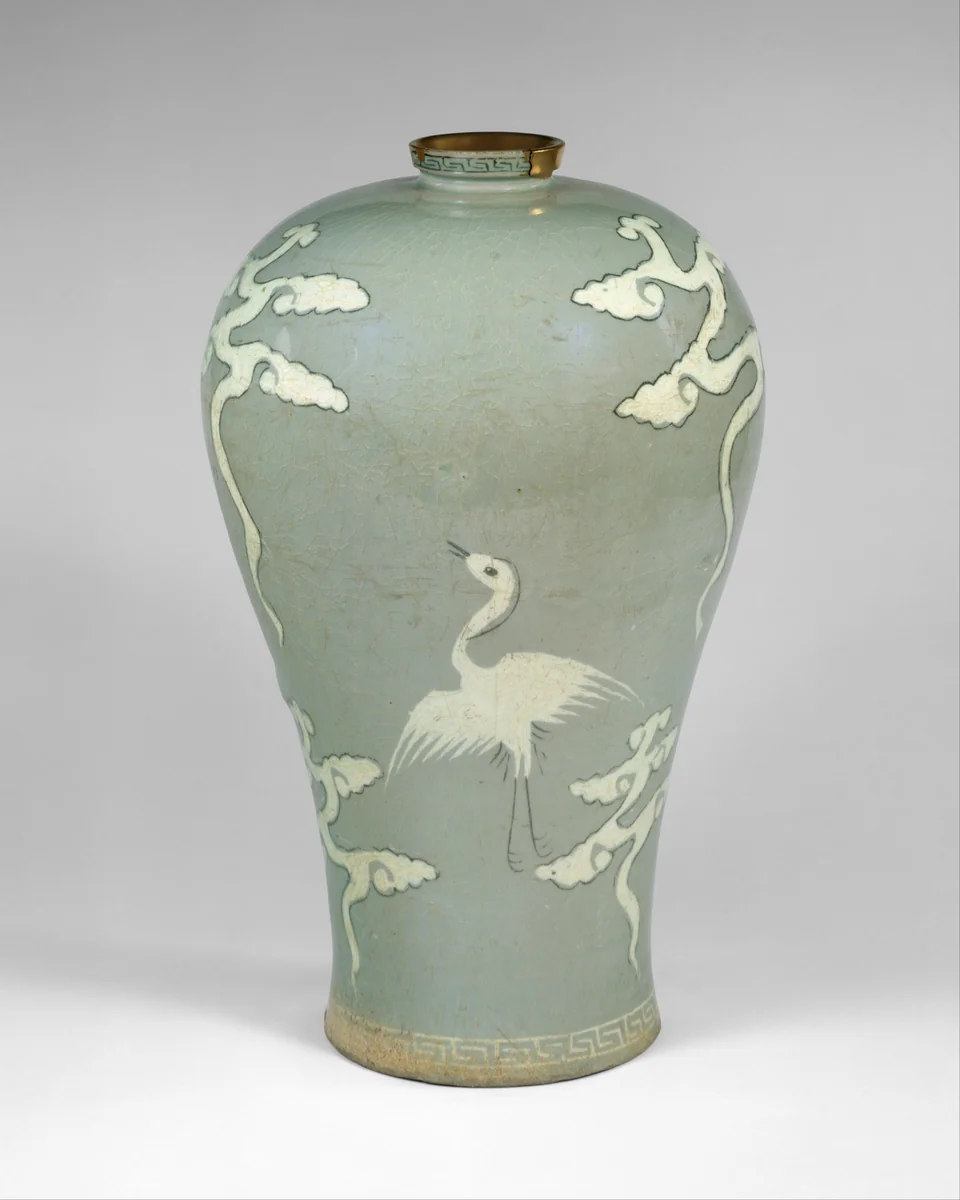 Enlarge and examine the picture
The Metropolitan Museum of Art · 27.119.11 · Fletcher Fund, 1927 · Public domain / CC0 · Resized and converted to WebP · Source and rights ↗ · Licence terms
A technology adapted, not simply copied
Goryeo potters adapted glaze and kiln technologies associated with China while developing distinctive ceramic forms. Celadon’s green surface depended on materials and firing, rather than paint applied to a finished pot. The Chinese envoy Xu Jing compared Korean and Chinese wares during his 1123 visit. Such connections reveal exchange without reducing Korean craftsmanship to imitation.
Workshops and the art of inlay
By the mid-twelfth century, Buan and Gangjin in southwestern Korea were important production centers. In the sanggam technique, potters cut designs into clay, filled them with contrasting slips, then glazed and fired the vessel. The resulting black and white motifs stood beneath a translucent green surface. These refined objects preserve evidence of accumulated workshop expertise even when individual makers remain unnamed.
A bottle with a history of repair
The pictured late-thirteenth-century maebyeong was made at Buan Yucheon-ri. Its cranes and clouds decorate a vessel used for alcohol and other beverages, despite the conventional translation plum bottle. The mouth was repaired with lacquer resin mixed with powdered gold. It is therefore evidence of use and care, not an untouched specimen that has remained exactly as it emerged from a kiln.
Collecting and lost context
The Smithsonian describes how disturbance of Goryeo royal and elite tombs in the late nineteenth century brought burial objects into the antiquities market. Some entered collections later acquired by Charles Lang Freer. Subsequent kiln archaeology has refined production histories. This broader history does not establish a looted origin for the particular bottle pictured here; it does explain why provenance and lost archaeological context deserve attention alongside beauty.