1368–1644 CE · Asia · Trade
Ming China: porcelain, court demand and archaeology
Jingdezhen porcelain links specialist production and imperial consumption to international exchange—and to excavations that revise the familiar chronology.
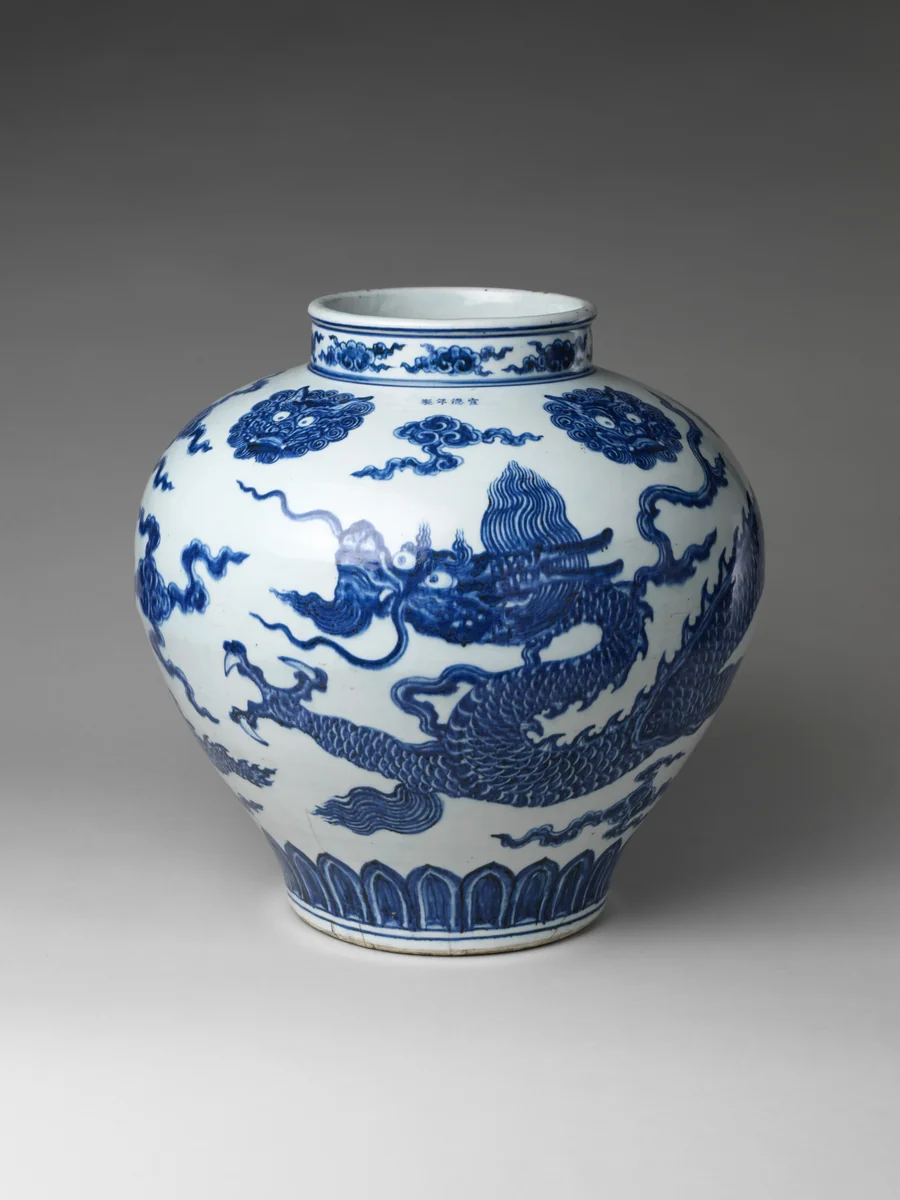 Enlarge and examine the picture
The Metropolitan Museum of Art · 37.191.1 · Gift of Robert E. Tod, 1937 · Public domain / CC0 · Resized and converted to WebP · Source and rights ↗ · Licence terms
More than blue and white
Many Ming imperial porcelains came from Jingdezhen. Makers combined kaolin and porcelain stone to create a dense, white, high-fired body. Court demand embraced more than blue-and-white decoration: white, red and richly colored wares also formed part of changing imperial tastes. The dynasty’s ceramics should not be reduced to a single decorative formula.
An inscription anchors a dragon jar
This court-commissioned storage jar was made at Jingdezhen. An inscription on its shoulder places it in the Xuande reign, 1426–1435. Cobalt-blue painting beneath transparent glaze carries a dragon through clouds. The inscription provides a closer date than the broad label Ming, but the luxury commission is not evidence of a typical household’s possessions.
Connected designs and courtly power
Chinese artistic inheritances coexisted with ideas shaped by exchange with West Asia. The Met relates blue-and-white ceramic development partly to Islamic-world trade; the Smithsonian notes porcelain forms related to Islamic metalwork. Manufacture and use also communicated hierarchy. These connections resist a picture of artistic traditions as sealed national compartments, while keeping the political setting of court consumption visible.
Fragments can overturn a familiar story
The Zhengtong, Jingtai and Tianshun reigns were once described as a ceramic blank period because securely identified evidence and reign-marked wares were scarce. The Palace Museum reports that discoveries at Jingdezhen in 2014 changed that picture, demonstrating continued production and technical development. Broken excavated objects can therefore correct a chronology shaped too heavily by prestigious, inscribed survivors.