1952–1960 CE · Africa · Empire
Mau Mau, the Kenya Emergency and colonial violence
An anti-colonial insurgency and the British campaign against it exposed profound conflicts over land, political power and the future of Kenya.
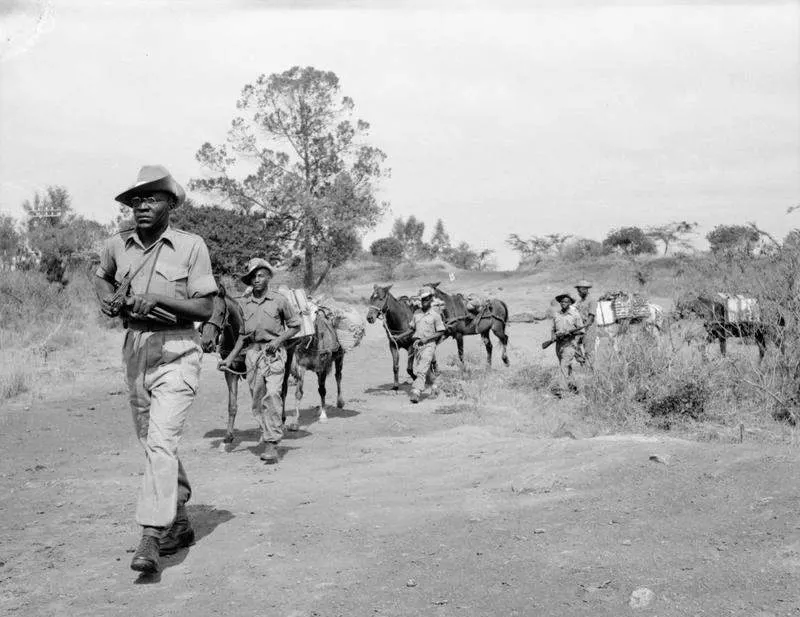 Enlarge and examine the picture
UK Ministry of Defence Post-1945 Official Collection / Imperial War Museums, MAU 345 / Wikimedia Commons · Public domain, expired UK Crown copyright · Converted to WebP · Source and rights ↗ · Licence terms
Land and political power
The Kenya Land and Freedom Army, often called Mau Mau, fought British colonial authority. The conflict also divided Kenyan communities. Understanding it requires attention to land grievances, insurgent organisation, African loyalists and the coercive institutions of the colonial state.
Military defeat and historical significance
British forces defeated the insurgency, but its meaning extends beyond battlefield outcomes. The Emergency belongs within the longer struggle over colonial rule and independence. Read British military accounts alongside Kenyan testimony and scholarship: the term ‘Emergency’ itself reflects the vocabulary of the governing authority.
Detention and its aftermath
Colonial detention extended the conflict far beyond forest fighting. Prisoners faced disease, inadequate food and violent abuse, including torture. Eleven detainees were killed at Hola camp in March 1959. These events belong at the centre of the account of state violence. Kenya became independent in 1963, after the formal Emergency had ended.