ATLAS / ANCIENT—PRESENT
All historyHow Atlas is sourced← Back to Atlas
Back to Atlas timeline
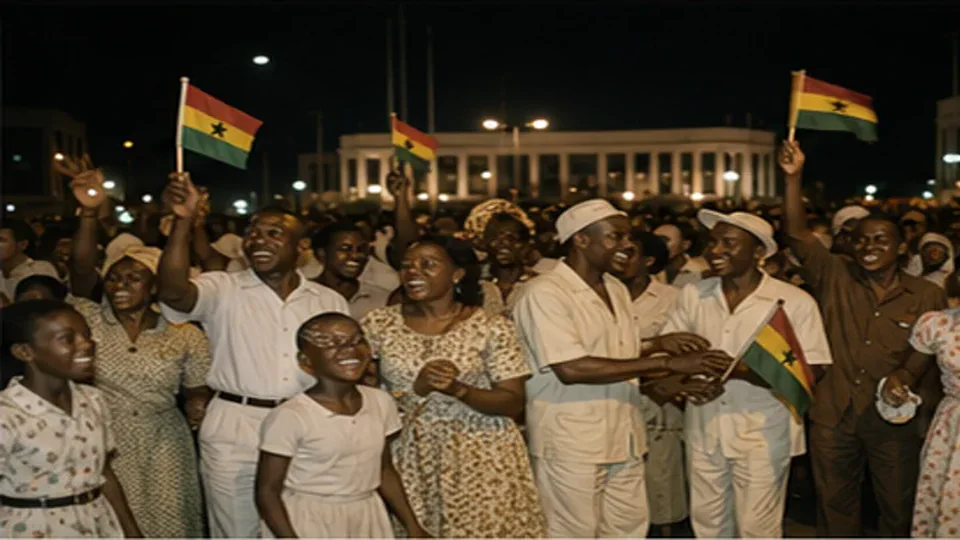
Ghanaian independence — original Atlas editorial reconstruction

6 March 1957 CE · Gold Coast becomes Ghana · Africa · Rights

Ghanaian independence

The British colony of the Gold Coast became independent Ghana on 6 March 1957 after strikes, elections, constitutional negotiation and mass anticolonial organizing led through—but not confined to—the Convention People’s Party.

Atlas dossier · Cold War & Decolonization

Free device narration · synchronized English captions · transcript available

Why it matters
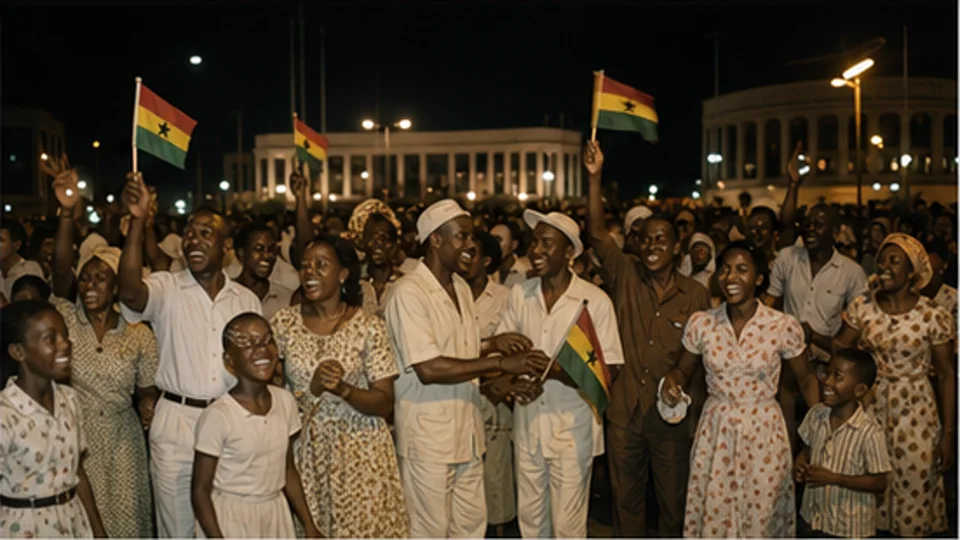
Ghana’s independence energized Pan-African and anticolonial projects, while leaving contested questions of political pluralism, economic sovereignty and colonial structures.

Date
6 March 1957 CE · Gold Coast becomes Ghana
Historical setting
Cold War & Decolonization · Africa
People & communities
Ghanaian voters and organizers · women and workers · Convention People’s Party · Kwame Nkrumah · opposition parties · traditional authorities

A precise constitutional threshold

On 6 March 1957 the British colony of the Gold Coast became the independent state of Ghana. The date followed strikes, elections, prison terms, constitutional negotiation and organising by many people. Nkrumah and the Convention People’s Party were central without being the whole movement.

United Nations Digital Library: Ghana independence

Independence was not decolonisation completed

Ghana’s independence encouraged Pan-African and anticolonial movements, yet formal sovereignty did not automatically settle economic dependence, political pluralism, regional inequality or the colonial shape of institutions and commodity trade. The dossier treats 1957 as a decisive beginning for self-government rather than a final endpoint.

UNESCO General History of Africa

Illustrated sequence

Silent pan-and-zoom motion derivative of the Ghanaian independence reconstruction; not archival footage.

Ghanaian independence — original Atlas editorial reconstruction
IMAGE 1

Original Atlas reconstruction

Primary Atlas editorial reconstruction for Ghanaian independence.

World History in Pictures · Public site artwork. This record does not grant third-party republication rights.

How Atlas classifies this artwork →
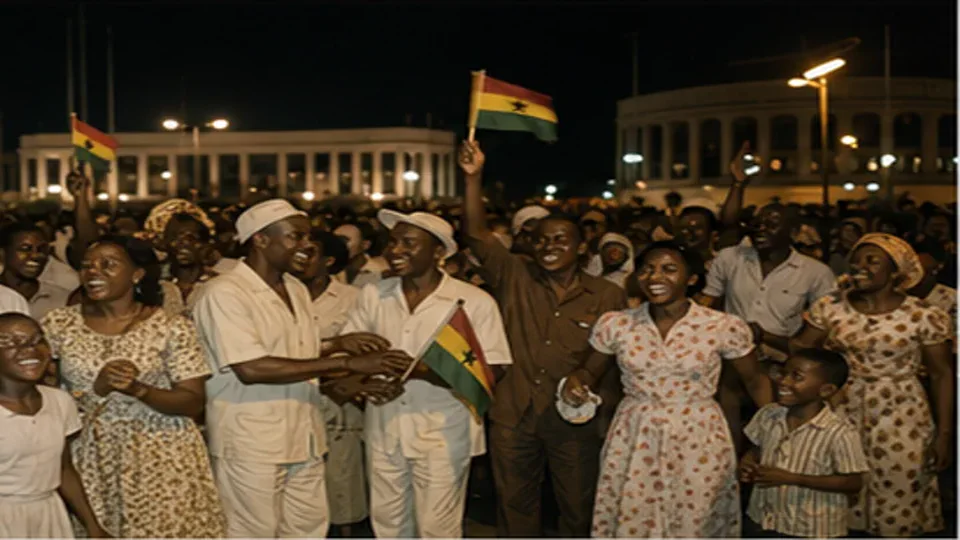
Ghanaian independence: people and action
IMAGE 2

Detail crop — same artwork

Detail crop from the same Ghanaian independence reconstruction; not an independent historical record.

World History in Pictures · Same editorial artwork package

How Atlas classifies this artwork →
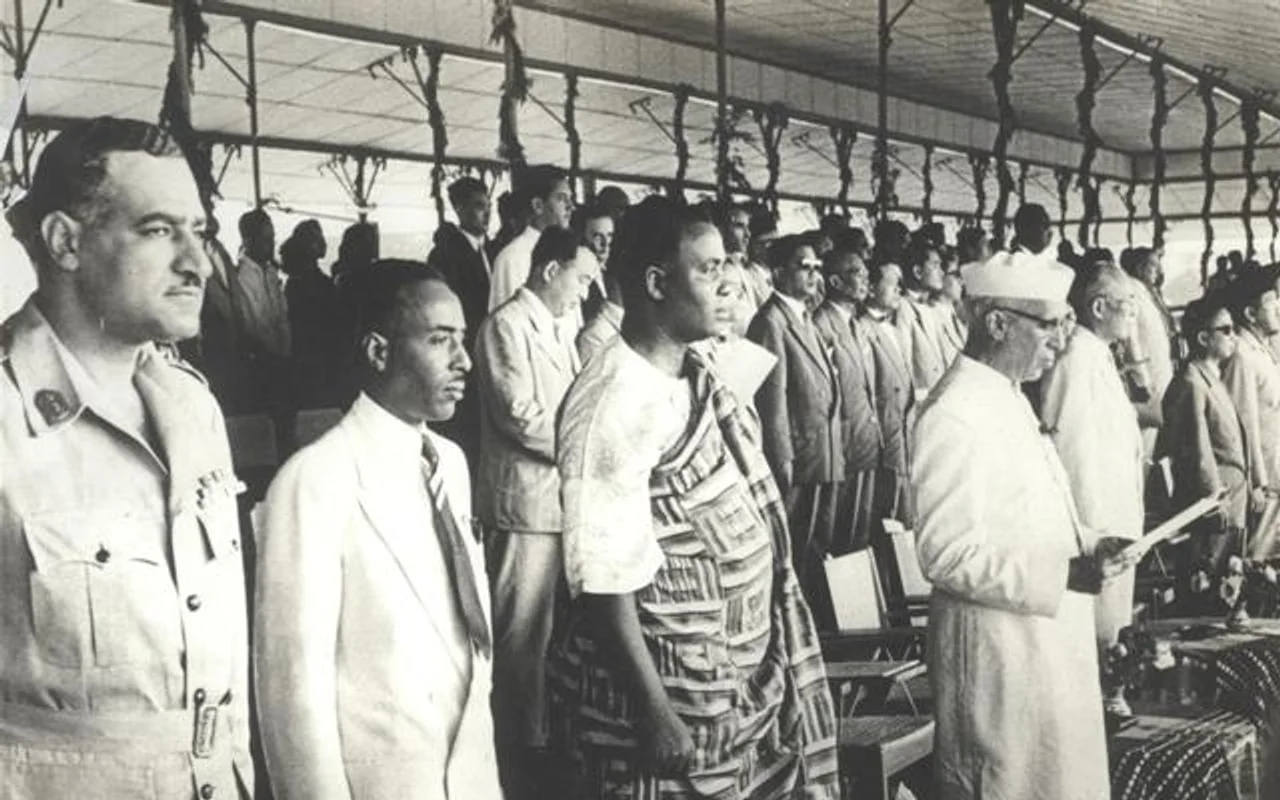
Ghanaian independence: setting and consequences
IMAGE 3

Context crop — same artwork

Context crop from the same Ghanaian independence reconstruction; not an independent historical record.

World History in Pictures · Same editorial artwork package

How Atlas classifies this artwork →

Interpretation note

Evidence, memory and historical debate

This dossier distinguishes the event’s basic chronology from later arguments about meaning, responsibility and legacy. When comparing religious, national, Indigenous or scholarly interpretations, consult the primary and institutional sources above alongside peer-reviewed historical work.

Elsewhere in the world
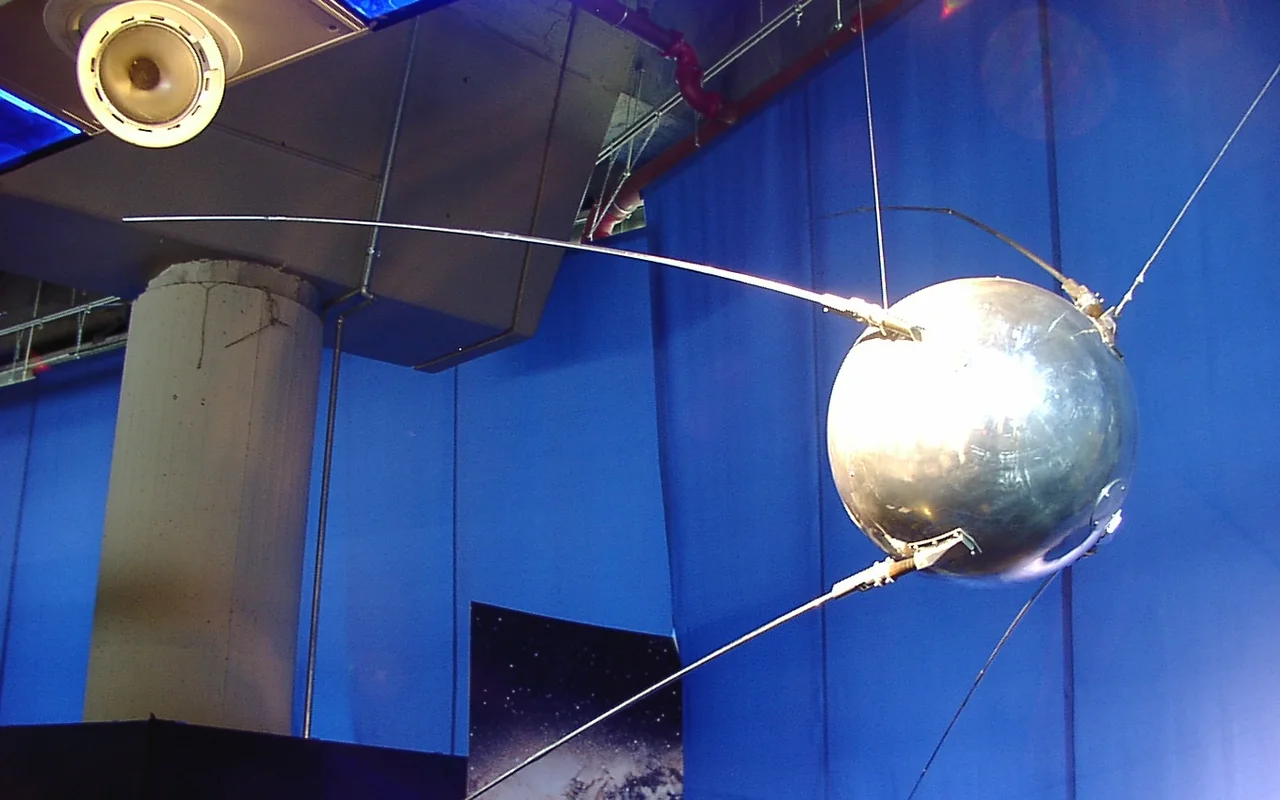
Parallel histories near this moment

1957–1990 CE · selected satellite and observing milestones · GlobalSpace age and Earth observation

Sputnik 1 inaugurated artificial Earth orbit in 1957; weather, communications and land-observing satellites then developed as distinct systems, while probes and observatories extended research across the Solar System and universe.

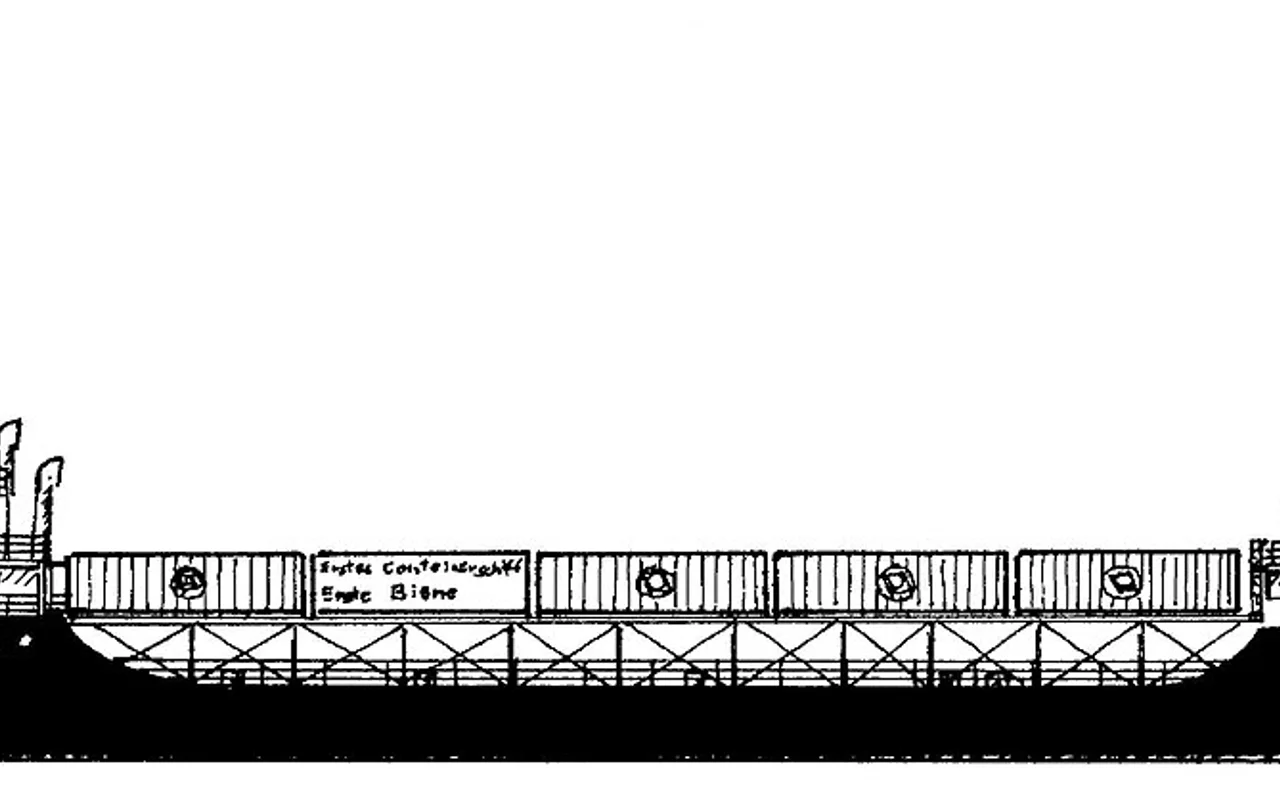
1956–2021 CE · selected shipping and supply-chain milestones · GlobalContainerization and global supply chains

The Ideal-X voyage in 1956 was one milestone in a larger system of standard containers, cranes, ships, rail and road links, safety rules and port redesign that reduced handling time and reorganized trade.

1955–1961 CE · Bandung conference and Belgrade founding milestones · GlobalBandung and the Non-Aligned Movement

Delegates from twenty-nine Asian and African states met at Bandung in April 1955 to debate colonialism, cooperation and peace. Six years later, a partly overlapping group formally founded the Non-Aligned Movement at Belgrade.

Explore the connections

Mau Mau, the Kenya Emergency and colonial violence

From the Organisation of African Unity to the African Union

Ghana / Wagadu: a Sahelian empire before Mali