1400–1819 CE · Asia · Trade
Melaka and Johor: ports, sultanates and the Straits world
The Malay Peninsula’s maritime history was shaped by Asian merchants and sultanates as well as European conquest. Melaka’s capture did not bring the political and commercial world around it to an end.
 Enlarge and examine the picture
Philip Nalangan / Wikimedia Commons · CC BY 4.0 · Resized and converted to WebP · Source and rights ↗ · Licence terms
A Malay port in an Asian trading world
The fifteenth-century Melaka Sultanate forms an early layer of the city’s recorded heritage. Maritime exchange brought Malay, Chinese, Indian and other communities into contact. Buildings, religious traditions and urban practices preserve the results of those encounters. Modern Malaysia is not an unchanged medieval kingdom: the earlier Straits world crossed present national borders.
1511 was a rupture, not an ending
Portuguese conquest in 1511 displaced Melaka’s ruler, Sultan Mahmud, who eventually settled on Bintan. His successors established the Johor kingdom and asserted claims over former Melakan territories. Portuguese Melaka, Johor and Aceh competed for authority and trade. The survival of these centres challenges a simple story in which Europeans immediately controlled all regional commerce.
Alliances and contested succession
Johor helped the Dutch East India Company capture Melaka in 1641 and obtained commercial and political privileges. Later succession struggles drew in Bugis, Minangkabau and Orang Laut actors as well as rival courts. Regional communities were participants in these changes, not merely the background to European expansion.
Reading the waterfront
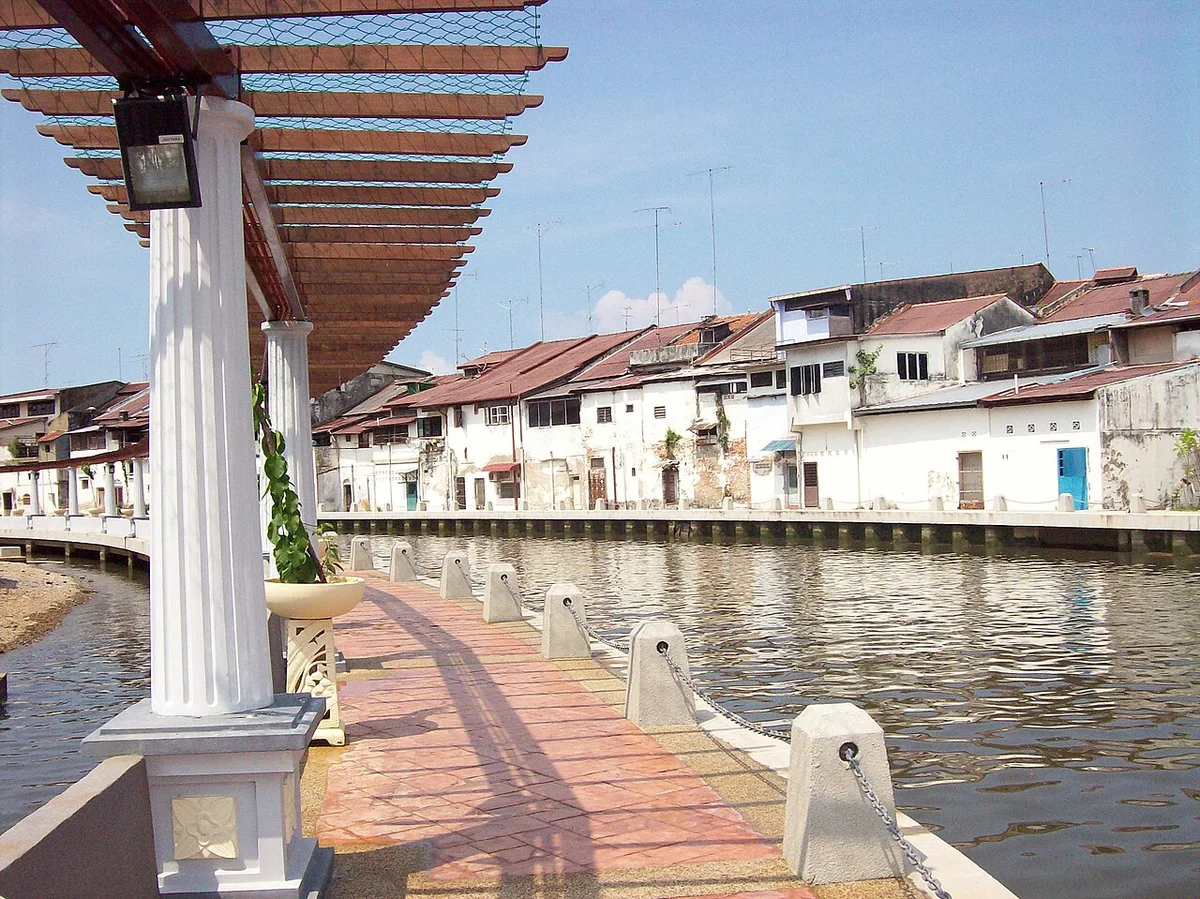
The 2006 photograph records the Melaka River and later waterfront buildings. It is not an image of the fifteenth-century port. Compare its layered townscape with the differently dated heritage of George Town, whose British-period development began in the late eighteenth century. Neither city alone represents all Malaysian histories, including those of Sabah, Sarawak and Indigenous communities.