1300–1819 CE · Asia · Trade
Singapore before 1819: Temasek, trade and surviving evidence
Singapore did not begin with the British trading post. Archaeology and written traditions reveal a port connected to the wider Malay and Asian maritime world centuries earlier.
 Enlarge and examine the picture
Jon Callas / Wikimedia Commons · CC BY 2.0 · Resized and converted to WebP · Source and rights ↗ · Licence terms
A port before the colonial port
Fourteenth-century Temasek participated in exchange with China and neighbouring Southeast Asian centres. Finds at Fort Canning and the Singapore River include imported ceramics and other goods. Aromatic wood and hornbill products appear in accounts of trade. Such evidence places the island within regional networks rather than treating it as an empty stage awaiting Europeans.
Different sources answer different questions
Wang Dayuan’s fourteenth-century account and the much later Malay Annals are not interchangeable records. The Annals connect ruling lineages and give stories of Singapura’s foundation and fall; they also served dynastic purposes. Excavated objects provide another line of evidence. A precise foundation year or a dramatic royal story should not be treated as archaeological fact merely because it is familiar.
A fragment that preserves uncertainty
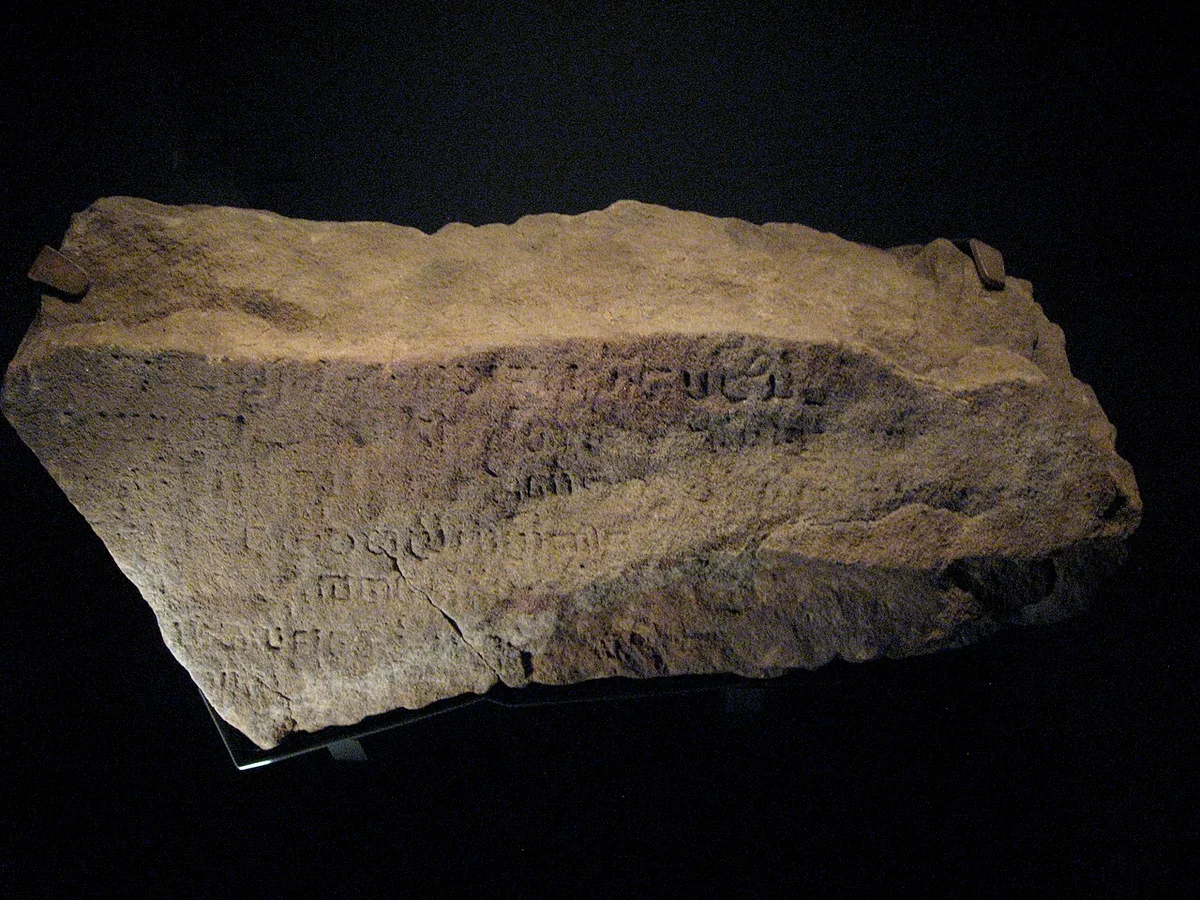
The Singapore Stone is a surviving piece of an inscribed sandstone slab from the river mouth. Its worn writing remains a reminder of the limits of knowledge; this study does not supply an invented translation or assert a precise inscription date. Jon Callas’s photograph records the object in the National Museum in 2009, not its original riverside setting.
1819 in its regional context
The island later belonged within the Melaka and Johor political worlds. In 1819, the British East India Company negotiated a trading-post agreement with Sultan Hussein Shah and Temenggong Abdul Rahman. Existing Malay, Chinese and Orang Laut inhabitants were part of the island’s life. The agreement is a major colonial milestone, not the beginning of human settlement or Singapore’s connections with its neighbours.