1910–1920 CE · Americas · Rights
The Mexican Revolution: land, power and competing programmes
The overthrow of Porfirio Díaz opened a decade of revolutionary conflict. Electoral change, land reform and military power divided former allies.
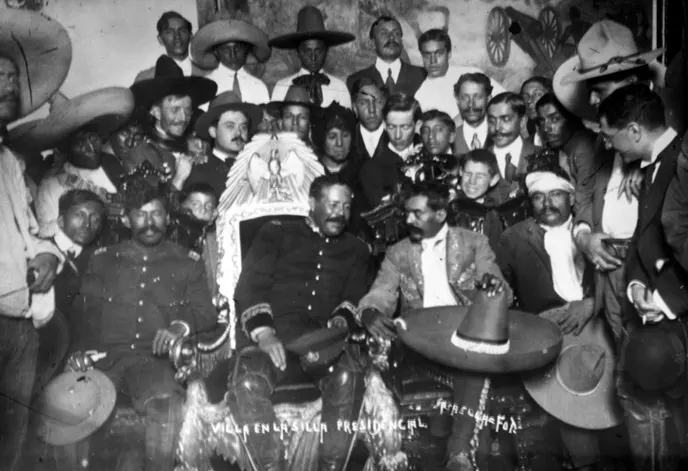 Enlarge and examine the picture
Agustín Víctor Casasola / Wikimedia Commons · Public domain in Mexico and the United States · Uploader’s scan; physical print and holding institution not identified · Converted to WebP · Source and rights ↗ · Licence terms
Beyond removing a president
Francisco Madero called for an uprising against Díaz in 1910. Opposition brought together people with different aims. Ending Díaz’s rule did not settle who should govern or how land and political power should be distributed.
Revolutionaries were not one movement
Emiliano Zapata pressed for land reform, while other leaders pursued competing programmes and alliances. The struggles involving Madero, Zapata, Pancho Villa and later Constitutionalist forces should be followed as a changing sequence, rather than a single unified revolution.
A national history with border crossings
The Library of Congress places its main revolutionary survey in approximately 1910–1920. U.S. diplomacy, intervention and the movement of refugees connected the conflict to the wider region. Its photographs and newspapers also show how different observers represented Mexico’s upheaval.