692–705 CE · Middle East · Trade
Umayyad coinage: reform, belief and exchange
A small gold coin records a major change in official imagery: Arabic religious inscriptions replaced inherited imperial designs.
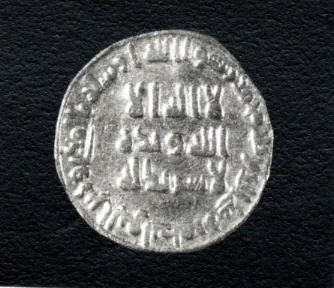 Enlarge and examine the picture
The Metropolitan Museum of Art · 99.35.2386 · Bequest of Joseph H. Durkee, 1898 · Public domain / CC0 · Resized and converted to WebP · Source and rights ↗ · Licence terms
Reform after civil conflict
‘Abd al-Malik reunited the caliphate in 692 after civil war and pursued administrative and monetary changes. An early standing-caliph coin showed a ruler carrying a sword; later issues abandoned the human figure for inscriptions. This sequence reveals changing choices about public authority, not a design that had remained fixed from the beginnings of Islam.
From inherited coins to a new design
Early Muslim rulers initially retained Byzantine and Sasanian monetary traditions, modifying designs gradually. ‘Abd al-Malik’s gold reform of 696–697 introduced a new, non-figural style. The pictured Syrian dinar, dated 79 AH/698–699 CE, belongs to this series. Its Arabic profession of faith makes the coin evidence of religious expression as well as monetary administration.
Connected markets and everyday evidence
Trade routes linked the Middle East with the Mediterranean, Arabia, eastern Africa and the Indian Ocean. Luxury goods traveled along these networks, but ordinary products underpinned economic activity. Coins can be studied alongside receipts, commercial letters, weights and balances. A gold dinar does not mean that every transaction used gold, or that all communities experienced these markets in the same way.
Read the scale as well as the inscription
The original coin is only about 2.1 centimeters across; an enlarged screen image can conceal that small scale. Its date, material and manufacture in Syria provide a specific historical anchor. Its survival does not reveal the identity or beliefs of every person who handled it. The photograph documents a particular object, not a complete reconstruction of Umayyad economic life.