969–1171 CE · Africa · Trade
Fatimid Egypt: textiles, court gifts and trade
A silk fragment opens a history of Cairo’s court, diplomatic gifts and the wider Egyptian economy, without mistaking luxury for ordinary life.
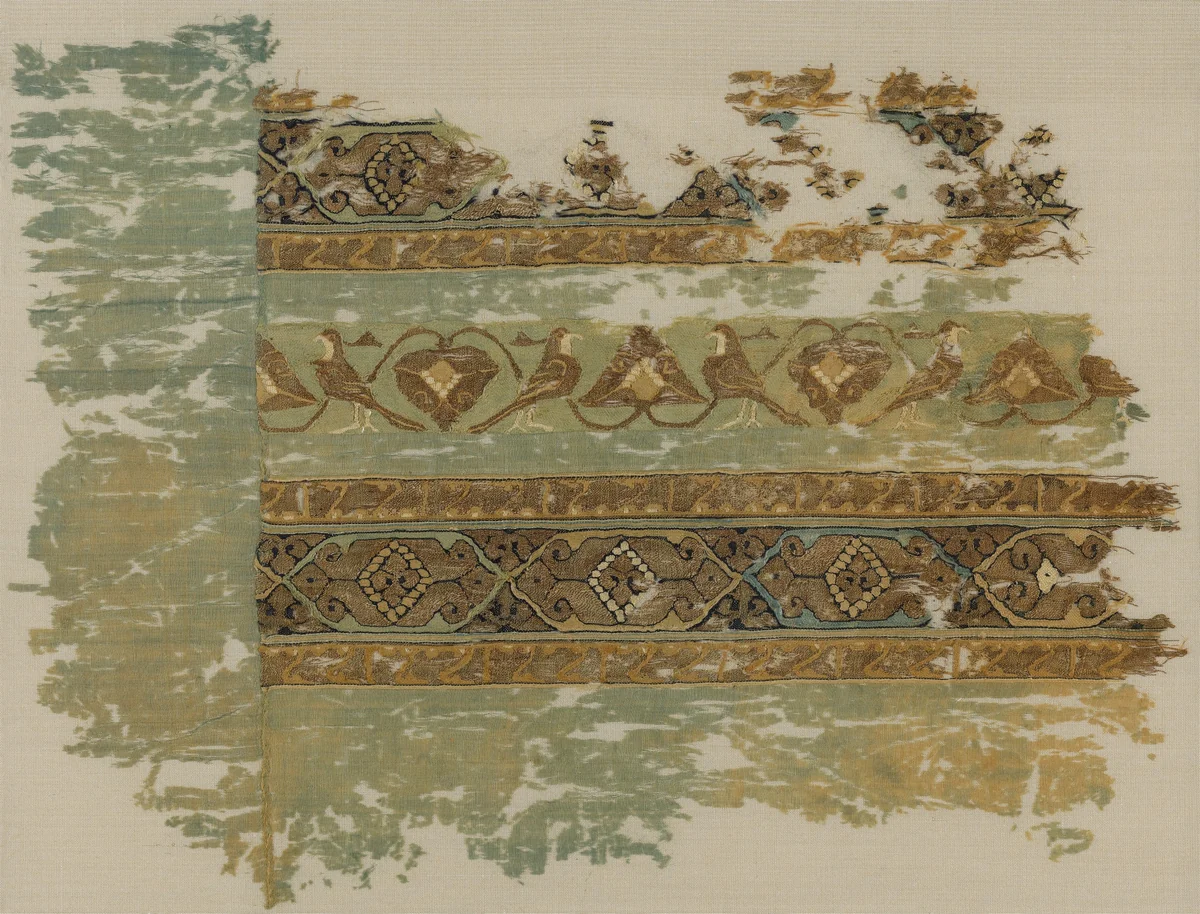 Enlarge and examine the picture
The Metropolitan Museum of Art · 31.106.66 · Gift of George D. Pratt, 1931 · Public domain / CC0 · Resized and converted to WebP · Source and rights ↗ · Licence terms
Cairo and a competing caliphate
The Fatimids conquered Egypt in 969, founded Cairo and made it their capital in 973. Their Isma‘ili Shi‘i claim to leadership, expressed through descent from the Prophet Muhammad’s daughter Fatima, challenged the Sunni Abbasid caliphate. These rival religious and political claims should remain visible rather than being compressed into a single, undifferentiated Islamic golden age.
Cloth as a political relationship
Tiraz can mean decorated textiles, their inscription bands or their workshops. Robes of honor marked relationships between rulers, officials and ambassadors. Workshops supplied both courtly and wider audiences. A ruler’s name on cloth does not, by itself, identify the institution that produced it: commercial and court manufacture could share inscriptions, materials and techniques.
Look closely at a surviving fragment
The pictured eleventh-century textile is silk, not linen, and the museum attributes it to Egypt. Birds, scrolling plants and repeated bands survive in its woven design. It is an authentic object photographed today, not a reconstructed costume. The fragment does not identify its original wearer or establish the complete appearance of a garment. Museum interpretation places such sumptuous fabrics within a tradition of ambassadorial gifts.
Beyond the palace treasury
Egypt linked Mediterranean and Indian Ocean commerce. Al-Fustat supported pottery, glass, metalwork and other crafts, while textile production extended into the Nile Delta. Flax and linen trade mattered to the economy alongside luxury silk. The surviving fragment invites questions about workers and materials, but cannot represent everyone’s living conditions. Agricultural products and ordinary goods must remain part of the story beside spectacular court possessions.