400–1945 CE · Asia · Empire
Vietnam’s historic landscapes: Champa, Đại Việt and Huế
Vietnam’s earlier history includes distinct kingdoms and changing centres of power. Mỹ Sơn, Thăng Long and Huế offer three different windows onto religion, government and the making of urban landscapes.
 Enlarge and examine the picture
Chainwit. / Wikimedia Commons · CC BY 4.0 · Resized and converted to WebP · Source and rights ↗ · Licence terms
Champa and the temples at Mỹ Sơn
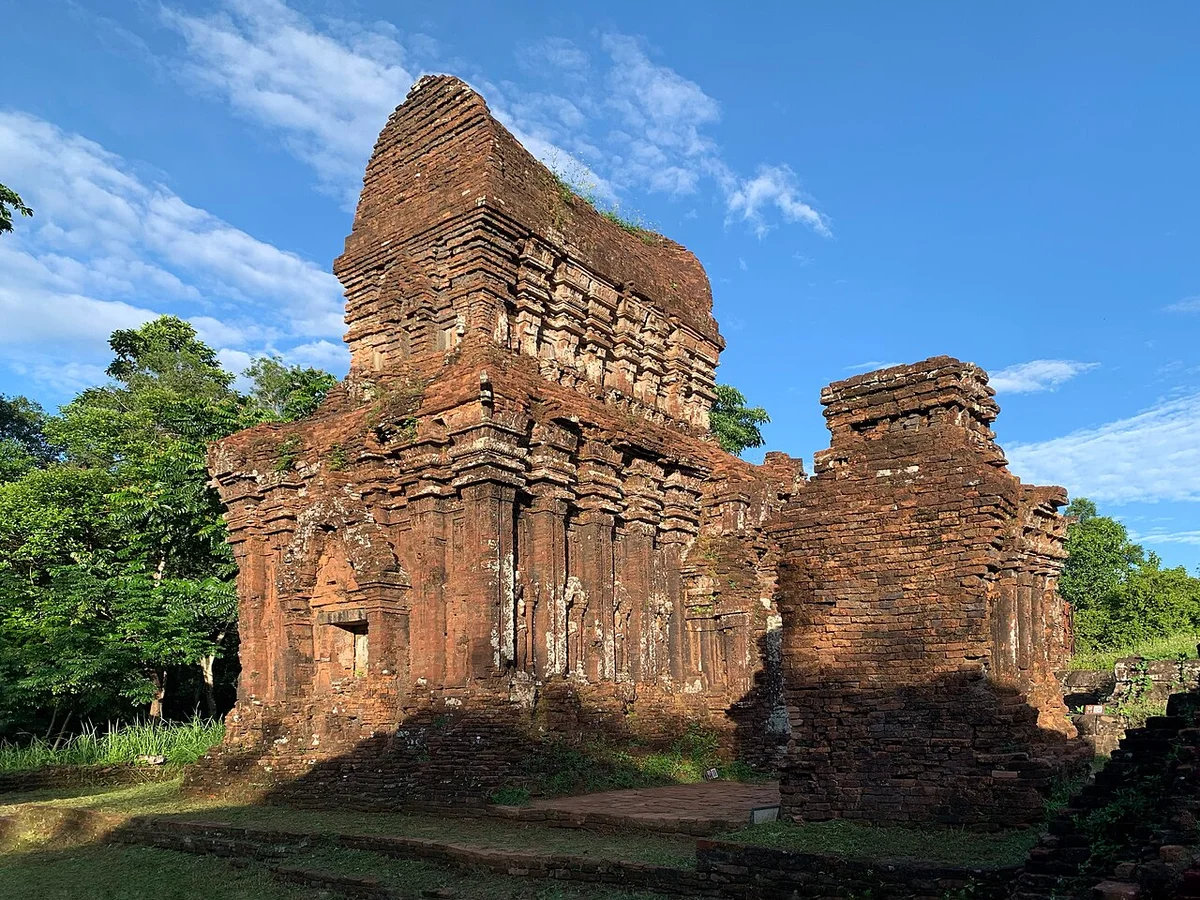
The brick tower-temples at Mỹ Sơn preserve a long period of Cham religious and political history, principally from the fourth to thirteenth centuries. Hindu traditions, especially devotion to Shiva, were adapted within a distinct local architectural culture. Cham engineering and sculpture were not simply copies of Indian forms. This coastal history belongs within the past of present-day Vietnam without being equated with every later Vietnamese state.
Đại Việt and Thăng Long
In the Red River Delta, the Lý dynasty built its eleventh-century imperial citadel over an older fortress site. Thăng Long, in present-day Hanoi, expressed the power of Đại Việt. Successive archaeological layers show changing institutions and construction. Northern Chinese influences and contacts with Champa were part of a locally developed culture, not evidence that all these political worlds were identical.
A later capital at Huế
Huế became the capital of a unified Vietnam in 1802 under the Nguyễn dynasty, whose court lasted until 1945. Palaces, fortifications, ritual places and royal tombs were arranged in relation to the Perfume River and surrounding landscape. This is a much later imperial setting than Mỹ Sơn or early Thăng Long. The dynasty’s lifespan should not be confused with uninterrupted political independence.
What the photograph can show
The 2024 image shows surviving and conserved brick buildings at Mỹ Sơn. It does not depict Huế, an undamaged medieval city or the people who once used the sanctuary. Comparing the three sites establishes a starting framework; land, village life, Cham communities, dynastic conflicts, colonial rule and modern national history still require distinct accounts.