ATLAS / ANCIENT—PRESENT
All historyHow Atlas is sourced← Back to Atlas
Back to Atlas timeline
Korean and Vietnam wars — original Atlas editorial reconstruction

1950–1975 CE · two wars with distinct origins and endpoints · Asia · War

Korean and Vietnam wars

War in Korea from 1950 to the 1953 armistice and Vietnam’s longer wars through 1975 arose from distinct histories of colonial rule, revolution, divided states, civil conflict and large-scale foreign intervention.

Atlas dossier · Cold War & Decolonization

Free device narration · synchronized English captions · transcript available

Why it matters

Calling both proxy wars is incomplete: Korean and Vietnamese actors pursued their own aims, civilians bore bombing and displacement, Korea remained divided without a peace treaty and Vietnam was reunified under communist rule.

Date
1950–1975 CE · two wars with distinct origins and endpoints
Historical setting
Cold War & Decolonization · Asia
People & communities
Korean and Vietnamese civilians · divided governments · international forces
Two wars, not one proxy template

The Korean War followed liberation from Japanese empire, competing states and escalating civil conflict before the June 1950 invasion and international intervention. Vietnam’s wars grew from anti-colonial struggle against France, partition, rival governments and successive foreign interventions. Superpower rivalry mattered without exhausting local causes or aims.

Academic research on the Korean and Vietnam wars

Their endpoints were fundamentally different

The July 1953 Korean armistice stopped large-scale fighting without a peace treaty and left the peninsula divided. In 1975 North Vietnamese forces captured Saigon and Vietnam was reunified under communist rule. Pairing the wars should clarify, not blur, those opposite political outcomes.

United Nations archives: Korean War

Civilians were not a secondary consequence

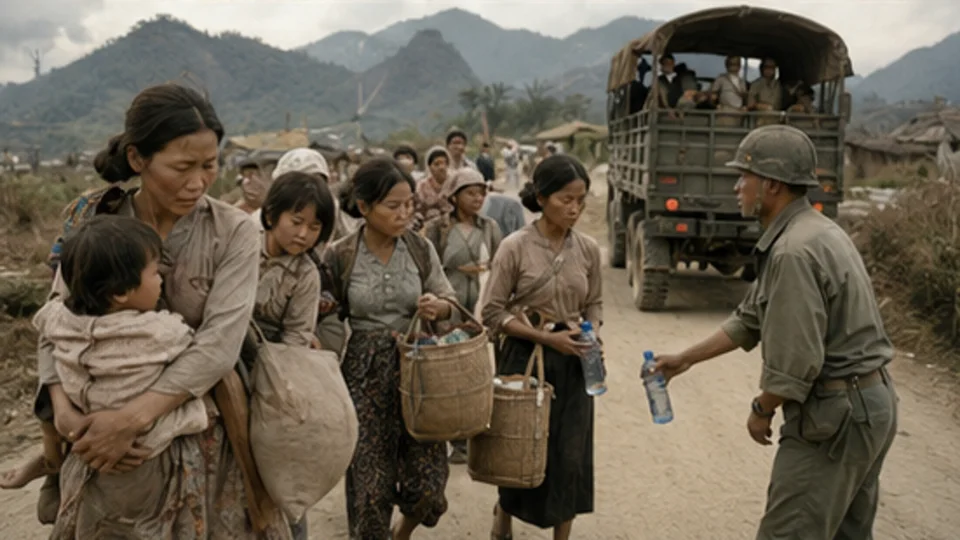
Mass killing, bombing, displacement, divided families and environmental damage reshaped both societies. South Korean, North Korean, South Vietnamese and North Vietnamese governments and armed forces also used coercion. Evidence must include civilian and refugee records rather than only U.S., Soviet or Chinese strategy.

Academic research on the Korean and Vietnam wars

Illustrated sequence

Silent pan-and-zoom motion derivative of the Korean and Vietnam wars reconstruction; not archival footage.

Korean and Vietnam wars — original Atlas editorial reconstruction
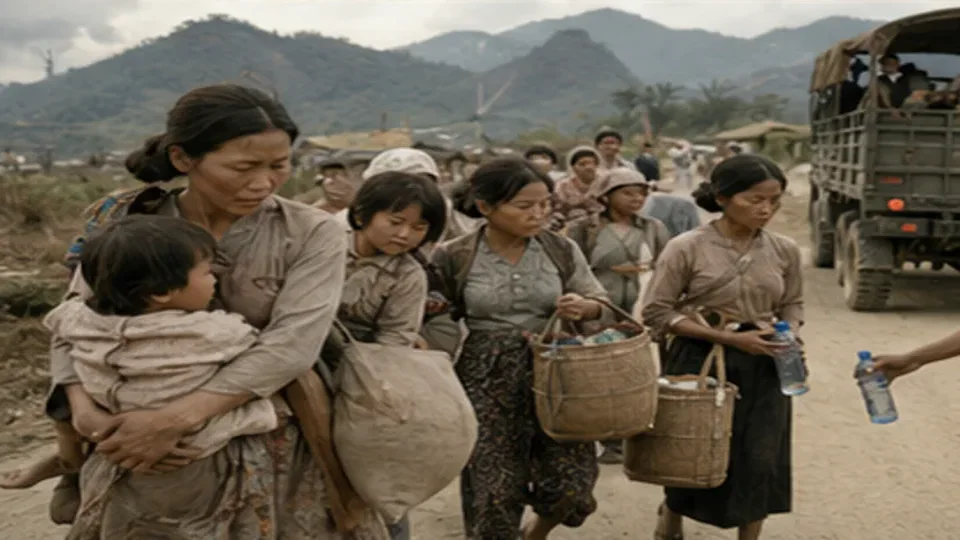
IMAGE 1

Original Atlas reconstruction

Primary Atlas editorial reconstruction for Korean and Vietnam wars.

World History in Pictures · Public site artwork. This record does not grant third-party republication rights.

How Atlas classifies this artwork →
Korean and Vietnam wars: people and action
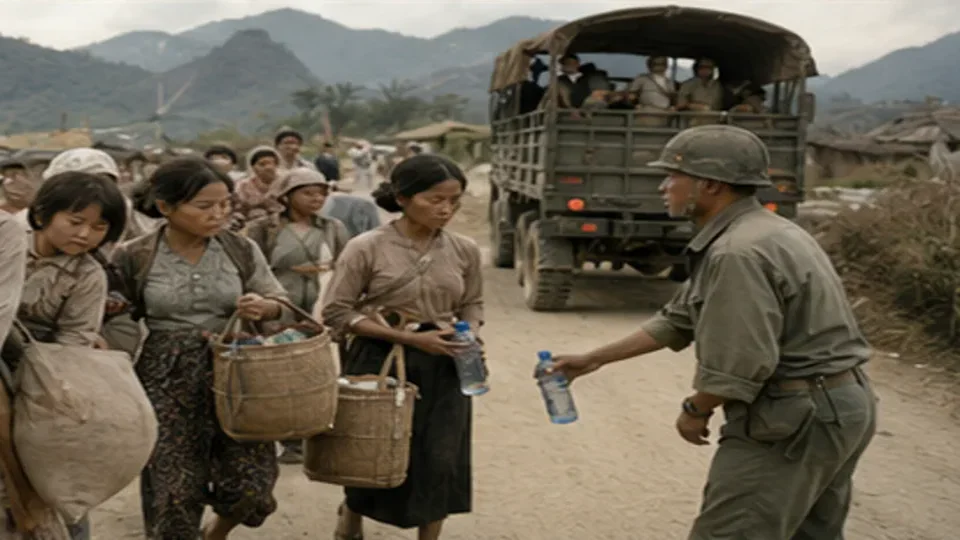
IMAGE 2

Detail crop — same artwork

Detail crop from the same Korean and Vietnam wars reconstruction; not an independent historical record.

World History in Pictures · Same editorial artwork package

How Atlas classifies this artwork →
Korean and Vietnam wars: setting and consequences
IMAGE 3

Context crop — same artwork

Context crop from the same Korean and Vietnam wars reconstruction; not an independent historical record.

World History in Pictures · Same editorial artwork package

How Atlas classifies this artwork →

Interpretation note

Evidence, memory and historical debate

This dossier distinguishes the event’s basic chronology from later arguments about meaning, responsibility and legacy. When comparing religious, national, Indigenous or scholarly interpretations, consult the primary and institutional sources above alongside peer-reviewed historical work.

Elsewhere in the world

Parallel histories near this moment

1948–1994 CE · formal apartheid to first democratic election · AfricaApartheid and the struggle for a democratic South Africa

The National Party formalized apartheid from 1948 upon older colonial segregation, enforcing racial classification, dispossession, forced removal, exclusion and repression. Diverse internal resistance and international campaigns helped force negotiation and universal-suffrage elections in 1994.

1948 CE · Shannon’s mathematical communication theory · AmericasInformation theory and digital communication

Claude Shannon’s 1948 papers formalized information, entropy, noise and channel capacity, building on earlier communication engineering and creating a mathematical limit framework for reliable signals.

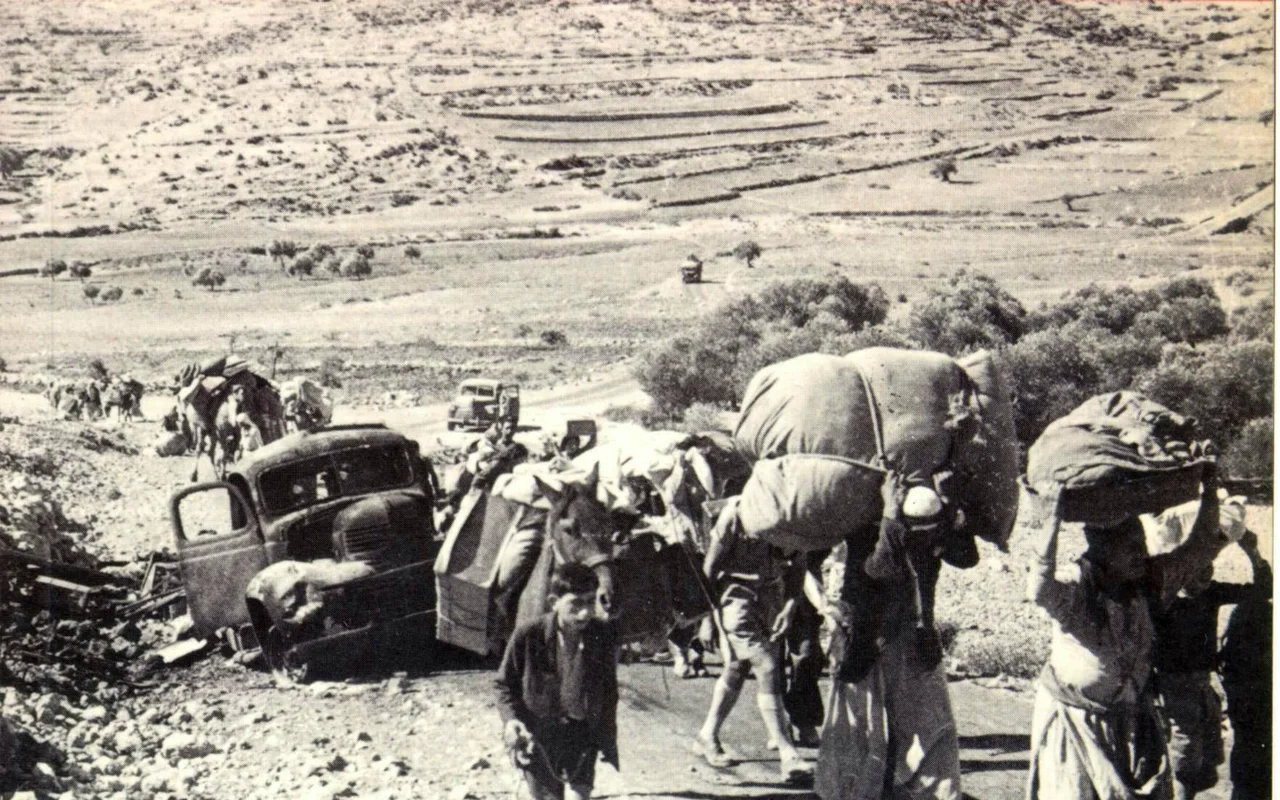
1947–1949 CE · partition proposal, civil war, statehood, regional war and displacement · Middle East1948 war, Palestinian displacement and the making of Israel

The UN General Assembly recommended partition in 1947; civil war followed, Israel declared statehood as the British Mandate ended in May 1948, and neighbouring Arab states entered the war. More than 700,000 Palestinians were displaced or expelled in the Nakba.

Explore the connections

Khmer Rouge rule and mass atrocities in Cambodia