ATLAS / ANCIENT—PRESENT
All historyHow Atlas is sourced← Back to Atlas
Back to Atlas timeline
Major Anglo-French and European wars — original Atlas editorial reconstruction

1568–1815 CE · selected conflict survey · Europe · War

Major Anglo-French and European wars

This selected survey follows dynastic, religious and commercial conflicts from the Dutch Revolt and wars of Louis XIV through the Seven Years’ and Napoleonic Wars, often extending overseas.

Atlas dossier · Early Modern World

Free device narration · synchronized English captions · transcript available

Why it matters

These wars developed fiscal-military states, redrew borders and tied European competition to empire in Africa, Asia and the Americas.

Date
1568–1815 CE · selected conflict survey
Historical setting
Early Modern World · Europe
People & communities
Soldiers and civilians · European monarchies · colonized allies and adversaries · Napoleon

A survey of selected conflicts

The 1568–1815 span does not describe one continuous war or every European conflict. It links selected struggles whose coalitions, religious alignments and imperial theatres changed repeatedly. Civilian loss, taxation and colonial warfare belong alongside dynastic and battlefield narratives.

UK National Archives: Anglo-French wars research shelf ↗

Why the survey ends in 1815

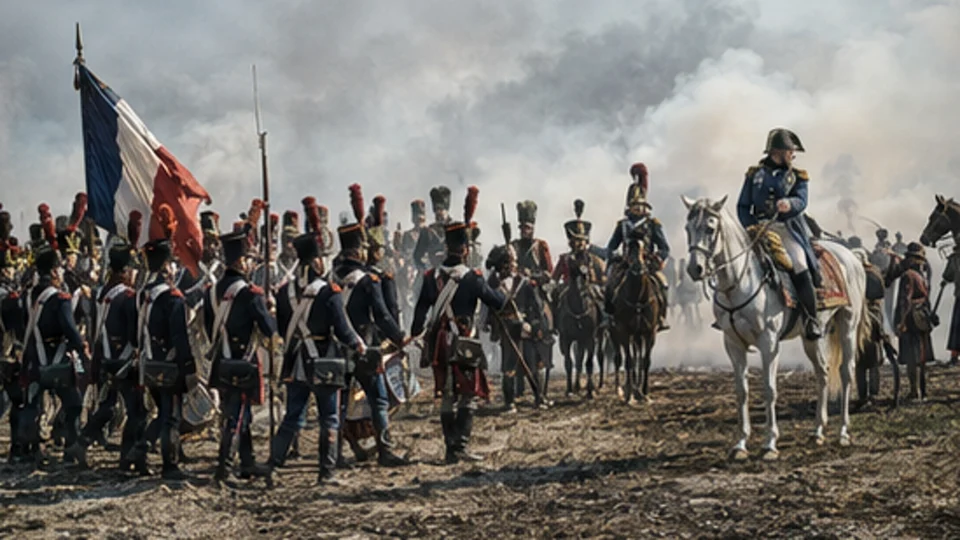
The earlier 1814 endpoint stopped at Napoleon’s first abdication. Waterloo was fought on 18 June 1815 after his return, against a coalition led by Wellington and Blücher. Extending the display to 1815 distinguishes those two milestones without implying that European or colonial warfare ended there.

National Army Museum: Battle of Waterloo ↗

Illustrated sequence

Silent pan-and-zoom motion derivative of the Major Anglo-French and European wars reconstruction; not archival footage.

Interpretation note

Evidence, memory and historical debate

This dossier distinguishes the event’s basic chronology from later arguments about meaning, responsibility and legacy. When comparing religious, national, Indigenous or scholarly interpretations, consult the primary and institutional sources above alongside peer-reviewed historical work.

Elsewhere in the world

Parallel histories near this moment

1602–1720 CE · institutional milestones, not a complete history · GlobalJoint-stock companies, exchanges and global finance

The Dutch East India Company, securities trading, insurance and public debt developed durable institutions for pooling capital and financing long-distance commerce; the 1720 crises exposed their risks.

1526–1858 CE · dynastic survey · AsiaMughal India

Mughal rulers governed much of South Asia through negotiated sovereignty, taxation and military power while court culture supported major architecture, painting and literature.

c. 1501–1866 CE · voyage survey; resistance continued · GlobalAtlantic slave trade and resistance

European and American traders forcibly transported more than twelve million captive Africans across the Atlantic; resistance by Africans and their descendants took many forms throughout slavery and abolition.