ATLAS / ANCIENT—PRESENT
All historyHow Atlas is sourced← Back to Atlas
Back to Atlas timeline
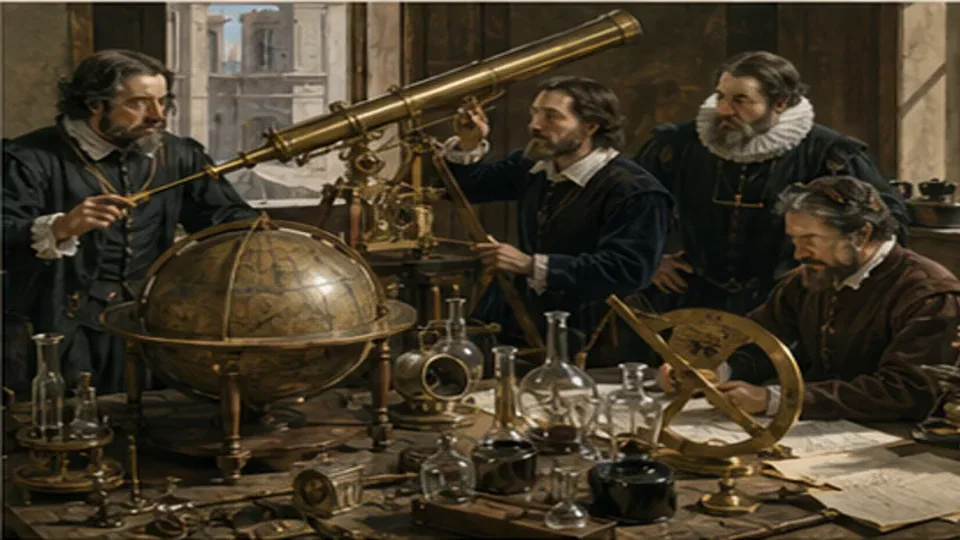
Scientific Revolution — original Atlas editorial reconstruction

1543–1700 CE · conventional European survey · Europe · Science

Scientific Revolution

Across a conventional European survey period, new models of astronomy, experiment, mathematics and instrumentation challenged inherited explanations of nature.

Atlas dossier · Early Modern World

Free device narration · synchronized English captions · transcript available

Why it matters

Changing methods and institutions reshaped later ideas of evidence, while drawing on artisans, correspondence and knowledge that crossed political and cultural boundaries.

Date
1543–1700 CE · conventional European survey
Historical setting
Early Modern World · Europe
People & communities
Copernicus · Galileo · Kepler · Newton · artisans and instrument makers
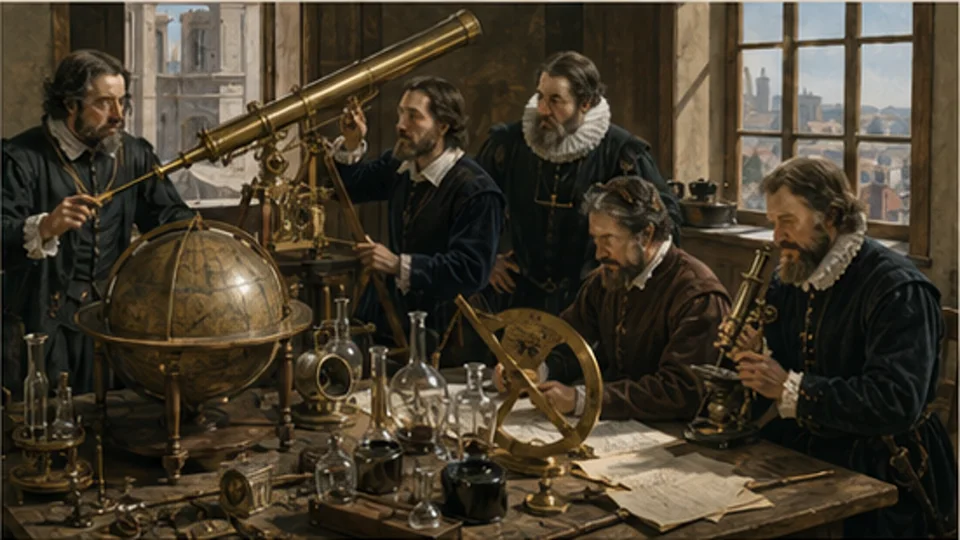
A useful but conventional boundary

The 1543–1700 range is an organising convention centred on early modern Europe, not a claim that science suddenly began or changed everywhere at once. Copernicus’s model, Kepler’s revisions and later telescopic evidence belong to a developing argument rather than a single completed revolution.

Library of Congress: Copernicus, Brahe and Kepler

Books, instruments and institutions

The familiar sequence of named authors depended on printers, instrument makers, observers and correspondence. Newton’s Principia reached print in 1687 with Edmond Halley’s encouragement and practical support. This material history keeps discovery from appearing to be the work of isolated minds alone.

Royal Society: the Principia manuscript and publication

Illustrated sequence

Silent pan-and-zoom motion derivative of the Scientific Revolution reconstruction; not archival footage.

Scientific Revolution — original Atlas editorial reconstruction
IMAGE 1

Original Atlas reconstruction

Primary Atlas editorial reconstruction for Scientific Revolution.

World History in Pictures · Public site artwork. This record does not grant third-party republication rights.

How Atlas classifies this artwork →
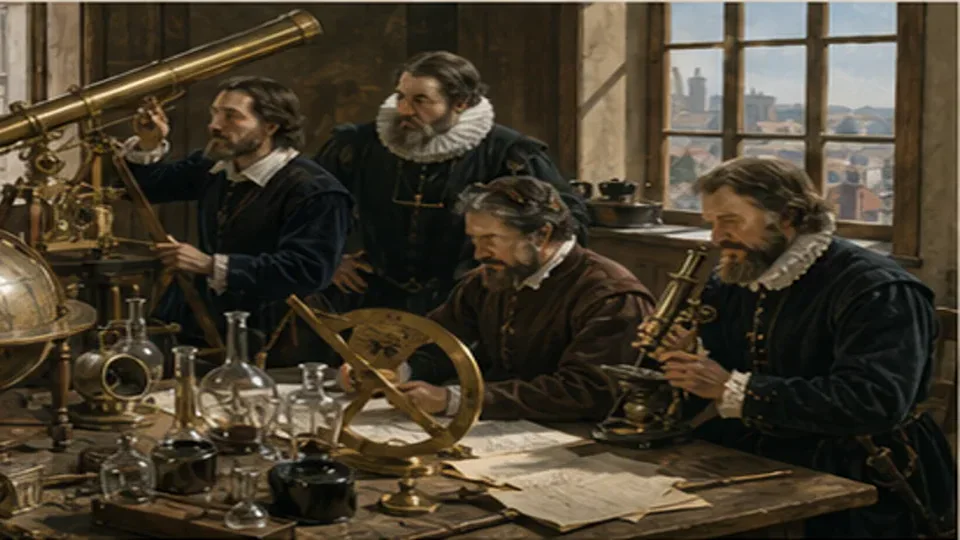
Scientific Revolution: people and action
IMAGE 2

Detail crop — same artwork

Detail crop from the same Scientific Revolution reconstruction; not an independent historical record.

World History in Pictures · Same editorial artwork package

How Atlas classifies this artwork →
Scientific Revolution: setting and consequences
IMAGE 3

Context crop — same artwork

Context crop from the same Scientific Revolution reconstruction; not an independent historical record.

World History in Pictures · Same editorial artwork package

How Atlas classifies this artwork →

Interpretation note

Evidence, memory and historical debate

This dossier distinguishes the event’s basic chronology from later arguments about meaning, responsibility and legacy. When comparing religious, national, Indigenous or scholarly interpretations, consult the primary and institutional sources above alongside peer-reviewed historical work.

Elsewhere in the world

Parallel histories near this moment

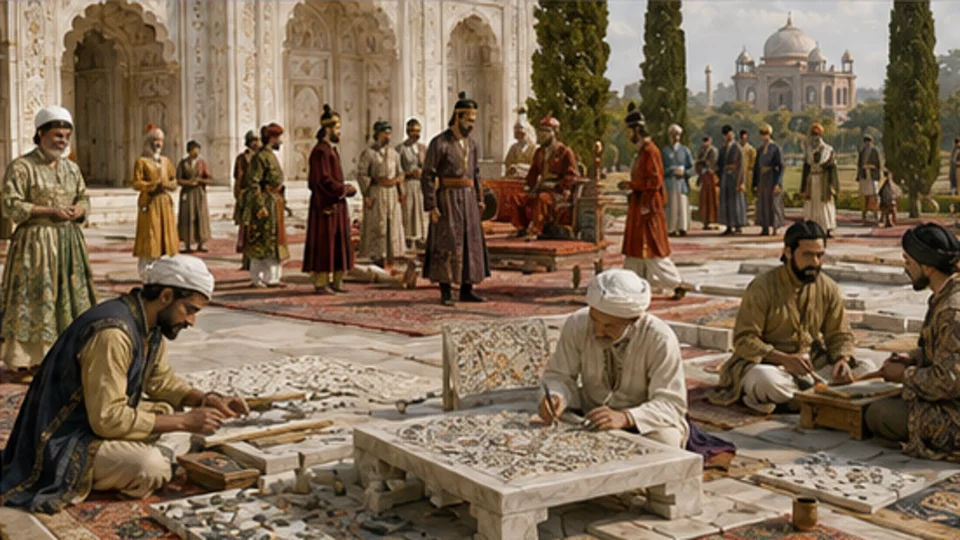
1526–1858 CE · dynastic survey · AsiaMughal India

Mughal rulers governed much of South Asia through negotiated sovereignty, taxation and military power while court culture supported major architecture, painting and literature.

c. 1501–1866 CE · voyage survey; resistance continued · GlobalAtlantic slave trade and resistance

European and American traders forcibly transported more than twelve million captive Africans across the Atlantic; resistance by Africans and their descendants took many forms throughout slavery and abolition.

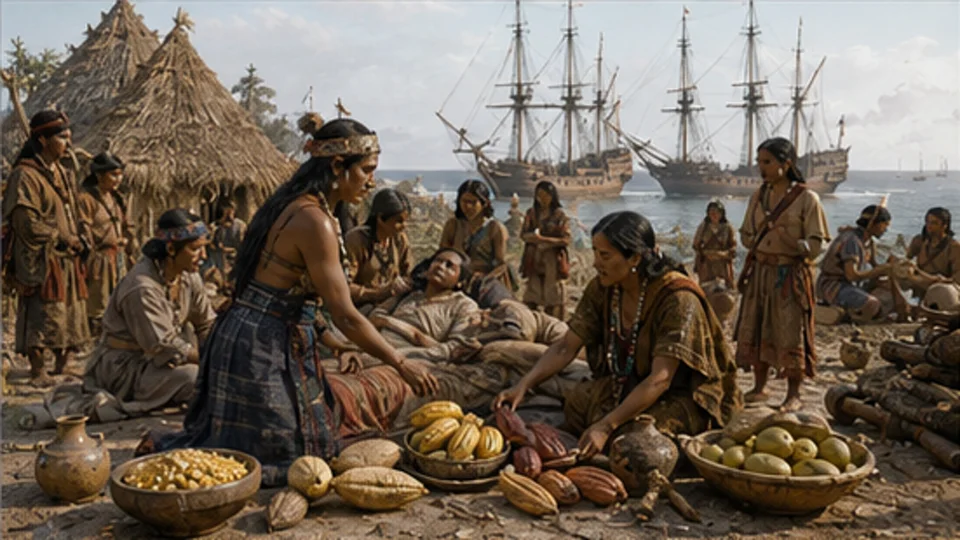
1492–1700 CE · Atlantic transformation; consequences continued · GlobalColumbian Exchange and Indigenous catastrophe

Atlantic crossings moved crops, animals, pathogens and people between hemispheres while invasion, epidemic disease, enslavement and forced labour devastated many Indigenous societies.