ATLAS / ANCIENT—PRESENT
All historyHow Atlas is sourced← Back to Atlas
Back to Atlas timeline
Katalin Kariko.jpg

2020–2023 CE · first COVID-19 authorizations and Nobel recognition of enabling science · Europe · Medicine

mRNA vaccines

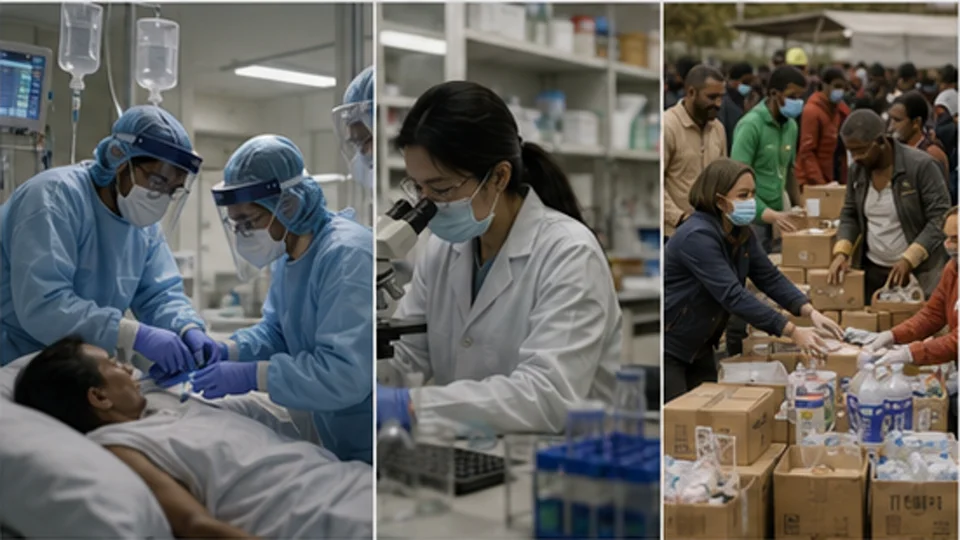
COVID-19 mRNA vaccines authorized in 2020 combined decades of work on messenger RNA, modified nucleosides, lipid nanoparticles, antigen design, manufacturing and clinical trials. The platform instructs cells to make an antigen; it does not alter the recipient’s genome.

Atlas dossier · Digital & Global Age

Free device narration · synchronized English captions · transcript available

Why it matters

The vaccines greatly reduced severe COVID-19 risk, but protection can wane and access, cold-chain capacity, production and trust were uneven. Rare adverse events require surveillance, and Nobel recognition of Karikó and Weissman marks enabling discoveries rather than the entire vaccine history.

Date
2020–2023 CE · first COVID-19 authorizations and Nobel recognition of enabling science
Historical setting
Digital & Global Age · Europe
People & communities
Katalin Karikó · Drew Weissman · lipid-nanoparticle and coronavirus researchers · BioNTech/Pfizer and Moderna teams · trial participants · regulators · manufacturers · vaccinators

Rapid deployment rested on decades of work

The 2020 COVID-19 vaccines did not begin with the pandemic. Messenger-RNA biology, methods to reduce inflammatory reactions, lipid-nanoparticle delivery, coronavirus research, antigen design, manufacturing and trial networks accumulated over decades. Pandemic funding and overlapping stages accelerated development without eliminating clinical evaluation.

Nobel Prize: mRNA vaccine enabling discoveries

The platform instructs; it does not rewrite DNA

Vaccine mRNA is delivered into the cytoplasm and provides temporary instructions for making an antigen that trains immune responses. It does not need to enter the nucleus or alter the recipient's genome. Product formulation, dose, storage and immune response still differ across vaccines and populations.

World Health Organization: COVID-19 vaccines

Success, surveillance and access coexist

Trials and population evidence showed strong protection against severe disease, while protection against infection changed with time and variants. Rare adverse events require continuing surveillance and transparent risk communication. Unequal supply, manufacturing capacity, cold chains, patents and trust shaped who benefited and when.

Academic research on mRNA vaccines

Illustrated sequence

A visual presentation accompanying this entry. Read each image’s attribution to distinguish archival records, later depictions and reconstructions.

Interpretation note

Evidence, memory and historical debate

This dossier distinguishes the event’s basic chronology from later arguments about meaning, responsibility and legacy. When comparing religious, national, Indigenous or scholarly interpretations, consult the primary and institutional sources above alongside peer-reviewed historical work.

Elsewhere in the world

Parallel histories near this moment

30 January 2020–5 May 2023 CE · WHO global-emergency boundary; disease continues · GlobalCOVID-19 pandemic emergency

After cases of a new coronavirus disease were identified in late 2019, WHO declared a Public Health Emergency of International Concern on 30 January 2020 and characterised COVID-19 as a pandemic on 11 March. WHO ended the PHEIC on 5 May 2023 because COVID-19 had become an established, ongoing health issue—not because the virus or every pandemic consequence disappeared.

25 December 2021–12 July 2022 CE · launch, commissioning and first science-image release · GlobalJames Webb Space Telescope

Webb launched on an ESA-provided Ariane 5 from French Guiana on 25 December 2021, unfolded and aligned its segmented mirror near the Sun–Earth L2 region and completed commissioning before its first public science images and spectra were released in July 2022.

2017–7 September 2026 CE · transformer research through mass public adoption; selected review boundary · GlobalGenerative AI enters mass use

Transformer research published in 2017 contributed to later foundation models, while diffusion and other model families advanced image, audio and video generation. Public tools reached mass use from 2022, but no single chatbot or company invented generative artificial intelligence.