ATLAS / ANCIENT—PRESENT
All historyHow Atlas is sourced← Back to Atlas
Back to Atlas timeline
COVID-19 pandemic emergency — original Atlas editorial reconstruction

30 January 2020–5 May 2023 CE · WHO global-emergency boundary; disease continues · Global · Medicine

COVID-19 pandemic emergency

After cases of a new coronavirus disease were identified in late 2019, WHO declared a Public Health Emergency of International Concern on 30 January 2020 and characterised COVID-19 as a pandemic on 11 March. WHO ended the PHEIC on 5 May 2023 because COVID-19 had become an established, ongoing health issue—not because the virus or every pandemic consequence disappeared.

Atlas dossier · Digital & Global Age

Free device narration · synchronized English captions · transcript available

Why it matters

COVID-19 caused mass illness, death, disability and disruption while exposing unequal risks by occupation, income, race, age, disability and access to care. Vaccines, testing, treatment, ventilation and public-health measures developed on different timelines; long COVID and continuing transmission prevent a simple end date.

Date
30 January 2020–5 May 2023 CE · WHO global-emergency boundary; disease continues
Historical setting
Digital & Global Age · Global
People & communities
patients and bereaved families · people with long COVID · health and care workers · essential workers · laboratory and clinical teams · public-health institutions · community organisations

Emergency dates describe institutions, not the virus's life

WHO declared a PHEIC on 30 January 2020 and characterised the outbreak as a pandemic on 11 March. Ending the PHEIC on 5 May 2023 meant COVID-19 no longer met that emergency definition; WHO explicitly described it as established and ongoing. The virus, long COVID and unequal consequences did not end that day.

World Health Organization: COVID-19 pandemic ↗

Evidence and interventions changed over time

Testing, clinical care, vaccines, treatments, ventilation and public-health measures developed under uncertainty and varied by place. No single intervention was sufficient in every phase. Later knowledge should not be projected backward when judging early decisions, but uncertainty also cannot excuse ignored evidence or inequity.

U.S. National Library of Medicine: COVID-19 resources ↗

A global label contains unequal local histories

Exposure and outcomes differed by occupation, housing, age, disability, race, income, migration status and access to care. Health workers, essential workers, patients, families and community organisations carried distinct burdens. Official counts also understate some mortality and disability, so exact totals need date and method.

Academic research on COVID-19 ↗

Illustrated sequence

Silent pan-and-zoom motion derivative of the COVID-19 pandemic emergency reconstruction; not archival footage.

Interpretation note

Evidence, memory and historical debate

This dossier distinguishes the event’s basic chronology from later arguments about meaning, responsibility and legacy. When comparing religious, national, Indigenous or scholarly interpretations, consult the primary and institutional sources above alongside peer-reviewed historical work.

Elsewhere in the world

Parallel histories near this moment

2020–2023 CE · first COVID-19 authorizations and Nobel recognition of enabling science · EuropemRNA vaccines

COVID-19 mRNA vaccines authorized in 2020 combined decades of work on messenger RNA, modified nucleosides, lipid nanoparticles, antigen design, manufacturing and clinical trials. The platform instructs cells to make an antigen; it does not alter the recipient’s genome.

7 October 2023–7 September 2026 CE · attacks, Gaza war and regional escalation; review boundary · Middle EastIsrael–Palestine war and regional escalation

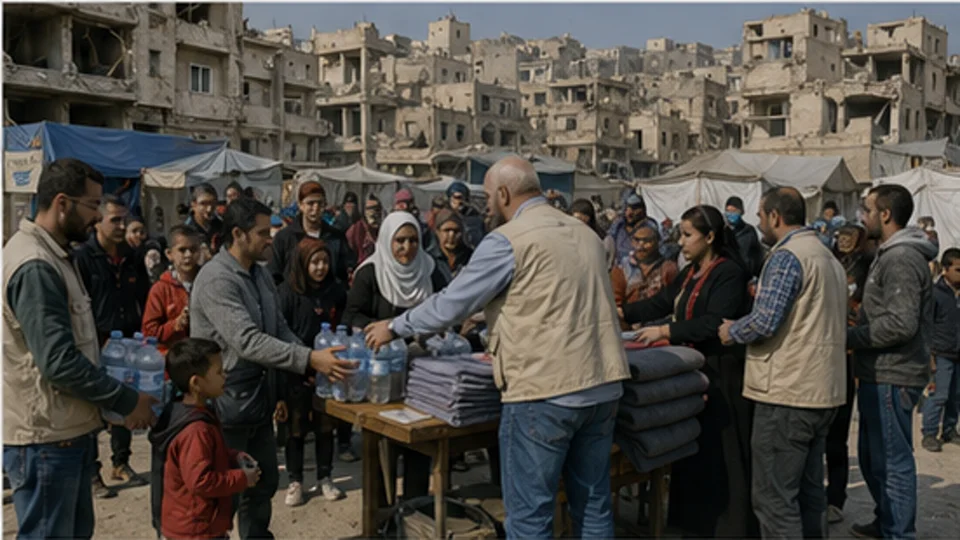
Hamas and other Palestinian armed groups attacked communities and military sites in Israel on 7 October 2023, killing civilians and taking hostages. Israel’s ensuing military campaign in Gaza caused enormous Palestinian civilian death, destruction and displacement. Violence also spread through connected regional fronts and remained unresolved at the 7 September 2026 review boundary.

February 2014–7 September 2026 CE · occupation, Donbas war and full-scale invasion; review boundary · EuropeRussia–Ukraine War

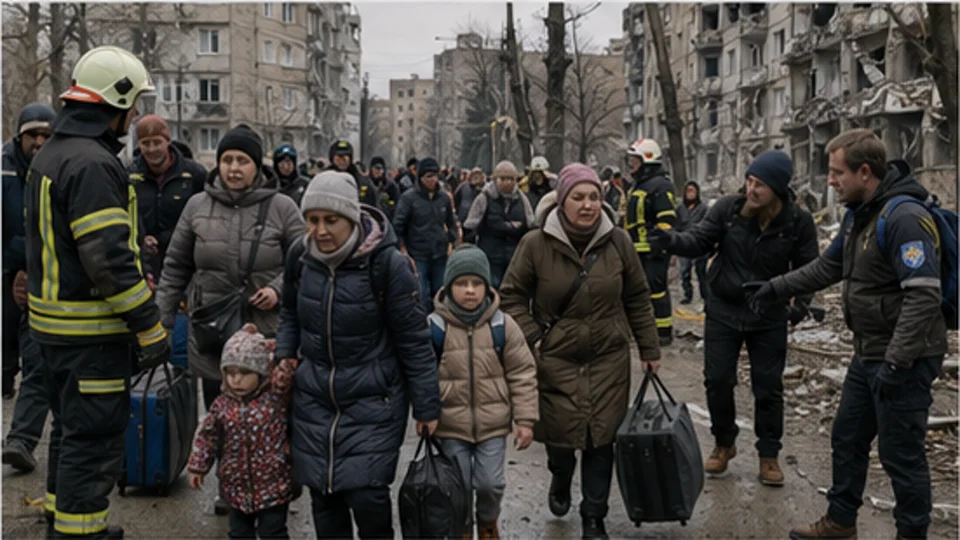
Russia seized and annexed Crimea in 2014 in an act rejected by the UN General Assembly, while war developed in Donbas. Russia launched its full-scale invasion of Ukraine on 24 February 2022. Fighting, occupation, strikes and displacement remained ongoing at this dossier’s 7 September 2026 review boundary.