ATLAS / WORLD HISTORY IN PICTURES

The interactive collection

Turn it. Trace it.
Understand it.

Move around objects, follow a journey, trace light and circulation, cycle PCR, build CT and MRI signals, follow mRNA into immune memory, guide CRISPR, orbit planets, turn DNA, compare plate boundaries and make induction visible. Eight downloadable models and twelve browser-native scenes connect architecture, technology, biology, medicine, Earth and space science with the histories behind them.

Each lesson is a labelled teaching reconstruction with sources and simplifications. 3D loads only when you choose to explore.

New · structures and systems

See relationships in motion.

01 / Space · interactive 3D

Orbit the planetary family

Turn a deliberately compressed model, select all eight planets, then compare it with NASA pictures.

02 / Biology · interactive 3D

Turn the double helix

Isolate complementary pairs and the two backbones, then open the illustrated DNA history.

03 / Earth · interactive 3D

Move Earth’s plates

Compare divergent, oceanic-subduction and transform boundaries in a sourced teaching cross-section.

04 / Energy · interactive 3D

Turn motion into current

Move a magnet through a coil and see why changing magnetic flux—not a stationary magnet—matters.

05 / Optics · interactive 3D

Follow light through a telescope

Adjust aperture and focus in a simplified Galilean ray path, then return to the real museum instrument.

06 / Microscopy · interactive 3D

Bring the small world into focus

Move the specimen stage, switch objectives and follow illumination from source to eyepiece.

07 / Physiology · interactive 3D

Trace one continuous circulation

Follow blood from the body through the right heart, lungs, left heart and back to the body.

08 / Molecular diagnostics · interactive 3D

Cycle a DNA target

Separate strands, bind primers and extend new DNA beside a photographed early thermal cycler.

09 / Medical imaging · interactive 3D

Build a CT slice

Follow X-ray measurements around one section, then see how computation turns many views into a cross-section.

10 / Gene editing · interactive 3D

Guide, cut, then repair

Match a guide, bind Cas9, cut a target and separate the variable repair outcome from the molecular tool.

11 / Medical imaging · interactive 3D

Turn alignment into an MRI signal

Separate net alignment, radio-frequency excitation, relaxation detection and spatial encoding.

12 / Immunology · interactive 3D

Follow a message into immune memory

Trace lipid delivery, cytoplasmic translation, antigen display and the formation of immune memory.

A timeline of changing knowledge

Play the sequence, step through it, or choose a milestone. Spacing on the axis measures elapsed time.

8 of 8
2500 BCE: Brick, water and an Indus city-25001290 BCE: The shaduf and the work of irrigation1291 CE: The layers of an astrolabe1450 CE: Pressure, type and the printed page1712 CE: The Newcomen power stroke1712 CE: Power, reset and repeat1752 CE: Current, paddles and a turning axle1914 CE: A chamber between two water levels1914

1914 CE · A chamber between two water levels. Watch the gates close before the chamber rises. Scrub back and forth to see why the upper gates open only after the water levels match. Read the study →

Read every milestone as text
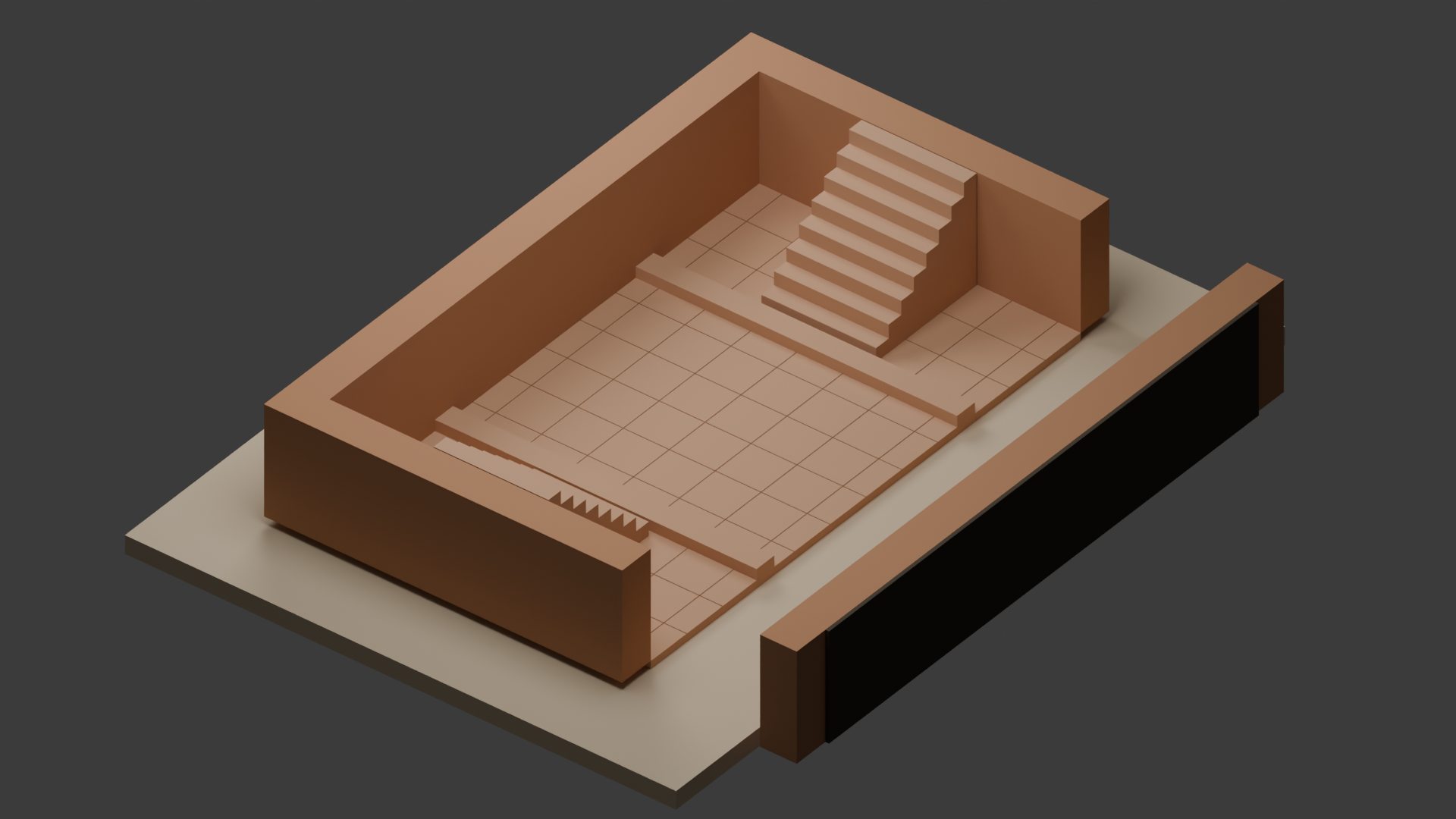
  1. 2500 BCEBrick, water and an Indus city. Turn the basin around and slide its east wall aside to reveal the interior. Compare the opposing stairs, floor and waterproofing layer in an architectural cutaway.
  2. 1290 BCEThe shaduf and the work of irrigation. Follow the bucket and counterweight on opposite sides of a pivot. This view explains the lever principle while the accompanying study examines irrigation through an ancient tomb scene and a later model.
  3. 1291 CEThe layers of an astrolabe. Explore a layered astronomical instrument. Rotate the model to inspect the body, central pivot and moving star framework; then compare the teaching model with the surviving object record.
  4. 1450 CEPressure, type and the printed page. Turn the press around, follow the bed and pause the screw at the moment of pressure. Separate the motion of the turning spindle from the platen that presses the paper.
  5. 1712 CEThe Newcomen power stroke. Inspect the piston, beam and pump rod from different angles. Follow one power stroke and distinguish the force on the piston from the motion transmitted to the mine pump.
  6. 1712 CEPower, reset and repeat. Follow a full motion cycle: the piston descends during the power stroke and rises again as the heavier pump side descends. Pause and turn the engine to compare the two movements.
  7. 1752 CECurrent, paddles and a turning axle. Examine a current-driven wheel and its axle. The rotating paddles demonstrate how moving water can turn a mechanism, before gears or belts carry that power to other work.
  8. 1914 CEA chamber between two water levels. Watch the gates close before the chamber rises. Scrub back and forth to see why the upper gates open only after the water levels match.

The first circumnavigation: selected waypoints

The line joins selected waypoints schematically. It does not reproduce the ship’s exact course; coastlines are modern. Playback advances between milestones rather than representing travel speed.

1519 — 1522A voyage around the world

Sanlúcar de Barrameda · Strait of Magellan · Guam · Mactan · Tidore, Maluku · Cape of Good Hope · Sanlúcar de Barrameda

Loads the globe on request. A full text route is below.

1519 · departure · Sanlúcar de Barrameda. The expedition left Spain seeking a westward route to the Spice Islands.

  1. The expedition left Spain seeking a westward route to the Spice Islands.

  2. A passage through southern South America brought the surviving ships into the Pacific.

  3. The fleet reached Guam after crossing the Pacific. The islands already had established communities and maritime histories.

  4. Magellan died during fighting at Mactan. He did not personally complete the circumnavigation.

  5. The expedition reached the clove-producing islands that had motivated its commercial objective.

  6. Victoria returned west across the Indian Ocean and around southern Africa under Elcano.

  7. Victoria’s return completed the first documented circumnavigation. The achievement depended on a multinational crew and came with severe losses.

Expedition documents and sources · Modern basemap: Natural Earth / CesiumJS.

Read the voyage, its context and its sources →