1536–1564 CE · Europe · Faith
Calvin and Geneva: books, institutions and contested authority
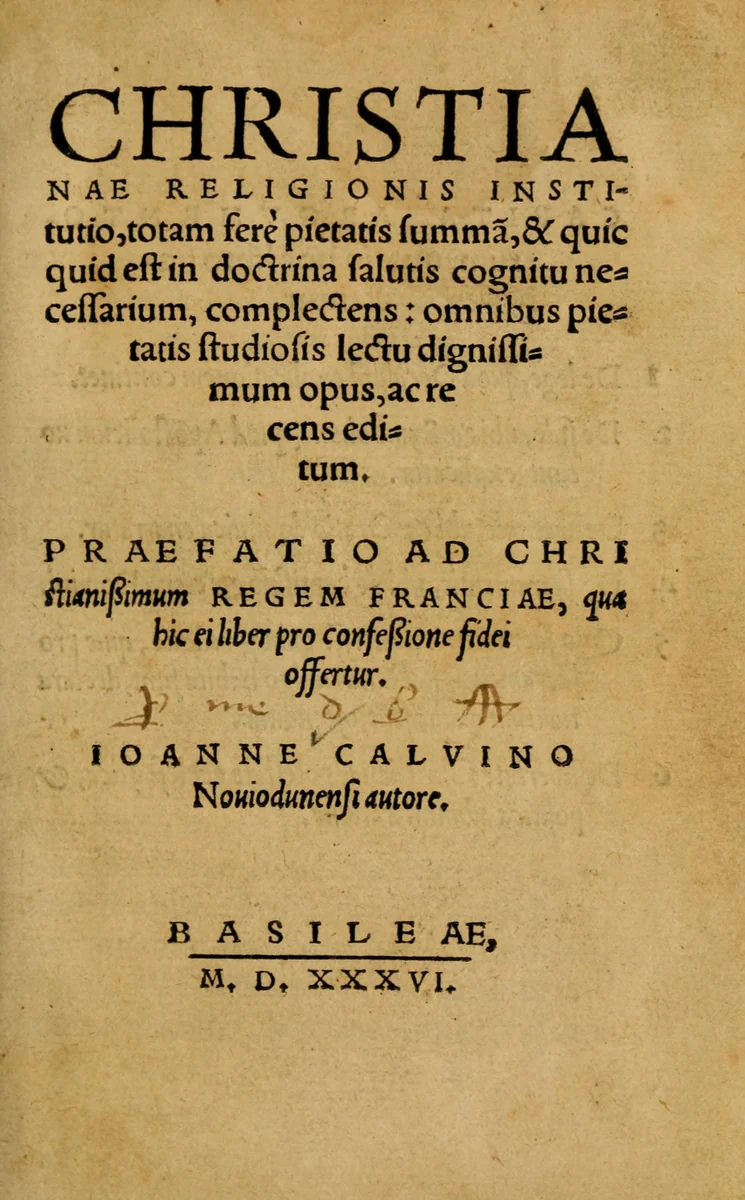
A surviving 1536 title page opens a study of Calvin’s changing books, Geneva’s church institutions and the limits of its religious settlement.
 Enlarge and examine the picture
John Calvin / Internet Archive, via Wikimedia Commons · Public domain · Resized without cropping and converted to WebP · Source and rights ↗ · Licence terms
A book before a settled church
John Calvin’s Institutes of the Christian Religion first appeared in Latin at Basel in 1536. The pictured title page belongs to that initial publication, not its substantially expanded later editions. Calvin developed the work over decades, and a French edition appeared in 1541. Print communicated Reformed teaching beyond one congregation or city. Readers encountered a developing theological argument, not a system issued complete at a single moment.
Exile and return
Guillaume Farel persuaded Calvin to remain in Geneva in 1536. Disputes over religious discipline and civic authority contributed to their expulsion in 1538. Calvin subsequently worked in Strasbourg, where Martin Bucer influenced him, before returning to Geneva in September 1541. This interrupted career complicates the picture of a reformer immediately controlling an obedient city. Geneva’s magistrates could invite, resist and expel ministers; the relationship between church and government remained contested.
How the new church worked
The Ecclesiastical Ordinances of 1541 distinguished pastors, teachers, elders and deacons. Pastors preached and administered sacraments; teachers provided instruction; elders supervised conduct; deacons served the sick and poor. The Consistory joined ministers with lay elders. These arrangements combined teaching, assistance and discipline. They were neither modern religious liberty nor a system in which Calvin personally possessed every governmental power. Disagreement continued over appointments and who could exclude people from communion.
Servetus and coercion
The execution of Michael Servetus exposes the coercive side of this religious order. In August 1553, Geneva’s magistrates imprisoned him at Calvin’s request. The city council condemned him, and he was burned on 27 October. Calvin participated in the proceedings and subsequently defended the punishment of heresy. The council issued the civil sentence, but Calvin was actively involved. Describing his theological achievements must not conceal persecution or imply that dissenters enjoyed equal freedom.
Reading Protestant historical memory
D’Aubigné’s History of the Reformation in Europe in the Time of Calvin presents the movement through an explicitly Evangelical perspective. Its editor acknowledges the author’s particular affection for Calvin. The work illuminates Protestant remembrance and points readers toward documents, but its moral framing should be identified rather than adopted as neutral narration. Reading it beside the Institutes, the Ordinances and institutional records allows admiration, criticism and historical evidence to remain distinguishable.