1809–1919 CE · Europe · Rights
Finland: votes for women, independence and a contested republic
Finland’s parliamentary transformation preceded independence. The election of women in 1907, separation from Russia in 1917, civil war in 1918 and republican settlement in 1919 were distinct—and contested—developments.
 Enlarge and examine the picture
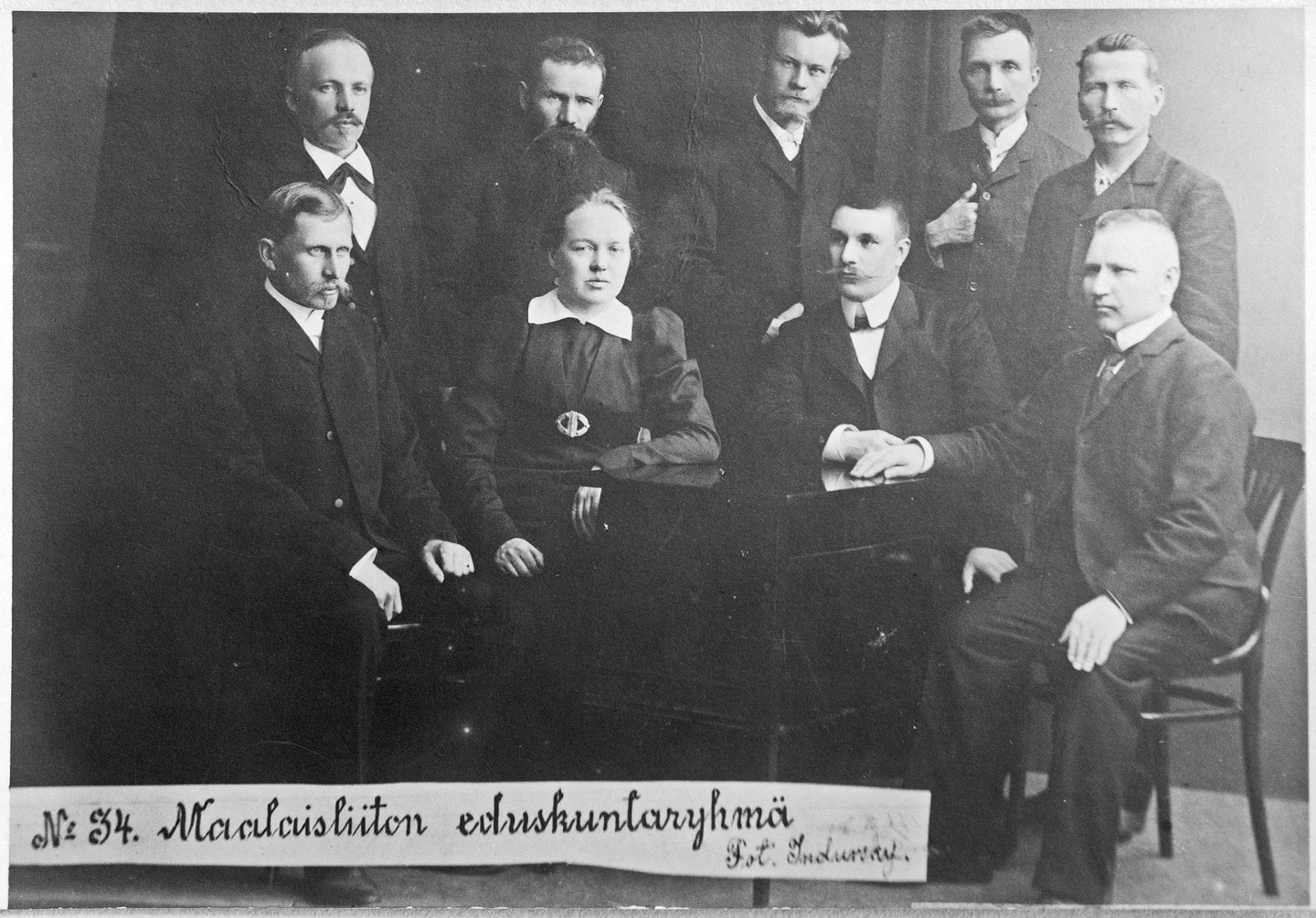
Judel Jankelovitsh Indurski / Finnish Heritage Agency, HK19071003:2 · CC BY 4.0 · Resized and converted to WebP · Source and rights ↗ · Licence terms
Autonomy before independence
In 1809 Finland passed from Swedish rule to the Russian Empire as an autonomous grand duchy. This was not yet an independent nation-state. Institutions developed within an imperial framework, and the relationship between local representation and the ruler remained crucial. In 1906 the four-estate Diet was replaced by a single-chamber parliament: a substantial change in political participation before sovereignty was achieved.
1907: women entered the national parliament
The 1906 reform established equal parliamentary voting and candidacy rights for women and men. Nineteen women were elected to the 200-seat chamber in 1907, the first women elected to a national parliament anywhere in the world. Hilma Räsänen, pictured with the Agrarian Party group, was among them. This portrait shows one party’s representatives, not the full parliament or all nineteen women. Voting rights and the numbers actually elected are different measures of representation.
Independence did not prevent civil war
Parliament adopted the declaration of independence on 6 December 1917. But armed White and Red groups had already formed amid deep social and political divisions. Civil war followed from January to May 1918. Deaths included executions and terrible losses in prison camps as well as battlefield casualties, with the Reds suffering far more. Independence must therefore be understood alongside internal violence, not as an uncomplicated national celebration.
1919: choosing a republic
After the White victory, plans for a monarchy closely linked to Germany gained support. Germany’s defeat in the First World War undermined that project, and Finland adopted a republican constitution in July 1919. The settlement did not immediately heal the divisions left by civil war. This chapter follows the construction of parliamentary institutions; it leaves Finland’s earlier cultures, later wars, linguistic minorities and welfare-state development for further studies.