930–1944 CE · Europe · Rights
Iceland: assembly, social life and the road to a republic
Þingvellir links Iceland’s medieval assembly, seasonal gatherings and later independence movement. Its long history includes institutional breaks and changing powers—not an unchanged modern democracy lasting a millennium.
 Enlarge and examine the picture
Ypsilon from Finland / Wikimedia Commons · CC0 · Resized and converted to WebP · Source and rights ↗ · Licence terms
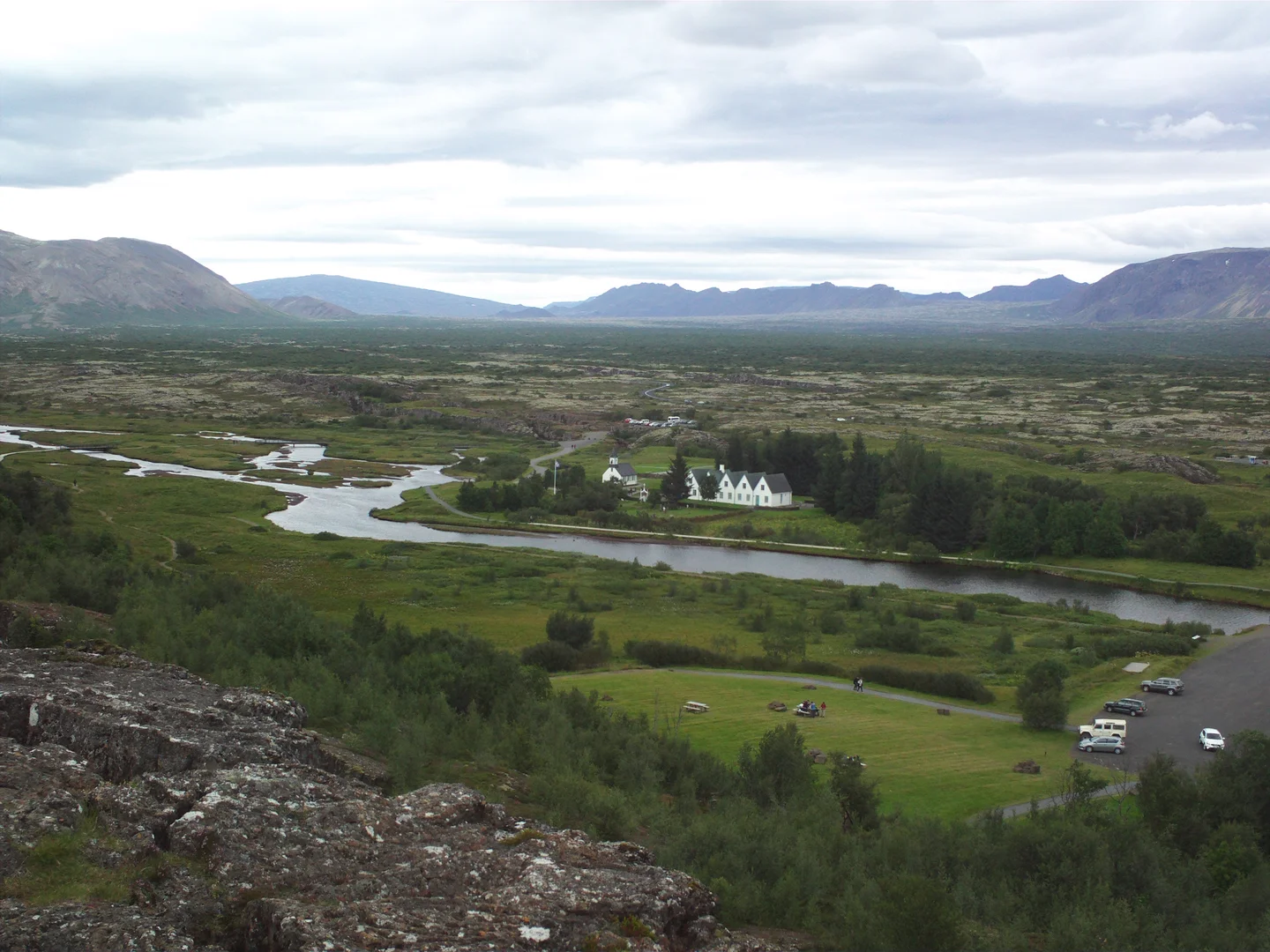
An assembly landscape
The Alþing was established around 930 at Þingvellir, where it continued to gather until 1798. During the Commonwealth period, the Law Rock and Law Council formed central parts of the assembly site. The National Park distinguishes lawmaking, legal proceedings and public speech. These medieval institutions should be understood in their own social setting rather than treated as equivalent to a parliament elected by universal suffrage.
More than a political meeting
For roughly two weeks each summer, the assembly also brought trade, services and sociability together. Written traditions describe craftspeople, merchants and food sellers alongside people dealing with legal business. Some travellers faced long journeys across the highlands. Remains of temporary booths help connect this gathering to the material landscape; they do not preserve every activity or voice that once filled it.
Re-establishment and national campaigning
After the last gathering at Þingvellir in 1798, the assembly was suspended. A royal decree in 1843 re-established an Alþing that first convened in Reykjavík in 1845 as an advisory body, not a legislature with full powers. Separate meetings at Þingvellir helped organize campaigns for greater political rights. The old site’s symbolism was actively renewed during the nineteenth century.
Sovereignty and the republic were separate steps
Iceland became a sovereign kingdom in union with Denmark in 1918 and received a new constitution in 1920. The republican constitution took effect on 17 June 1944, when the republic was established at Þingvellir. The modern photograph shows the landscape and later buildings: it does not show the medieval assembly or the 1944 ceremony. This study follows institutional change; fishing, migration, women’s organizing and later economic history require additional chapters.