1397–1523 CE · Europe · Empire
The Kalmar Union: three kingdoms, contested authority
Denmark, Norway and Sweden shared a monarch without becoming one uniform state. The union reveals both the power of dynastic negotiation and the limits of royal authority.
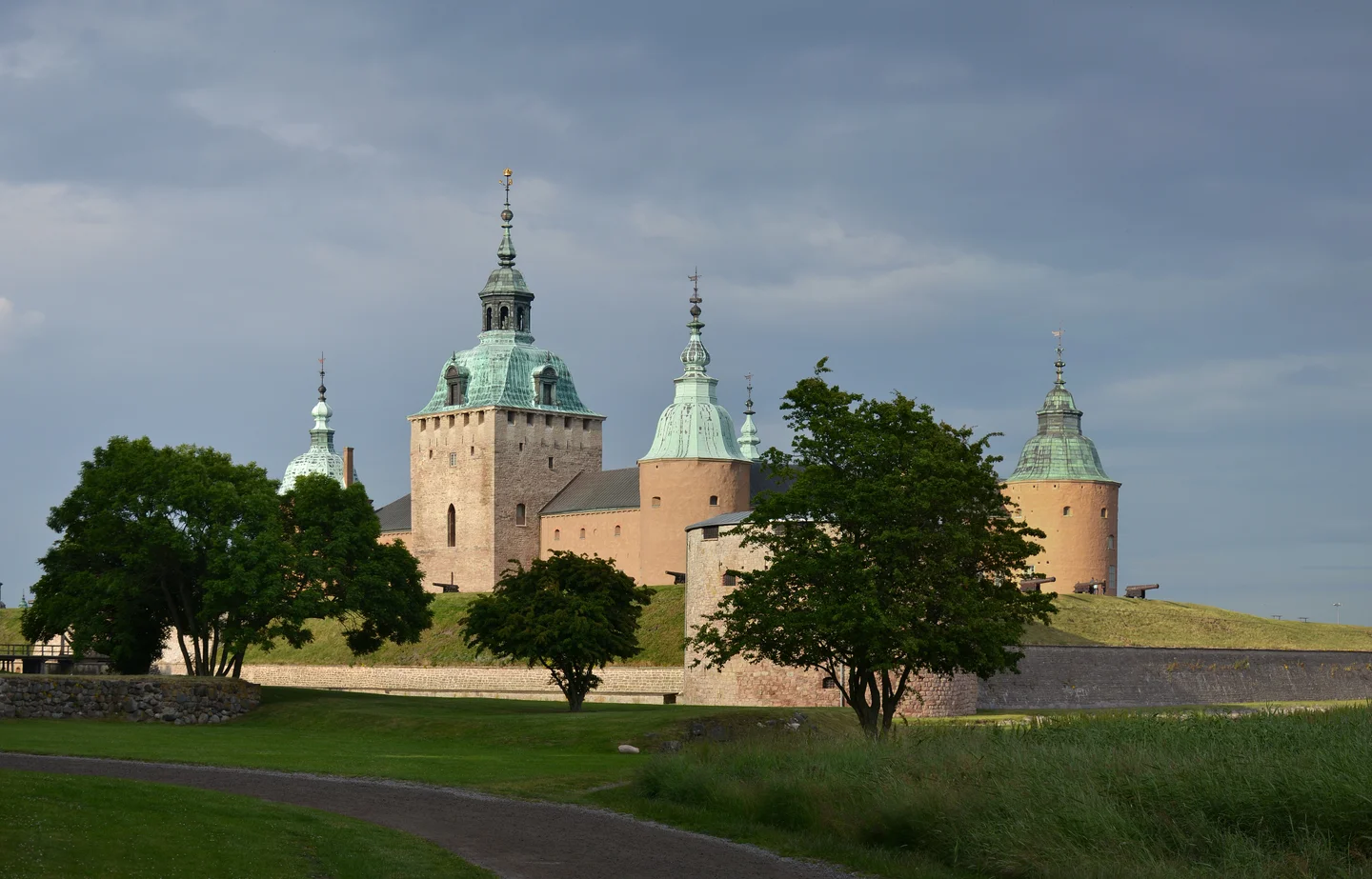 Enlarge and examine the picture
Pudelek / Wikimedia Commons · CC BY-SA 4.0 · Resized and converted to WebP; derivative under the same licence · Source and rights ↗ · Licence terms
Margaret and a shared crown
Margaret helped bring the three kingdoms under Eric of Pomerania, who was formally chosen as their king at Kalmar in 1397. She continued to exercise power until her death in 1412. The arrangement was a personal union: sharing a ruler did not erase the kingdoms’ separate legal systems. It should not be pictured as a modern federation with a single administration.
What the union letter can—and cannot—prove
The surviving July 1397 letter proposed rules for future royal elections, external relations and peace between the kingdoms. Its unfinished physical form matters: ten seals accompany seventeen named signatories, and it was written on paper rather than the parchment normally used for treaties. Historians therefore debate its contemporary legal force. The text records an ambition for durable unity, not proof that every proposed rule operated in practice.
Power was also visible in money
Norway’s monetary history offers a view beyond royal succession. Norges Bank describes a long interruption in Norwegian coin production after 1387, followed by renewed minting under King Hans late in the fifteenth century. More foreign coins circulated in the meantime. Political union was thus experienced through ordinary exchange as well as ceremonies and diplomacy.
A prolonged separation, not one simple collapse
Sweden was effectively outside the union for substantial periods after 1434. Gustav Vasa’s election in 1523 marks its definitive withdrawal in the conventional chronology, while Denmark and Norway remained linked. The pictured castle is a modern photograph of surviving architecture, not a reconstruction of the 1397 meeting or evidence that the building then looked exactly as it does today.