1523–1584 CE · Europe · Faith
Nordic Reformations: Scripture, crowns and conscience
Swedish, Danish, Norwegian and Icelandic reformations followed different paths. Vernacular Scripture and preaching interacted with royal power, confiscation and resistance; later Protestant writers interpreted these changes through their faith.
 Enlarge and examine the picture
Uppsala University Library, Carolina Rediviva / Swedish History Museum · Public domain · WebP delivery recompressed without enlargement or cropping · Source and rights ↗ · Licence terms
Read the Protestant accounts as interpretations
In The History of Protestantism, volume II, book X, J. A. Wylie presents Nordic reform as the advance of biblical truth. Ellen White’s The Great Controversy (1911), chapter 13, celebrates Hans Tausen and the Petri brothers as courageous teachers of Scripture. These are later Protestant interpretations, not eyewitness accounts or a consensus about divine action. White explicitly cites Wylie in her Swedish discussion, so agreement between them is not independent corroboration.
Sweden: a gradual royal and religious transformation
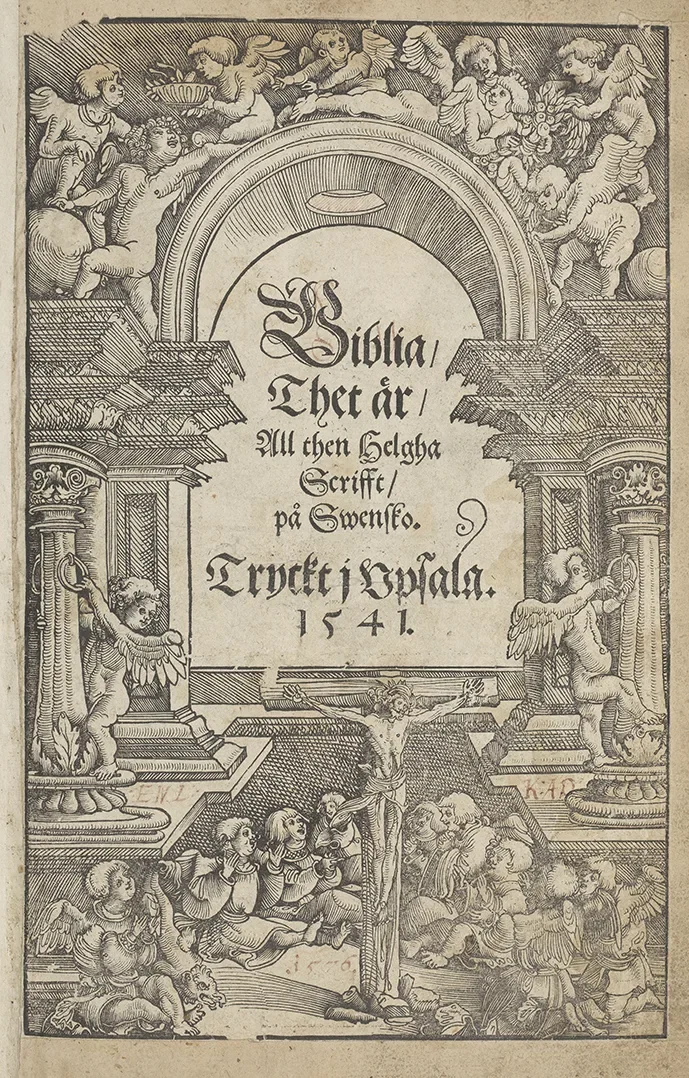
Gustav Vasa became king in 1523; the Västerås assembly of 1527 strengthened crown control over church property and administration. Olaus and Laurentius Petri promoted Lutheran teaching, and Laurentius became archbishop in 1531. The complete Swedish Bible appeared in 1541. The Swedish History Museum stresses that older practices persisted. A decree, a translation and changes in everyday worship were different stages, rather than one instant national conversion.
Denmark: preaching, song and a victorious king
Wylie’s chapters VII–VIII emphasize Tausen’s preaching and congregational song: reform involved listeners and singers, not only rulers. Aarhus University distinguishes urban movements from the settlement imposed after civil war. In 1536 Christian III imprisoned Catholic bishops and appropriated church estates. Johannes Bugenhagen helped organize the new church; its ordinance appeared in Latin in 1537 and Danish in 1539. Royal responsibility extended to education and poor relief as well as worship.
Norway: imposed reform and diminished autonomy
Norway’s trajectory was not simply Denmark’s popular movement repeated. University of Oslo historians emphasize Christian III’s political and military power. In 1537 opposition was defeated and Archbishop Olav Engelbrektsson fled. Episcopal property passed to the crown, while church government followed the Danish framework. This changed both religious authority and Norway’s position within the monarchy. The distinction matters when reading celebratory accounts that make the spread of Protestantism sound uniformly voluntary.
Iceland: resistance outlasted the Danish settlement
Lutheran leadership took hold at Skálholt while Jón Arason remained Catholic bishop at Hólar. He and two sons were executed on 7 November 1550; royal forces arrived in northern Iceland in 1551. Historian Gunnar Karlsson distinguishes political victory from the slower transformation of belief. In 1584 Guðbrandur Þorláksson’s complete Icelandic Bible was printed at Hólar: religious change also worked through language, costly book production and parish use.
The pictured Bible—and the limits of triumphal history
The image is the title page of the Swedish Bible printed in Uppsala in 1541, not a modern reconstruction. Its elaborate ornament makes vernacular Scripture visible as a crafted object. White connects Scripture with spiritual liberation; the institutional histories also show the enlargement of royal authority. Reading these perspectives together preserves the reformers’ convictions without treating a state church as proof of unrestricted liberty of conscience.