1804–1903 CE · Africa · Empire
The Sokoto Caliphate: political power, plantations and slavery
The nineteenth-century Sokoto Caliphate linked religious reform and state formation to an expanding plantation economy sustained by enslaved labour.
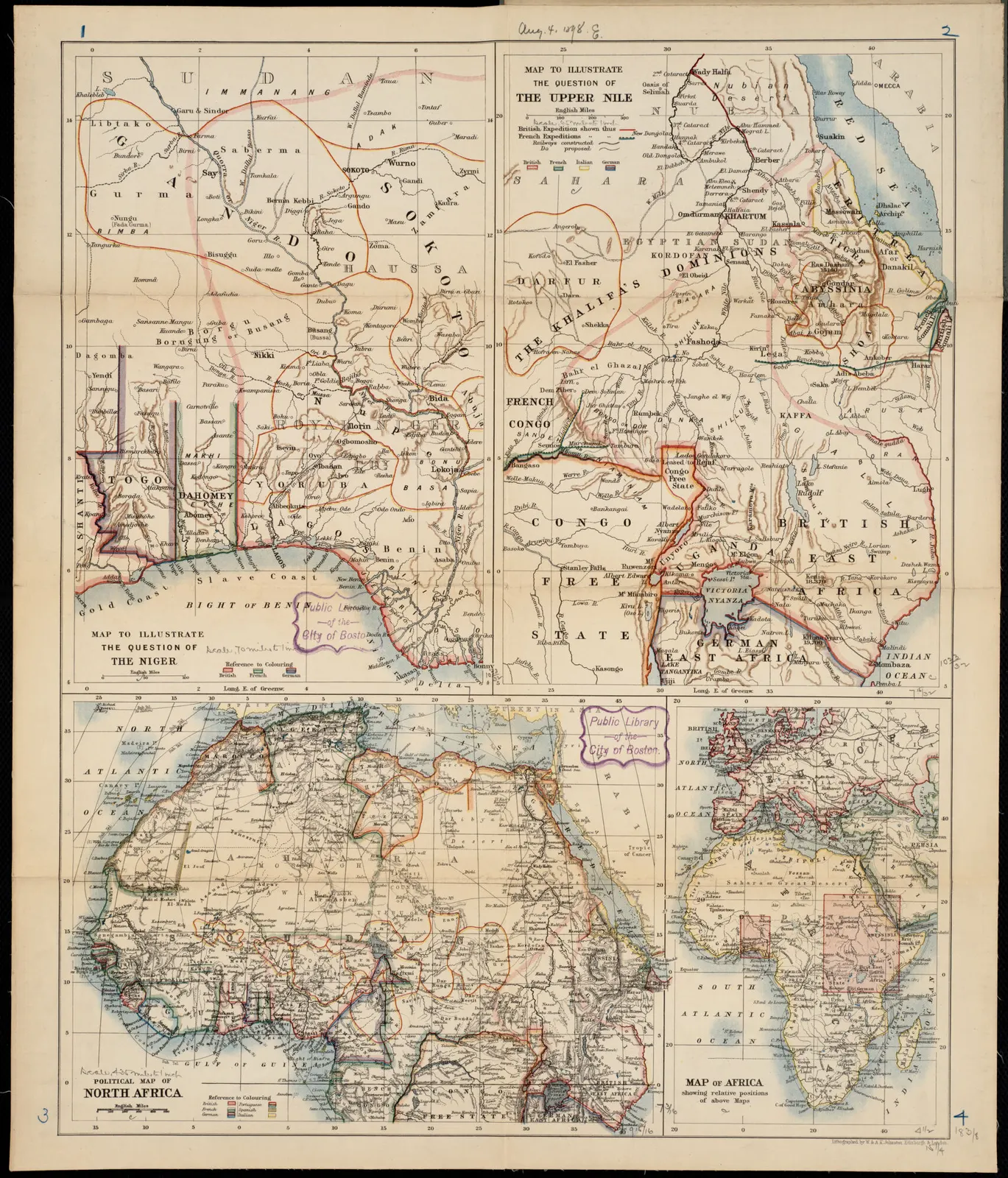 Enlarge and examine the picture
W. & A.K. Johnston Limited / Norman B. Leventhal Map & Education Center, Boston Public Library / Wikimedia Commons · 1898 publication, public domain in the United States · Full sheet retained; resized and converted to WebP · Source and rights ↗ · Licence terms
State formation and conquest
The Sokoto Caliphate developed in the central Sudan region of West Africa from 1804. Its territory incorporated former Hausa states including Gobir and Zamfara. Leaders pursued an Islamic political project through military campaigns. The resulting access to land and captives helped expand an existing plantation sector.
Slavery was a political choice
Historian Mohammed Bashir Salau argues that elite decisions were central to the growth and maintenance of plantation slavery. His study examines ownership, management, labour control and resistance. This interpretation challenges accounts that explain slavery only through abundant land or scarce labour, or portray it chiefly as benign household incorporation.
Law and practice require separate examination
Sultans and emirs maintained courts applying Islamic law, while plantation organisation also reflected practical political interests. Salau’s comparison uses Arabic material, oral testimony and historical scholarship to examine those relationships. The 1903 endpoint marks the caliphate’s demise, not a claim that enslaved people everywhere immediately gained freedom.