ATLAS / ANCIENT—PRESENT
All historyHow Atlas is sourced← Back to Atlas
Back to Atlas timeline
Ottoman Empire: rise, expansion and dissolution — original Atlas editorial reconstruction

c. 1299–1922 CE · changing imperial rule · Middle East · Empire

Ottoman Empire: rise, expansion and dissolution

A frontier principality became a multiethnic empire spanning Anatolia, southeastern Europe, the Arab lands and North Africa before reform, nationalism, war and partition ended the sultanate.

Atlas dossier · Medieval World

Free device narration · synchronized English captions · transcript available

Why it matters

Ottoman institutions connected continents and faith communities while conquest, taxation, accommodation, coercion and rebellion shaped centuries of life.

Date
c. 1299–1922 CE · changing imperial rule
Historical setting
Medieval World · Middle East
People & communities
Osman I · Mehmed II · Suleiman I · subject peoples · reformers and national movements

An approximate beginning and a precise institutional ending

Ottoman state formation around 1300 was gradual. The endpoint 1922 identifies abolition of the sultanate, not the disappearance of Ottoman communities or an unchanged empire lasting to its final day. The centuries between included territorial expansion, provincial change and contested authority.

The Met: Ottoman imperial chronology ↗

1922 and 1923 are different milestones

Turkey’s Grand National Assembly abolished the sultanate on 1 November 1922. The Treaty of Lausanne followed in July 1923, and the republic was proclaimed in October. War, displacement and political reconstruction shaped the transition; it was not simply a new name for the same imperial government.

Manatū Taonga: Birth of the Turkish Republic ↗

Illustrated sequence

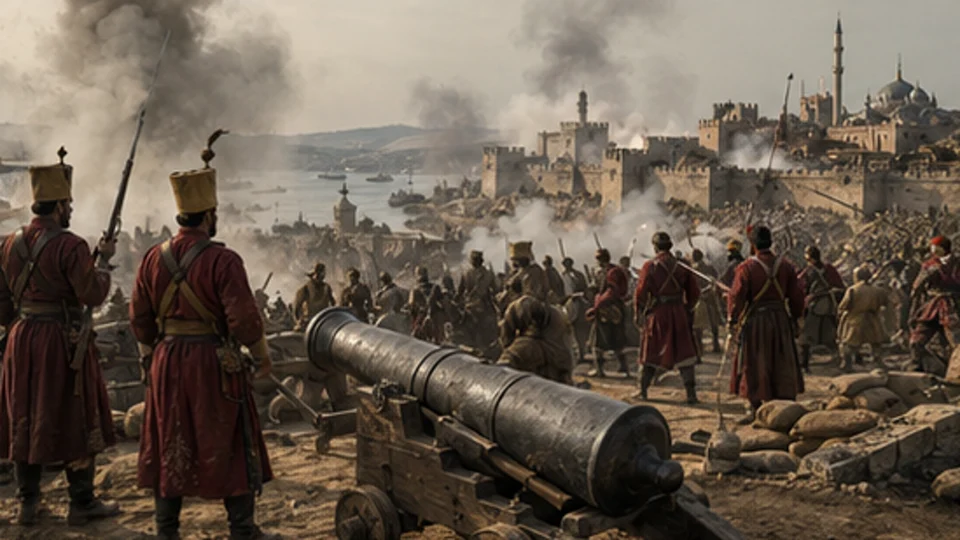
Silent pan-and-zoom motion derivative of the Ottoman Empire: rise, expansion and dissolution reconstruction; not archival footage.

Ottoman Empire: rise, expansion and dissolution: people and actionEnlarge and examine the picture

Examine the picture

IMAGE 2

Supporting Atlas reconstruction

Supporting Atlas reconstruction within the same Ottoman Empire: rise, expansion and dissolution editorial package; not an independent archival record.

World History in Pictures · Same editorial artwork package

How Atlas classifies this artwork →

Supplemental archival visual

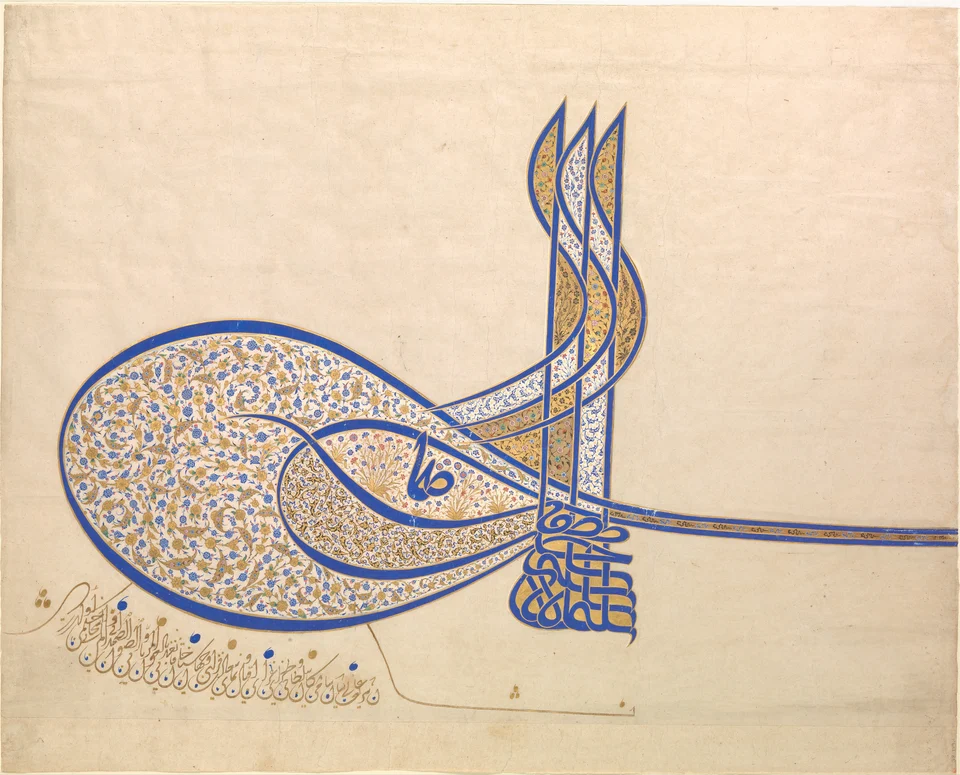
Imperial authority on paper

A modern museum photograph of Süleyman’s imperial insignia, made in Istanbul around 1555–1560 using ink, opaque watercolour and gold on paper. The object date is not the photograph date; the museum supplies no photographic capture date.

Open the item page and rights record ↗The Metropolitan Museum of Art, 38.149.1. Rogers Fund, 1938. Public Domain.
Tughra of Sultan Süleyman the Magnificent, c.1555–1560 — museum photographEnlarge and examine the picture

Examine the picture

Tughra of Sultan Süleyman the Magnificent, c.1555–1560 — museum photograph · Public Domain

Interpretation note

Evidence, memory and historical debate

This dossier distinguishes the event’s basic chronology from later arguments about meaning, responsibility and legacy. When comparing religious, national, Indigenous or scholarly interpretations, consult the primary and institutional sources above alongside peer-reviewed historical work.

Elsewhere in the world

Parallel histories near this moment

c. 1300–1600 CE · regional survey · EuropeRenaissance and humanism

Artists, scholars and patrons revisited classical learning while experimenting with perspective, anatomy, philology and new forms of civic culture.

1325–1532 CE · paired survey; endpoints are milestones · AmericasMexica and Inca worlds before conquest

The Mexica and Inca built far-reaching political worlds with sophisticated agriculture, engineering, tribute systems, trade, religious life and knowledge traditions before Spanish invasions ruptured them in the sixteenth century.

1337–1453 CE · EuropeHundred Years’ War

English and French dynasties contested territory and sovereignty through long cycles of war, truce and civil conflict.

Explore the connections

The Armenian genocide →

Safavid Iran: faith, illustrated books and imperial cities →