1377 CE · Asia · Technology
Jikji and the longer history of printing
The surviving volume of Jikji, printed in Korea in 1377, is the oldest extant book printed with movable metal type. It sits within a much longer East Asian history of reproducing texts.
 Enlarge and examine the picture
Bibliothèque nationale de France / Wikimedia Commons · Public domain · Converted to WebP · Source and rights ↗ · Licence terms
A printing surface, not a page
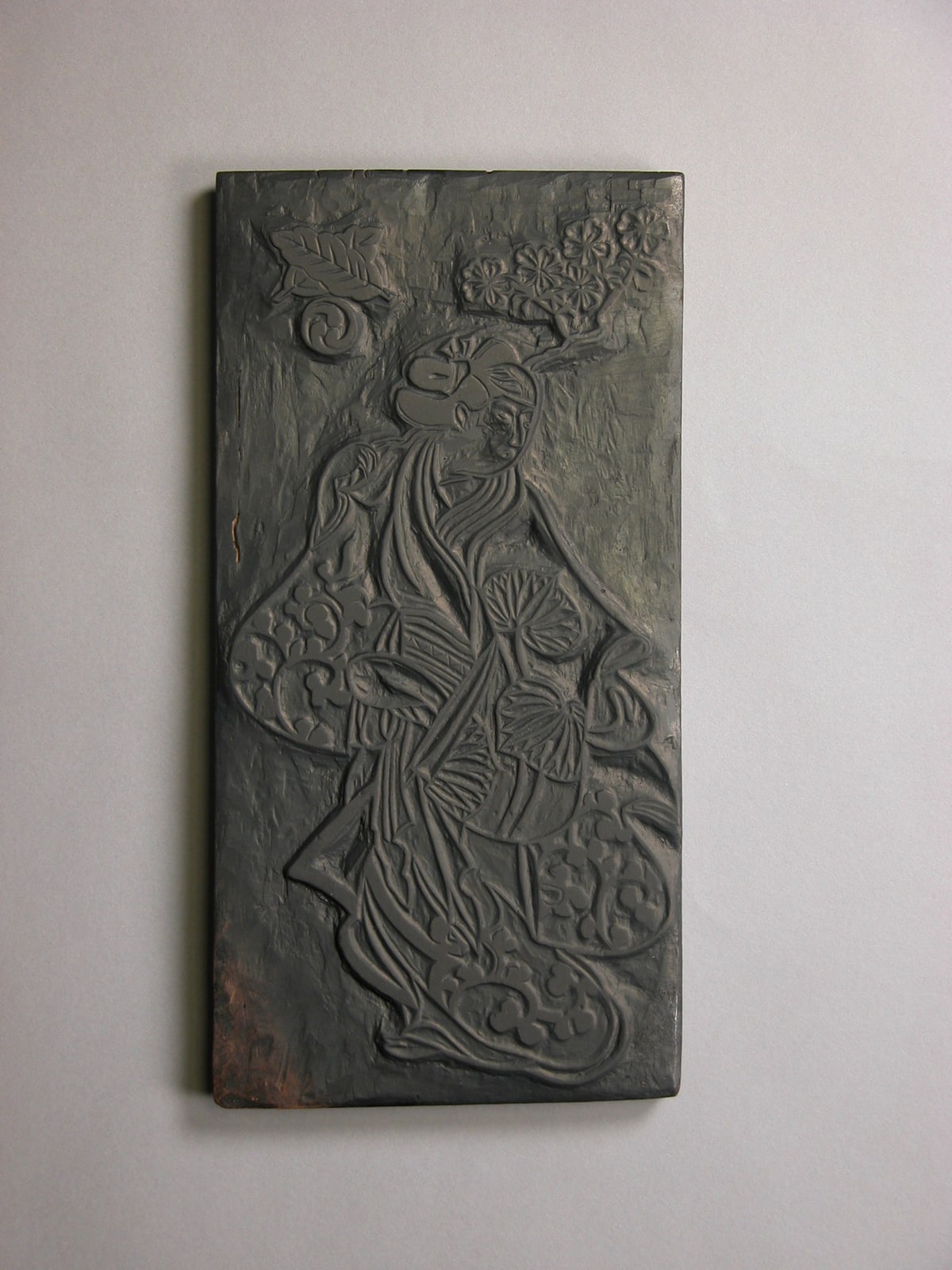
The Jikji pages above were printed with movable metal type. This later Japanese woodblock shows a different method: an image carved into one wooden surface.
 Enlarge and examine the picture
Compare the carved lines with the printed page. The block dates to about 1730; it does not show the tools used in Korea in 1377 or establish a route of transmission to Europe.
From carved pages to printed reform
Play the sequence, step through it, or choose a milestone. Spacing on the axis measures elapsed time.
1522 CE · Luther’s German New Testament. The German New Testament appeared during the Reformation. It belongs to a longer history of vernacular translation; presses amplified the work of translators, publishers and readers. Read the study → Musée protestant: vernacular Bibles ↗
Read every milestone as text
- 868 CE — A dated woodblock book. The Diamond Sutra dated 868 survives as a complete printed book. Its pages were reproduced from carved blocks; this is a different process from movable type. Getty: the Diamond Sutra ↗
- 1041–1048 CE — Reusable clay type. Shen Kuo’s account describes Bi Sheng’s clay types: separate characters could be arranged and reused. The date range follows the Asian Art Museum’s account. Asian Art Museum: printing techniques ↗
- July 1377 CE — Jikji in Korea. Printed at Heungdeok Temple in Cheongju. The surviving second volume is the oldest extant book printed with movable metal type, rather than proof of the first experiment. University of Utah: Jikji ↗
- c. 1455 CE — Gutenberg’s Bible. The Mainz Bible marks a major development in European type and press production. This chronology does not establish a direct line of technological transmission from East Asia. University of Utah: From Jikji to Gutenberg ↗
- 1516 CE — Erasmus’s Greek New Testament. A printed Greek New Testament brought humanist textual scholarship into Biblical study. Editions, translators and readers connected the press to religious debate. Musée protestant: humanism and translations ↗
- 1522 CE — Luther’s German New Testament. The German New Testament appeared during the Reformation. It belongs to a longer history of vernacular translation; presses amplified the work of translators, publishers and readers. Musée protestant: vernacular Bibles ↗
Before the European press
Chinese woodblock printing preceded European movable-type printing by centuries. A block carried a whole image or page in relief. Movable type instead separated the printable surface into reusable units that could be arranged again for another text.
What Jikji establishes
Jikji was printed at Heungdeok Temple in July 1377. Its surviving second volume is evidence of metal-type printing in Korea before Gutenberg’s Bible. “Oldest surviving” describes the evidence that remains; it is not the same as the first experiment ever made.
Compare systems without inventing a direct line
Clay, wood and metal types, block printing, ink and paper each shaped what a printing system could do. The presence of earlier technology in East Asia does not by itself establish a documented route of transmission to Gutenberg. Comparative history should keep chronology, resemblance and evidence of contact separate.